• 2 min read
Rosatom advances 10 MW mini reactor for Chukotka
Rosatom has moved its Shelf-M mini nuclear plant for Chukotka into engineering surveys, with construction planned for 2027.
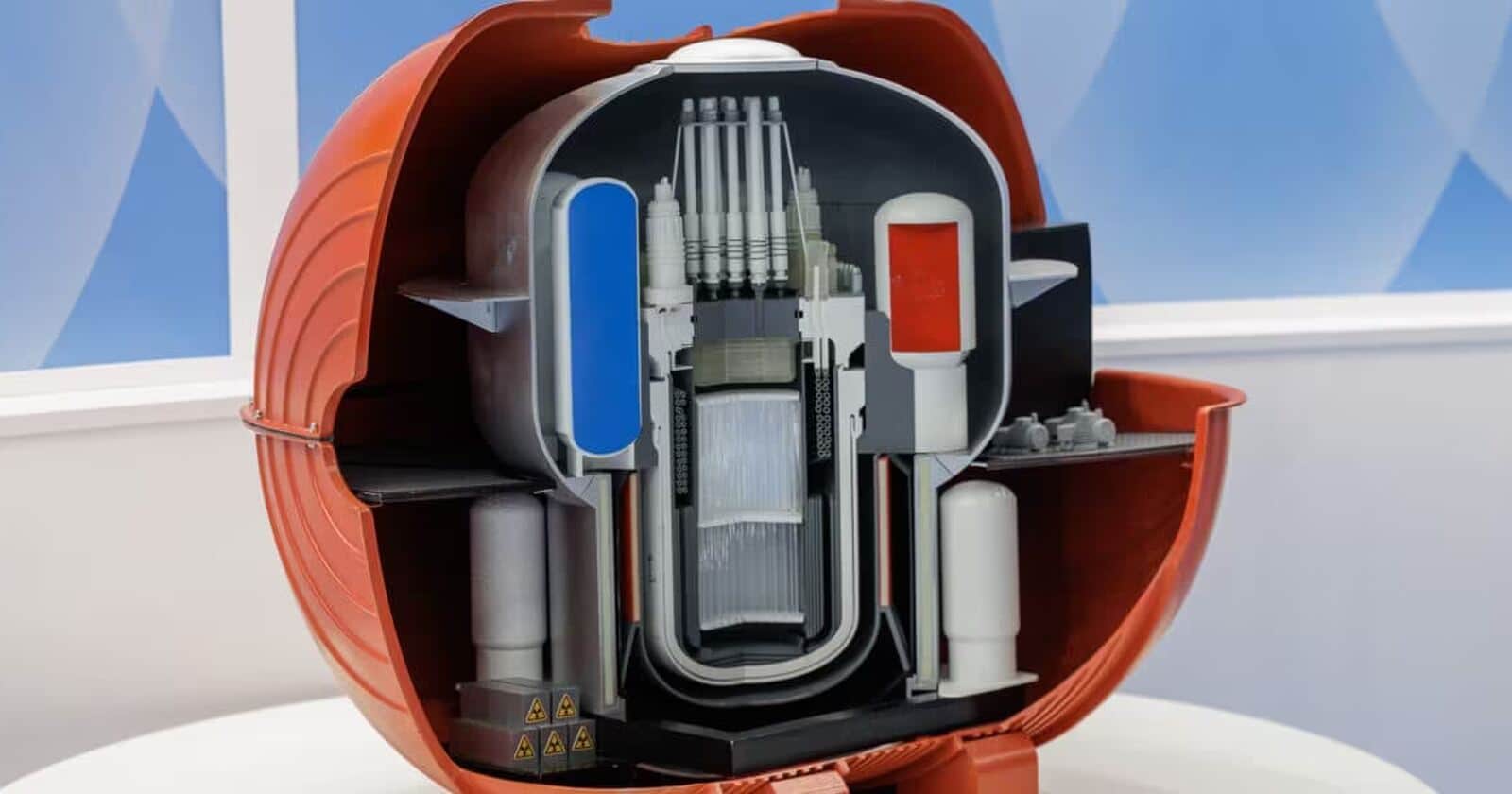
Image: ITzine
Image source: Country Rosatom.
Rosatom has completed the economic justification for Russia’s first land-based mini nuclear power plant using the Shelf-M reactor, moving the project into the engineering survey phase. The facility is planned for the Sovinoye gold mine in Chukotka’s Chaunsky District, where large-scale generation is not considered financially viable.
The reactor’s most significant feature is its ability to remove residual heat without external power. In an accident involving a loss of grid supply, the system is designed to enter a safe state automatically. The concept transfers technologies developed over years for nuclear icebreakers to an onshore facility serving an isolated industrial site.
Shelf-M specifications and passive cooling
Shelf-M is designed as a single 11-meter-long, 370-ton monoblock. It is expected to arrive at the site fully assembled, avoiding the lengthy on-site installation of multiple large components.
Recommended reading
Solar windows harvest indoor light and sunlight
According to the stated specifications, the plant will provide:
- 10 MW of electrical power;
- 35 MW of thermal power;
- A service life of 60 years;
- Fuel refueling once every eight years.
The key engineering feature is passive cooling. If external power is lost, the system should remove heat without diesel generators or operator intervention. The passive system is designed to operate at approximately 30% of nominal power—a critical safeguard for remote locations where backup infrastructure can cost nearly as much as the reactor itself.
The fuel is uranium dioxide in a silumin matrix, the same approach used on nuclear icebreakers. Rosatom presents this as a technology already tested in Arctic conditions rather than a laboratory experiment.
Construction timeline and remote-site economics
The company says construction will begin in 2027. A physical startup is planned for 2030, followed by commercial operation in 2032.
Likhachev has linked Shelf-M-type units to regions where extending the main grid or building a large nuclear power plant would make little economic sense. For mining companies, energy infrastructure is one of the largest budget burdens. For the state, small reactors could connect power generation directly to raw-material projects in the Arctic and the Russian Far East, where investments are measured in decades rather than years.
The project is entering a global market crowded with proposed small modular reactors, but only a few have reached serial production. Projects in the United States, Canada, and Europe are also targeting remote mines, data centers, and northern cities, while many still need to prove that their economics can survive construction costs, schedules, and regulatory approvals.
Unlike broad plans built around the energy transition, the Chukotka project has a defined industrial customer. If its schedule holds, Shelf-M would give Rosatom a concrete test of whether its icebreaker-derived technology can operate on land—and whether isolated mining regions will pay for it.

Frontier Editor
Dan is our resident futurist, covering electric mobility, space exploration, and the smart home. He's interested in atoms just as much as bits. Whether it's a new battery chemistry, a reusable rocket, or a protocol that finally makes IoT devices talk to each other, Dan breaks down the engineering that pushes humanity forward.
via ITzine