• 2 min read
Cyanobacteria biobattery powers clocks without lithium
Cambridge researchers demonstrated a cyanobacteria biobattery that powers clocks, sensors, and plant monitoring systems without lithium.
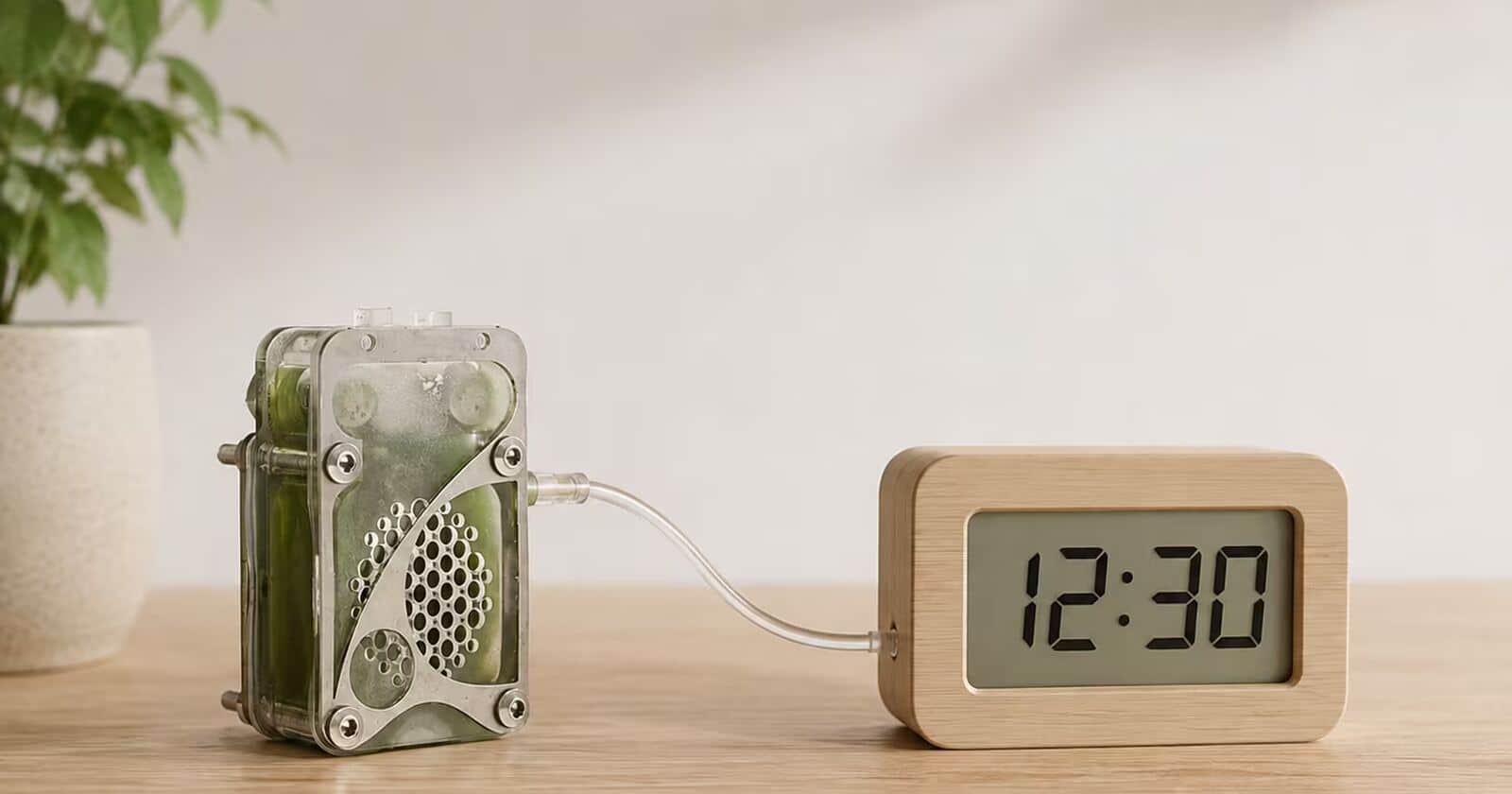
Image: ITzine
Researchers at the University of Cambridge, working with biodesigner Lucia Hiron, have demonstrated a working prototype of a “living” biobattery powered by photosynthetic cyanobacteria. Called biocell, the system already runs low-power electronics without relying on lithium.
The design needs only light, water, and carbon dioxide. It also continues producing electricity after sunset: once the light is gone, the cells keep operating through their natural metabolic processes.
This is not an attempt to replace lithium-ion batteries in smartphones. The target is electronics that consume very little power, including:
- Electronic clocks
- Temperature sensors
- Compact monitoring systems
- Remotes and other low-power devices
The Cambridge team has assembled more than a laboratory sample. One demonstration monitors a houseplant’s light level, air temperature, and soil moisture, then sends the readings to a mobile app.
Recommended reading
Strained ultrathin RuO2 shows signs of altermagnetism
How the biocell works in practice
The researchers say cyanobacteria have been used in laboratory electricity-generation setups for more than six years. That history suggests the work has moved beyond a one-off demonstration and into longer-term engineering development, although the source does not provide output figures or a specific operating lifetime for the prototype.
The technology faces competition from more than conventional batteries. Designers of low-power electronics are also reducing the amount of energy their devices require, which could make efficiency improvements as important as the power source itself.
The team has launched the e-Pho startup and is looking for commercialisation partners. It has also created an educational kit that allows school students to grow cyanobacteria and assemble their own biobatteries.
Commercial prospects for biocell
Based on its current capabilities, biocell is positioned as a power source for niche devices with extremely low energy requirements, not as a universal battery replacement. Its most plausible early market is the large population of small sensors and monitoring devices that now depend on disposable cells.
The source does not give a price, release date, power output, or independent test results. Commercial adoption will depend on whether the system can operate reliably for long periods in real-world conditions and compete with the cost of conventional disposable batteries, which remain widely used.
Frontier Editor
Dan is our resident futurist, covering electric mobility, space exploration, and the smart home. He's interested in atoms just as much as bits. Whether it's a new battery chemistry, a reusable rocket, or a protocol that finally makes IoT devices talk to each other, Dan breaks down the engineering that pushes humanity forward.
via ITzine