• 2 min read
China turns coal into graphene and carbon materials
Chinese developers say a quantum-chemistry process can turn coal into graphene, carbon fiber and supercapacitor materials at industrial scale.
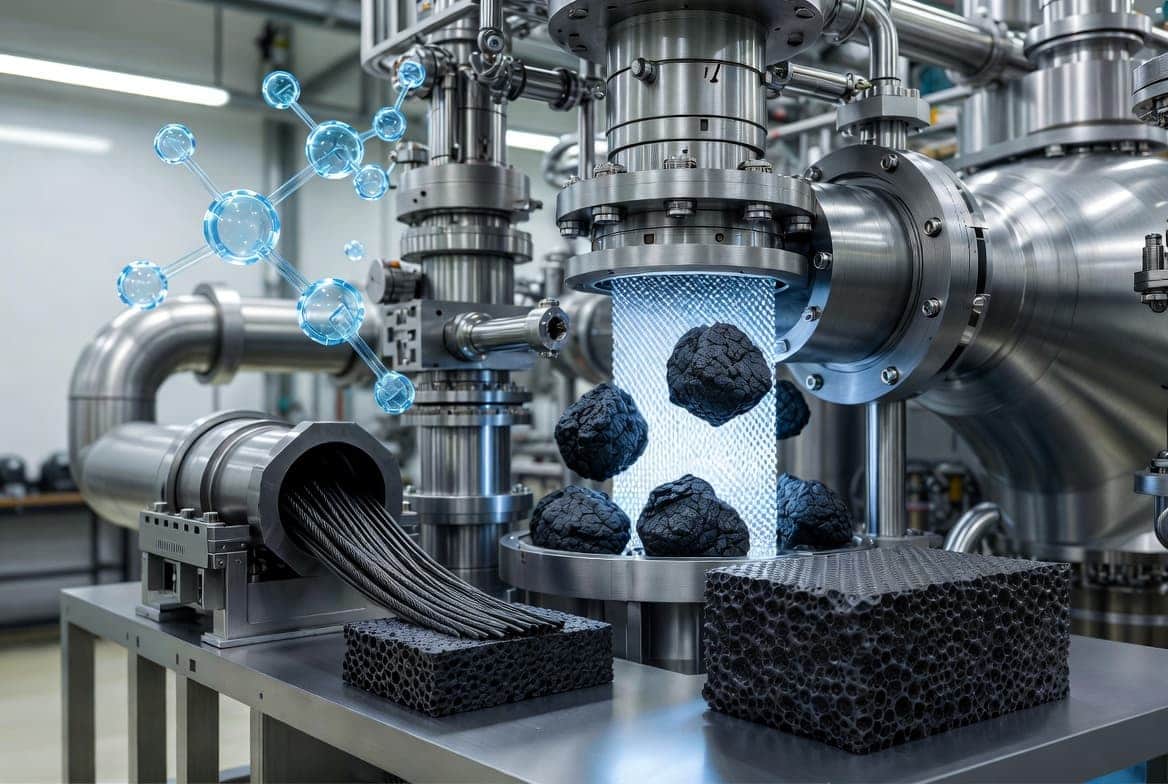
Image: iXBT
A Chinese technology could turn ordinary coal into graphene, carbon fiber and supercapacitor materials, rather than burning it for power or fuel. The process was presented at an industry conference in Shanxi province on August 2, 2026.
Image generated by Grok.
The technology was jointly developed by Zhaoqing Shunxin Coal Chemical Industry Technology and Guangdong Coal-based Carbon Materials Research. The companies said it passed an expert evaluation by the China International Association for the Promotion of Science and Technology in 2025, after which specialists recommended accelerating its commercial rollout.
Recommended reading
Strained ultrathin RuO2 shows signs of altermagnetism
How coal becomes carbon materials
The developers say the process is based on quantum chemistry. During processing, coal molecules are separated according to the strength of their chemical bonds. Less-stable compounds become liquid and gaseous products, while the most stable aromatic structures are used to produce condensed pitch, a key feedstock for advanced carbon materials.
According to the developers, that pitch can be used to make:
- Carbon fiber and carbon foam
- Three-dimensional graphene
- High-purity activated carbon
- Materials for supercapacitors
These products could be used in aerospace, electronics, energy-storage systems and other high-technology industries.
Planned industrial production
The process reportedly converts about 60% of the carbon in coal into finished products, rather than releasing it into the atmosphere through combustion. Scientists estimate that processing one metric ton of coal this way could reduce carbon-dioxide emissions by approximately two tons compared with conventional coal use.
The first commercial step has already been taken: the developers signed an agreement with state-owned China Pingmei Shenma Group to build a plant in Henan province. The facility is expected to produce up to 6,000 tons of carbon materials per year.
The developers also say some products have already been tested by potential customers and are being prepared for mass production. However, the technology is still moving from laboratory and pilot projects to industrial manufacturing. Its economic efficiency and whether it can deliver the stated characteristics at large scale have not yet been confirmed.
Frontier Editor
Dan is our resident futurist, covering electric mobility, space exploration, and the smart home. He's interested in atoms just as much as bits. Whether it's a new battery chemistry, a reusable rocket, or a protocol that finally makes IoT devices talk to each other, Dan breaks down the engineering that pushes humanity forward.
via iXBT