• 5 min read
Foldable phones are boring now—and Apple could benefit
Foldables have become thinner, tougher, and less distinctive. Apple’s expected iPhone 18-era debut could determine whether the niche goes mainstream.
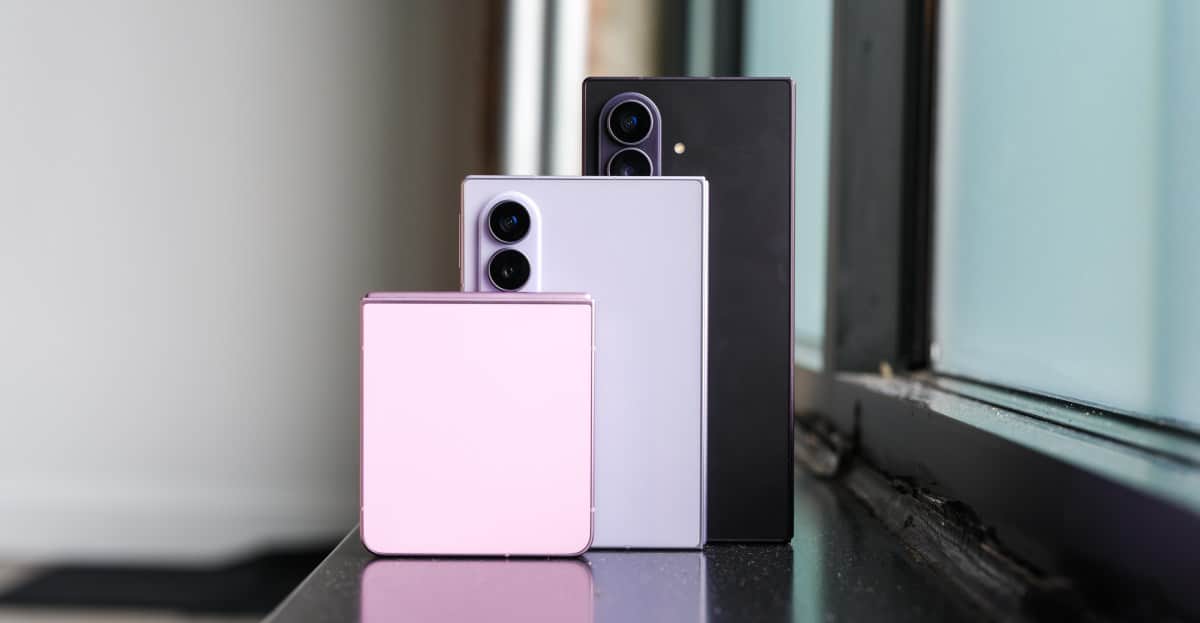
Image: The Verge
Foldable phones have reached an unusual stage: the hardware is now good enough to feel routine. After years of broken screens, conspicuous creases, limited durability, and prices near $2,000, the category’s standard designs have settled into predictable annual upgrades. Apple’s expected entrance could determine whether that maturity brings mass adoption or simply confirms that most buyers do not want an expensive phone that folds.
From fragile prototypes to mature hardware
The commercial foldable-phone era began with Royole’s FlexPai, a “charmingly awful” device from the now-bankrupt flexible-display manufacturer. Samsung’s first Galaxy Fold arrived a year later, but review units broke within days. The problems were severe enough to prompt Huawei to delay its Mate X by five months. Huawei’s unusual design placed the folding display around the outside of the phone, but the approach proved unpopular.
Motorola’s first Razr foldable and Samsung’s similar Z Flip followed. They received scores of 4/10 and 6/10, respectively. Samsung’s later generations became substantially more reliable, including after the company learned that integral layers of the display stack should not be as easy to remove as a screen protector.
The market expanded as Google, OnePlus, Oppo, Vivo, Xiaomi, and Honor launched foldables. Prices also began to spread beyond the flagship tier. Book-style models have remained around $2,000 for seven years straight, but Motorola’s entry-level Razr now costs $799, while Samsung introduced an FE version of its Z Flip 7 last year for $899.
The hardware improvements have been incremental but significant:

Recommended reading
Oppo Find X10 Ultra tipped at 10,000 yuan
- Foldables are thinner, lighter, and more durable.
- Creases are flatter and less visible, and some inner displays support a stylus.
- Cameras have moved closer to standard slab phones in quality.
- Flip and book-style designs have diversified.
Wider designs, stronger batteries, and smaller creases
Until recently, foldables largely fit two templates: compact flip phones with square cover displays spanning the front, and book-style phones that open into an almost-square tablet-like screen.
Huawei began pushing beyond those formats with the Mate XT trifold, followed by the wider Pura X flip and, this year, the even wider Pura X Max. Samsung launched its Galaxy Z TriFold late last year, then shifted the Galaxy Z Fold 8 to the same squat shape as the Pura X Max last month.
Durability has also improved. Google’s Pixel 10 Pro Fold introduced an IP68 rating, while Honor’s Magic V6 raised the bar to IP69. The Magic V6 is both the thinnest foldable on the market and the model with the largest battery, enabled by silicon-carbon battery technology. Its higher energy density allows manufacturers to fit greater capacity into smaller batteries.
The latest models are barely thicker than flagship slab phones when closed and nearly as thin as a USB-C port when open. Their batteries can last a day or two per charge. Oppo’s Find N6 is similarly thin and long-lived, while using a hinge design that makes its crease almost invisible. The fold remains detectable by touch and sight, but finding it can require close inspection and the right lighting.
Cameras remain the main hardware weakness. Recent Oppo and Vivo foldables have offered triple rear-camera systems with quality comparable to some slab flagships, but they still trail top-tier Ultra phones—and cost substantially more. The source argues that design and cost constraints may keep foldables one or two steps behind regular phones in camera performance.
Despite the progress, foldables remain a niche product. Counterpoint says they represented just 1.6 percent of the smartphone market in 2025.
Apple’s expected foldable could reset the market
The technology now appears mature enough for Apple to use. The first foldable iPhone is widely expected to debut next month alongside the iPhone 18 Pro models. IDC analyst Francisco Jeronimo described the launch as “a turning point for the foldable segment” and predicted that Apple could capture 34 percent of the foldable market by value in its first year.
“A turning point for the foldable segment.”
The unanswered question is whether Apple will bring in customers who have rejected foldables, or simply serve people who have been waiting for a foldable running iOS. A premium price would still limit its reach, even if Apple helps move the category beyond its niche status.
Apple’s influence may already be visible in product design. Huawei and Samsung introduced wider foldable formats only months before Apple’s expected device, which leaks suggest will also be wide. Leaks point to wider models from Oppo and Honor as well, setting up the next 12 months as a test of whether users actually prefer the shape—or whether Android manufacturers have moved in anticipation of Apple rather than customer demand.
The future of trifolds is less certain. Huawei has made bullish claims about the sales success of its two Mate XT phones, suggesting it may continue with the design. Samsung pulled its TriFold from the market after fewer than three months, but the reason is unknown: it may have reflected low sales or simply a small manufacturing run. Rollables and other experimental designs are likely still several years from commercialization; Lenovo has, however, been selling a laptop with a rollable display for a full year.
Software is another open variable. Bloomberg’s Mark Gurman reports that Apple’s foldable will run a version of iOS adapted for an iPad-like interface, without iPadOS’s full multitasking capabilities. On Android, Oppo’s ColorOS is described as the leading foldable software experience, combining split-screen controls with floating app windows.
The most mature foldables are no longer defined by obvious technical failures. Their remaining barriers are largely the price, camera compromises, and whether consumers want the form factor at all. Apple’s launch will test that proposition at scale.
Gadgets Editor
Eli is obsessed with the tangible future. He reviews phones, wearables, and everything with a battery. Known for his rigorous testing protocols and unabashed teardowns, Eli has broken more review units than he cares to admit, all in the name of discovering the truth about durability and repairability.
via The Verge