• 2 min read
Zinc flow battery runs for 5,128 hours
A zinc flow battery from Chinese researchers ran for 5,128 hours, pointing to a long-duration storage option for solar and wind farms.
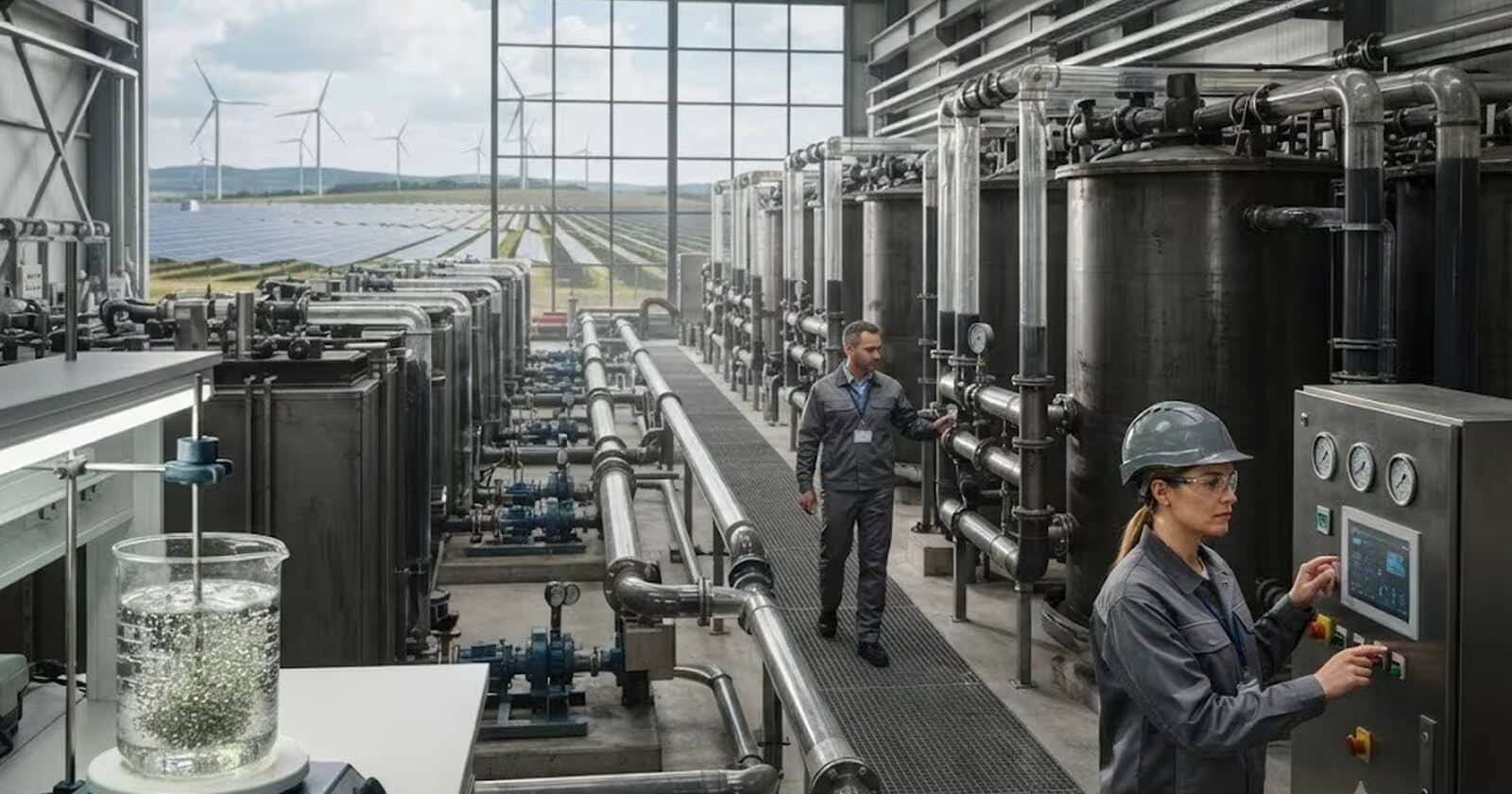
Image: ITzine
Scientists from Fudan University and the Chinese Academy of Sciences have demonstrated a flow zinc battery that operated continuously for 5,128 hours in laboratory testing. The system is not aimed at smartphones or electric vehicles; it is designed for large-scale storage at solar and wind farms, where cost and service life matter more than compact size.
Unlike lithium-ion batteries, flow batteries separate power output from energy capacity. Increasing the amount of stored energy can therefore involve expanding the tanks rather than simply enlarging the electrochemical cells. That design suits utility-scale storage, including systems that capture excess generation overnight and deliver it during the day.
How the zinc flow battery works
The main challenge for zinc batteries is uneven deposition during repeated operation. Zinc particles can clump together, gradually damaging the electrode surface. The researchers addressed this problem with a suspension of zinc nanoparticles in a conductive liquid and a hollow carbon framework that helps keep the material stable during operation.
Instead of a conventional solid electrode, the battery circulates a fluid mixture between an external reservoir and an electrochemical cell. During charging and discharging, zinc reversibly shifts between its metallic and ionic forms, while a specialized electrolyte keeps the reaction within stable operating limits.
The reported results include:
Recommended reading
Light-programmable liquid crystal switch stores its threshold
- 5,128 hours of continuous operation in testing.
- 99.94% coulombic efficiency.
- A zinc–manganese dioxide version that retained 81.1% of its capacity after 5,500 cycles.
- Expandable energy storage through larger suspension tanks.
Zinc storage versus lithium-ion and vanadium systems
Lithium-ion batteries retain advantages in energy density and manufacturing maturity, but long-duration grid storage is driving interest in alternatives because of cost, service life and safety concerns. Zinc flow batteries are also positioned as a potential competitor to vanadium redox-flow batteries, one of the more established technologies for stationary storage.
The study was published in Nature Energy. The next step is to refine the suspension and hardware so the design can move beyond laboratory equipment and into practical installations. Whether the reported performance holds at that scale will determine its value for renewable power plants.

Frontier Editor
Dan is our resident futurist, covering electric mobility, space exploration, and the smart home. He's interested in atoms just as much as bits. Whether it's a new battery chemistry, a reusable rocket, or a protocol that finally makes IoT devices talk to each other, Dan breaks down the engineering that pushes humanity forward.
via ITzine