• 3 min read
Light-programmable liquid crystal switch stores its threshold
A liquid-crystal switch from Dutch and Canadian researchers stores a light-set activation threshold without power or separate memory.
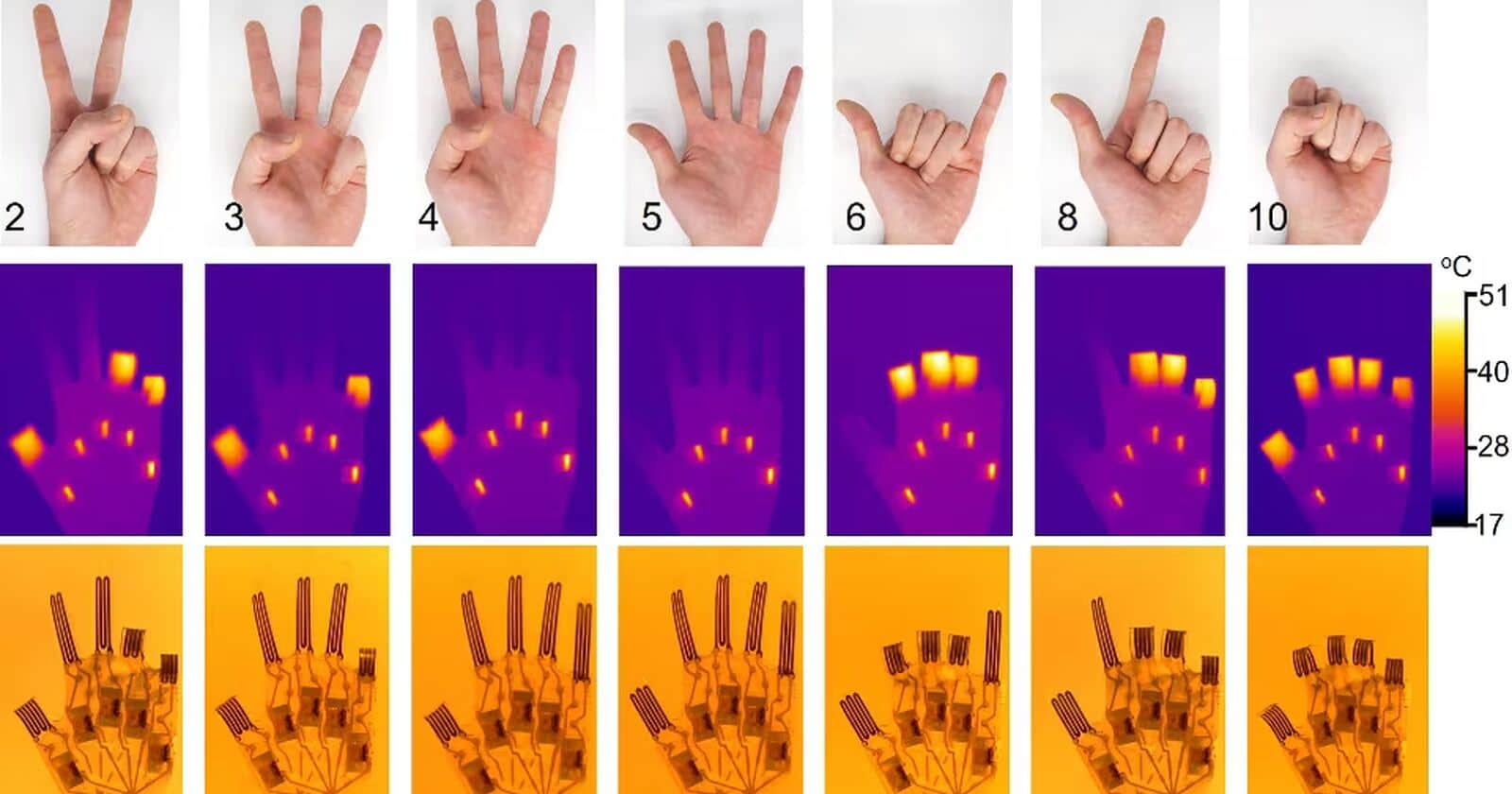
Image: ITzine
A liquid-crystal switch can be reprogrammed with light, then continue operating without a power supply or separate memory. Materials scientists from the Netherlands and Canada built the device from a liquid-crystal polymer containing azobenzene, publishing their results in Science Advances.
The switch’s activation threshold can be adjusted through either heat or light. Once configured, it behaves like a conventional switch, but its trigger point is stored in the material itself rather than fixed permanently during manufacturing.
How light changes the switching threshold
The researchers used ultraviolet exposure to control the share of azobenzene molecules in the cis isomer state. Changing the duration and intensity of the UV light altered the size of a gap inside the device. That, in turn, shifted the minimum power required by a heating electrode to close the circuit.
The same component could therefore be set to activate earlier or later without modifying the surrounding circuitry. The material retains its setting without continuous power, although the memory is temporary: according to the authors, the programmed threshold gradually disappears after approximately 10 hours in complete darkness.
Recommended reading
Starlink Mini 2 reportedly adds a built-in battery
The device differs from a conventional thermal relay. A typical relay uses a bimetallic strip made from two metals that expand at different rates. Heating bends the strip and triggers the switch, but its threshold is determined by the physical design and is not readily changed afterward.
The liquid-crystal version can be reconfigured with light and then used without further calibration until its stored setting fades. That combination of flexibility, low weight, and reduced electronics could be useful in soft robotics, where rigid sensors and complex wiring can be difficult to integrate.
Five switches control a robotic hand
To demonstrate that the effect could do more than produce a laboratory response, the researchers first used the device for simple binary classification. They adjusted the switch with pulses of ultraviolet and blue light, then applied signals and changed the threshold so the device assigned each input to one of two classes.
The team then assembled five switches into a control system for the fingers of a robotic hand. Each switch received its own threshold, corresponding to the power at which a particular finger should bend. The system reproduced multiple gestures, including movements of individual fingers and combinations of them.
The approach places some decision-making in the material rather than in external electronics. That may suit wearable devices, medical micro-actuators, and adaptive grippers, where compactness can matter as much as precision. Soft robotics is already valued at billions of dollars, and components that can bend while processing simple inputs locally could help reduce the hardware needed at each joint.
The concept also revives an older form of device logic. Mechanical relays emerged almost two centuries ago before electronic circuits made switching faster and more compact. Materials researchers are now embedding some of that behavior back into a device’s physical structure—while adding the ability to rewrite its response with light.
The remaining question is durability. The researchers still need to establish how long the elements operate in practical systems, how they withstand repeated heating and illumination cycles, and how consistently they preserve their programmed thresholds in more complex robotic assemblies.

Frontier Editor
Dan is our resident futurist, covering electric mobility, space exploration, and the smart home. He's interested in atoms just as much as bits. Whether it's a new battery chemistry, a reusable rocket, or a protocol that finally makes IoT devices talk to each other, Dan breaks down the engineering that pushes humanity forward.
via ITzine