• 2 min read
Japan’s $9,230 cooling cabin chills workers in five minutes
Japan’s Do Hiemon Box cools workers in five minutes, using a 15°C cabin and 5°C air stream for $9,230 before tax.
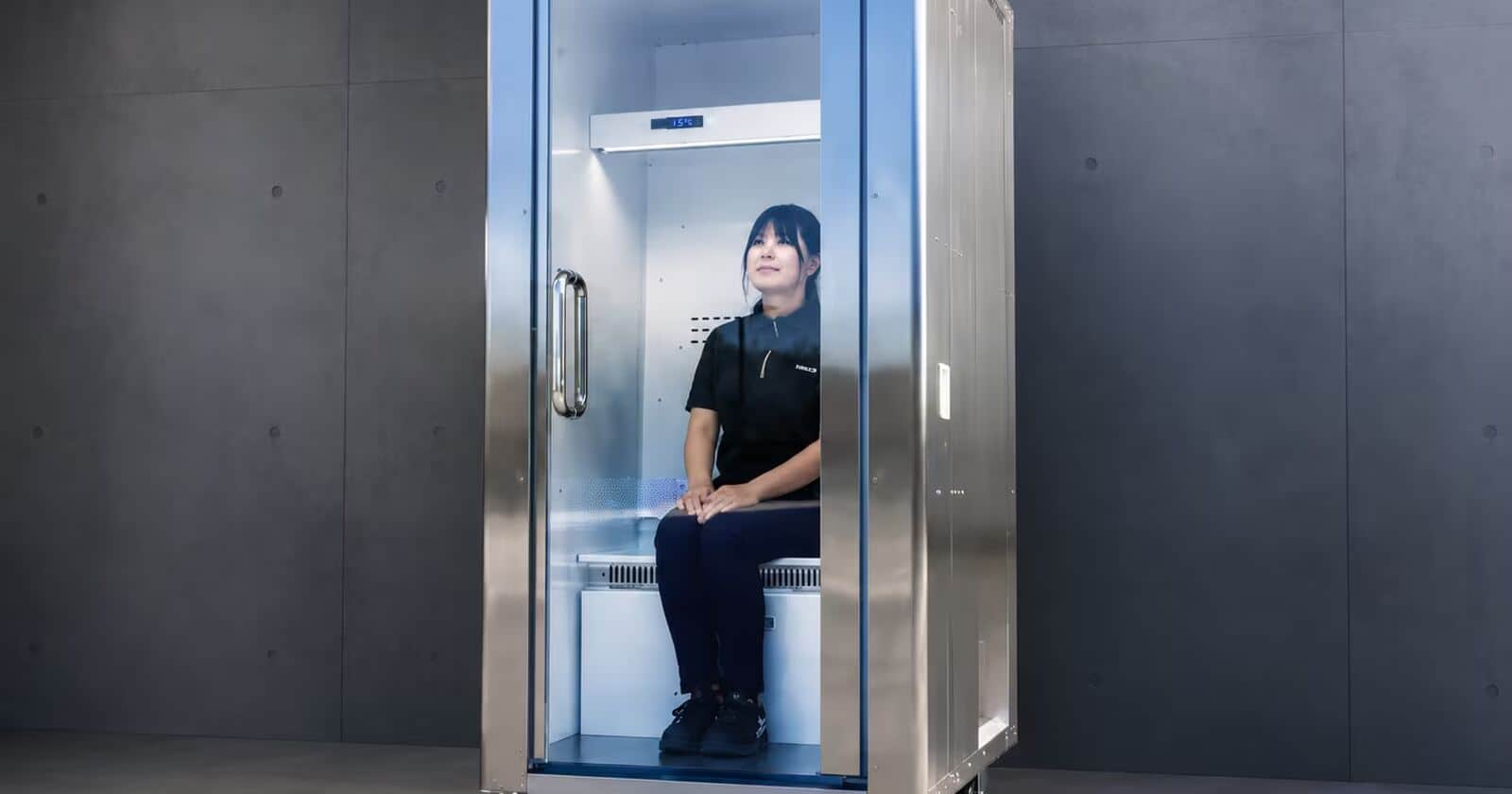
Image: ITzine
A five-minute session inside Japan’s Do Hiemon Box is designed to provide rapid relief from extreme heat. The enclosed cooling cabin, made by Japanese refrigeration and vending-machine manufacturer SDRS, is intended for construction sites, warehouses, schools and other workplaces where summer heat can become a hazard early in the day.
From the outside, the unit resembles an oversized vending machine or household refrigerator. Inside, it has a seat and a directional cooling system. The cabin is kept at about 15°C, while an air stream of roughly 5°C is directed at the user’s head, neck, shoulders and back.
According to the companies involved, users should notice a clear effect after five minutes. A 10-minute session is expected to help lower body temperature and ease overheating symptoms.
Recommended reading
UK AI data centers face water priority warning
Key features include:
- Three cooling modes
- Automatic shutdown after 20 minutes
- Wheels for moving the unit between sites
- Operation without on-site installation
The product is sold by industrial supplier Trusco Nakayama, which positions it as business equipment rather than a household appliance.
Energy use and workplace deployment
SDRS also highlights the cabin’s power consumption. Its calculations indicate that Do Hiemon Box uses approximately half as much electricity as a conventional spot air conditioner, while avoiding the need for permanent installation.
That could appeal to employers operating facilities that cannot be quickly equipped with full climate-control systems. In Japan, heat is increasingly treated as an occupational risk rather than merely a seasonal inconvenience.
Pricing and availability
Do Hiemon Box is already available through industrial distributors in Japan for 1.5 million yen before tax, or approximately $9,230. Earlier this year, one unit was provided to Maebashi City Hall, where people can use it free of charge during working hours.
The expected market is therefore construction sites, warehouses, schools, municipalities and other locations where heat exposure is a daily problem—and where a work stoppage caused by overheating could cost more than the cabin itself.
Demand for targeted cooling equipment is rising as Japanese summers become more severe. Authorities have introduced separate terminology for days when temperatures exceed 40°C, pushing businesses and municipalities to seek compact alternatives alongside conventional air conditioning.

Enterprise Editor
Marcus follows the money. He covers enterprise software, cloud architecture, and the tectonic shifts in Big Tech strategy. He translates dense earnings calls and complex M&A activity into actionable insights about where the industry is actually heading. If a tech giant makes a silent pivot, Marcus is usually the first to notice.
via ITzine