• 2 min read
NASA captures a turquoise plankton bloom in the Black Sea
NASA images from the ISS and PACE satellite reveal a turquoise phytoplankton bloom near the Black Sea coast and Bosphorus.
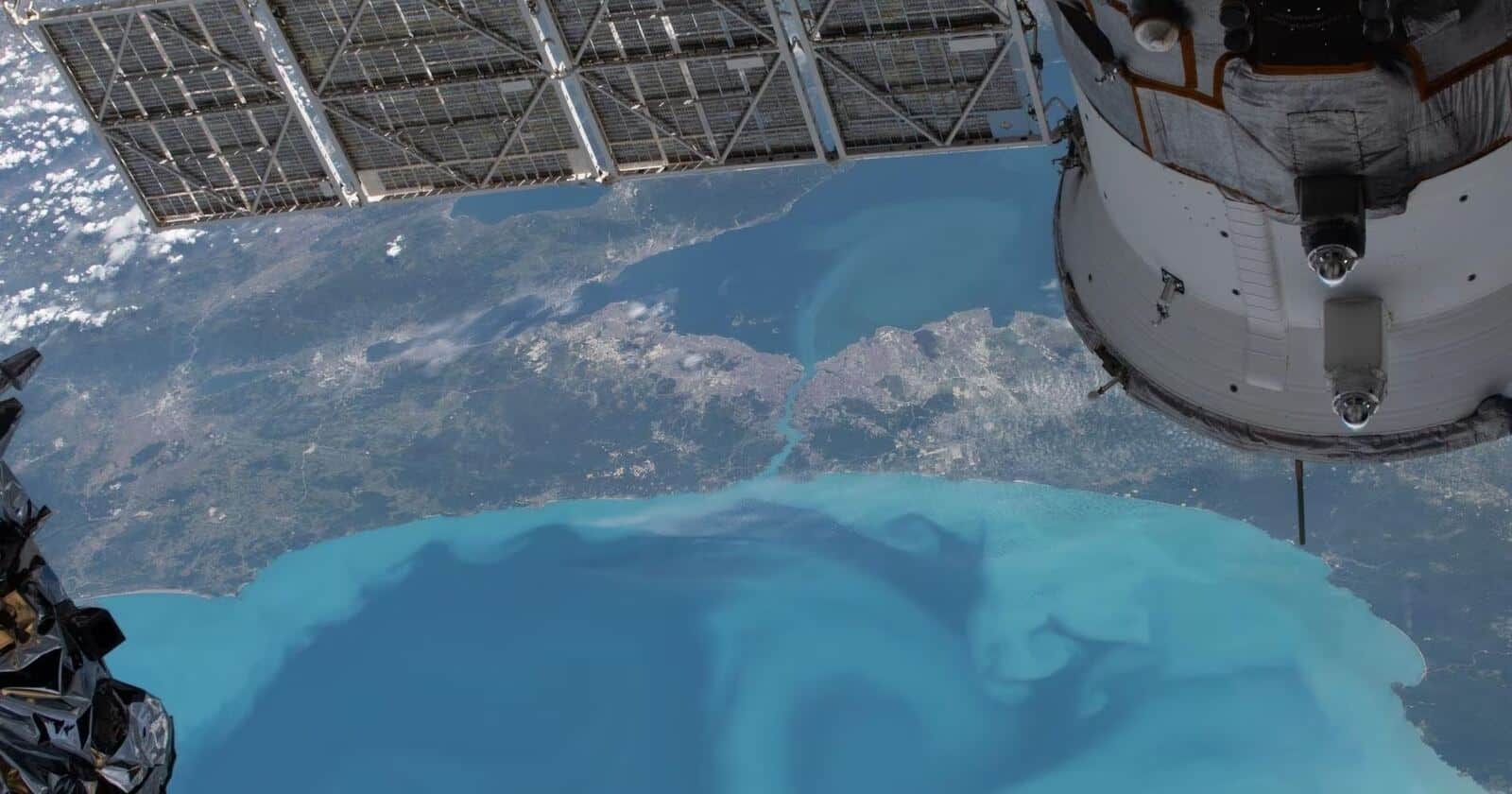
Image: ITzine
NASA has published images of the Black Sea showing large turquoise patches near the coast and around the Bosphorus. From orbit, the scene resembles a seasonal plankton bloom covering a broad area and changing the water’s color.
The images were captured by an astronaut aboard the International Space Station and by PACE, NASA’s satellite launched to study the ocean, the atmosphere, and how they affect one another. The imagery shows pale swirls and streaks formed by concentrations of microscopic organisms that reproduce especially actively in late spring and early summer.
Why the bloom matters
Some phytoplankton have calcareous shells that reflect light, turning the water bluish-white. These blooms give scientists a way to monitor marine ecosystems without constantly collecting water samples.

Recommended reading
Starlink Mini 2 reportedly adds a built-in battery
The Black Sea is particularly useful for this type of observation because its color and transparency change significantly with the seasons, while a single ground-based monitoring network cannot cover the entire region.
PACE now operates alongside other orbital systems that track ocean color, including Europe’s Copernicus satellites and American spacecraft from earlier NASA programs. The images also highlight phytoplankton’s role in the carbon cycle: the organisms absorb carbon as they grow, and some of that carbon is carried to the seafloor after they die.
Author: Elizaveta Dobrovolskaya has written for itzine.ru since 2021. She covers smartphones, gadgets, hardware, artificial intelligence, space, technology markets, and electric-vehicle culture.

Frontier Editor
Dan is our resident futurist, covering electric mobility, space exploration, and the smart home. He's interested in atoms just as much as bits. Whether it's a new battery chemistry, a reusable rocket, or a protocol that finally makes IoT devices talk to each other, Dan breaks down the engineering that pushes humanity forward.
via ITzine