• 3 min read
Webb spots methane on the gas giant TOI-199b
The James Webb Space Telescope has found methane in the atmosphere of TOI-199b, a gas giant about 335 light-years from Earth. The detection gives astronomers a cleaner test of how moderate giant planets form, because TOI
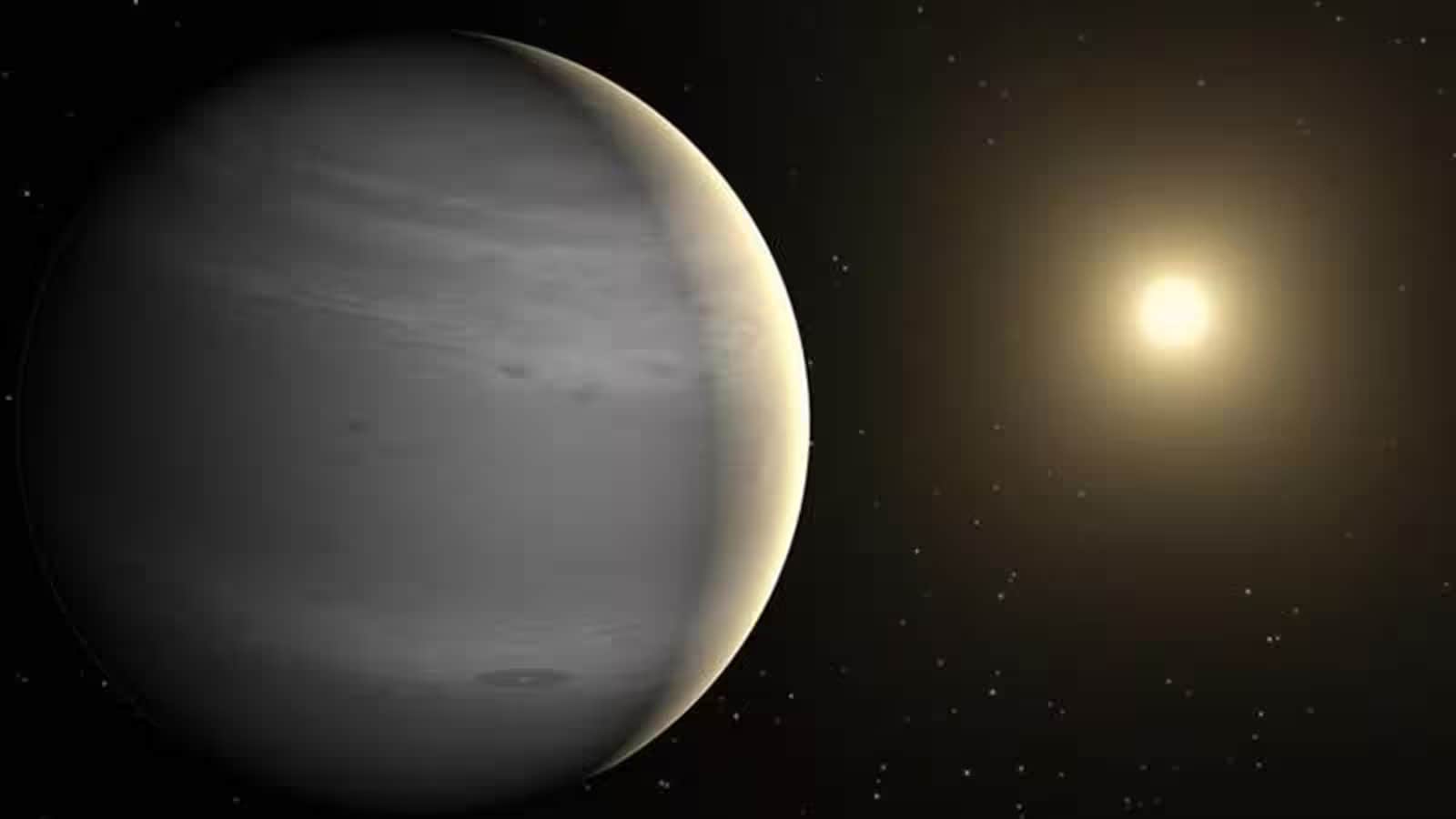
Image: ixbt.com
The James Webb Space Telescope has found methane in the atmosphere of TOI-199b, a gas giant about 335 light-years from Earth. The detection gives astronomers a cleaner test of how moderate giant planets form, because TOI-199b is neither a scorched hot Jupiter nor a frozen outsider: it sits in the awkward middle where chemistry gets interesting and the models finally have to earn their keep.
TOI-199b weighs about 0.17 Jupiter masses and measures roughly 0.81 Jupiter radii. It orbits a G-type star every 104.9 days, a period that sits between Mercury’s 88 days and Venus’s 225 days in Solar System terms, and its estimated temperature is about 79 C. That makes it warm enough to stay gaseous, but far less extreme than the close-in giants that dominate exoplanet headlines.
Methane detection on TOI-199b
The detection is being described as the first confirmed methane finding in the atmosphere of a moderate gas giant. That is a useful milestone because methane has been expected in planets with this kind of temperature and distance from their star, but expectation is not the same thing as evidence. Webb is doing what older telescopes could not: turning a prediction into an observation.
Researchers used transmission spectroscopy, watching starlight filter through the planet’s atmosphere during transit and reading the chemical fingerprints left behind. It is a neat trick, and one that keeps paying off because different molecules absorb light at different wavelengths, which makes even a distant world behave a little like a lab sample.
What Webb has and has not found
So far, methane is the only molecule singled out with confidence. Scientists are also considering carbon dioxide and ammonia, but those detections are not yet confirmed, which is science-speak for “don’t print the bingo card too early.” Further observations should tighten the abundances and make the atmosphere less of a sketch and more of a portrait.
Recommended reading
Zinc flow battery runs for 5,128 hours
That matters beyond one planet. Methane has already turned up in other exoplanet atmospheres, including WASP-80b, a warm Jupiter at about 550 C, and K2-18b, a sub-Neptune with temperatures from -7 to 43 C. The expanding sample is starting to separate unusual one-offs from repeatable patterns, which is how planetary science stops guessing and starts classifying.
A useful test for planet-formation models
For theorists, TOI-199b is valuable because it sits in a relatively tidy part of parameter space: not too hot, not too light, not too close. If the methane-rich atmosphere holds up under more scrutiny, it will strengthen models of moderate giant planets and help explain how gas giants evolve under less punishing stellar heat.
The broader payoff is a better framework for comparing atmospheres across different planet types, including worlds that may not look much like TOI-199b at all. The next question is whether Webb finds this chemistry to be common among moderate gas giants, or whether TOI-199b turns out to be the oddball that forces the rulebook to be rewritten.

Frontier Editor
Dan is our resident futurist, covering electric mobility, space exploration, and the smart home. He's interested in atoms just as much as bits. Whether it's a new battery chemistry, a reusable rocket, or a protocol that finally makes IoT devices talk to each other, Dan breaks down the engineering that pushes humanity forward.
via ixbt.com