• 2 min read
Brains solve unfamiliar games with limited search
A study of more than 1,000 people found that humans solve unfamiliar games with limited mental search, offering a path to more efficient AI.
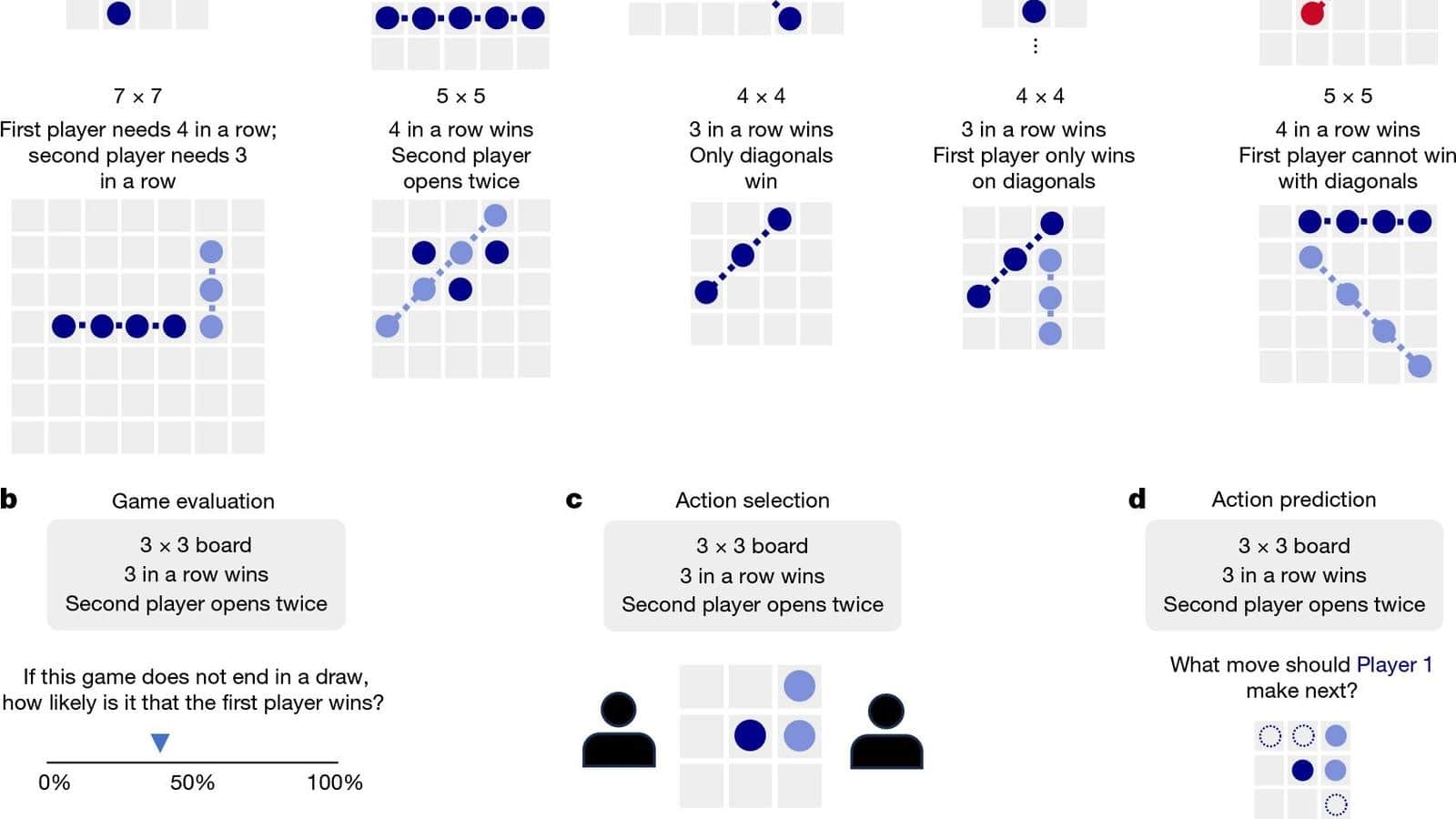
Image: iXBT
People confronting unfamiliar rules do not calculate every possible outcome. Instead, they rapidly simulate a limited number of likely moves—a finding that could help build more efficient artificial-intelligence systems.
A study published in Nature examined how people make decisions in situations they had never encountered before. Researchers created 121 new strategic games and tracked how participants assessed the rules, made opening moves, and predicted opponents' actions without prior experience.
The digital games used a grid-based format resembling tic-tac-toe, but varied in board size, rules, and winning conditions. In some versions, creating a line meant victory; in others, it meant defeat. More than 1,000 participants took part across several groups.
The first group inspected an empty board and read the rules before rating how fair and interesting each game appeared, without making a move. The second group played the unfamiliar games, while the third watched newcomers and predicted their next actions.

Recommended reading
Light-programmable liquid crystal switch stores its threshold
The Intuitive Gamer model
To model human reasoning, the researchers built a computer system called Intuitive Gamer. It tested several possible moves but evaluated only their immediate consequences—for example, whether a move advanced the player toward victory or blocked an opponent.
The model’s decisions resembled those made by the participants. According to the study, people facing an unknown situation do not perform an exhaustive search. They use a small number of rapid mental simulations to select an action that is good enough.
The researchers describe this as a systematic and adaptive decision-making strategy. Human reasoning is neither random nor based on checking every possibility, an approach that would require excessive time and computing resources.
The findings suggest that artificial-intelligence models using simplified prediction strategies could make sensible decisions in new situations while consuming far fewer computational resources than systems designed to analyze every possible outcome.

Frontier Editor
Dan is our resident futurist, covering electric mobility, space exploration, and the smart home. He's interested in atoms just as much as bits. Whether it's a new battery chemistry, a reusable rocket, or a protocol that finally makes IoT devices talk to each other, Dan breaks down the engineering that pushes humanity forward.
via iXBT