• 3 min read
Tesla’s paid Robotaxi miles fell 36% in Q2
Tesla’s paid Robotaxi miles fell 36% in Q2 despite expansion, while Elon Musk said Cybercab data is slowing deployment.
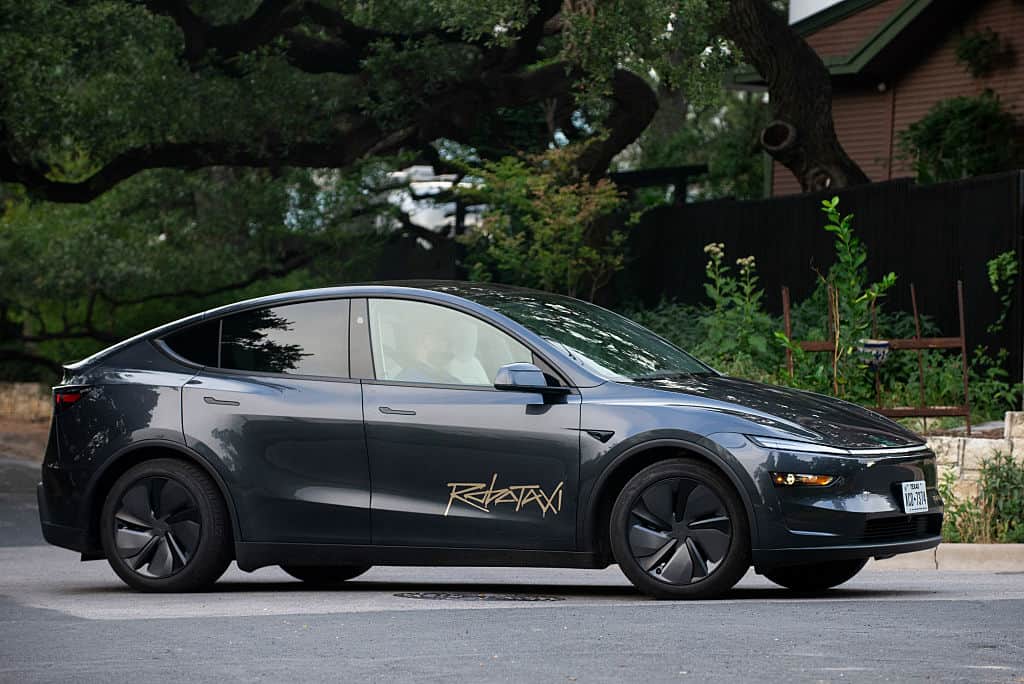
Image: TechCrunch
Tesla’s Robotaxi fleet drove about 700,000 miles with paying passengers in the second quarter, down from roughly 1.1 million miles in the first quarter. The 36% decline comes even as the company expanded the service to six cities across Texas and Florida.
The figures appeared in a cumulative chart Tesla released Wednesday. While the chart suggests steady growth in paid rides from August 2025 through June 2026, breaking the totals down by quarter reveals the drop. Tesla may also be including paid miles from the San Francisco Bay Area, where its branded Robotaxis operate with safety drivers and without the permits required for autonomous operation.
The results landed alongside weaker-than-expected profits in Tesla’s core businesses. Its stock fell more than 13% in early trading Thursday.
Recommended reading
Phone charging barely affects your car’s fuel economy
Tesla says Cybercab data is the bottleneck
On Tesla’s second-quarter earnings call, CEO Elon Musk said the company must collect driving data specific to the Cybercab, its gold-colored, purpose-built two-seat sedan, before deploying large numbers of them.
“Unlike, say, Model 3, Model Y, and our other vehicles where we’ve got a lot of vehicles on the road, millions of vehicles on the road, we don’t have that for Cybercab.”
Tesla is gathering that data with Cybercabs retrofitted with steering wheels, acceleration pedals, and brake pedals. Musk said the number of Cybercabs in cities will increase “dramatically” once the company is confident in the data.
That explanation marks a shift from Tesla’s long-running claim that its nearly 10 million customer vehicles have been collecting data to train future Robotaxis, as well as the company’s Full Self-Driving driver-assistance software.
Safety claims face crash disclosures
Musk and Tesla Vice President of AI Ashok Elluswamy framed the cautious rollout as a safety decision. Musk said a single injury could trigger worldwide headlines and an immediate regulatory response, even though the United States records 30,000 to 40,000 automotive deaths per year.
Elluswamy said Tesla’s Robotaxis had recorded “zero notable incidents” over more than 380,000 miles without a safety operator. He did not define “notable incidents,” but said reported events involved other actors hitting Tesla vehicles while they were stationary.
Tesla has reported 22 crashes to the National Highway Safety Administration since beginning Robotaxi trials a year ago. Most involved other vehicles, but three were caused by teleoperators moving Robotaxis remotely. Other incidents included low-speed impacts with curbs, utility poles, and the bed of a tow truck.
The company has also shifted its explanation for the slow rollout. Tesla previously emphasized regulation as the main obstacle to full-scale Robotaxi deployment; executives now say proving safety is the critical remaining hurdle.
Elluswamy nevertheless defended Tesla’s camera-only autonomy system, contrasting it with Waymo’s use of radar, lidar, and high-definition maps. Musk and Elluswamy said unsupervised miles have grown about 10% each week since Tesla introduced them at the end of last year. Musk promised the service would continue scaling “very, very rapidly.”

Frontier Editor
Dan is our resident futurist, covering electric mobility, space exploration, and the smart home. He's interested in atoms just as much as bits. Whether it's a new battery chemistry, a reusable rocket, or a protocol that finally makes IoT devices talk to each other, Dan breaks down the engineering that pushes humanity forward.
via TechCrunch