• 2 min read
Phone charging barely affects your car’s fuel economy
Charging a phone in your car has a negligible effect on fuel economy, but an engine-off charge can put some strain on an old battery.
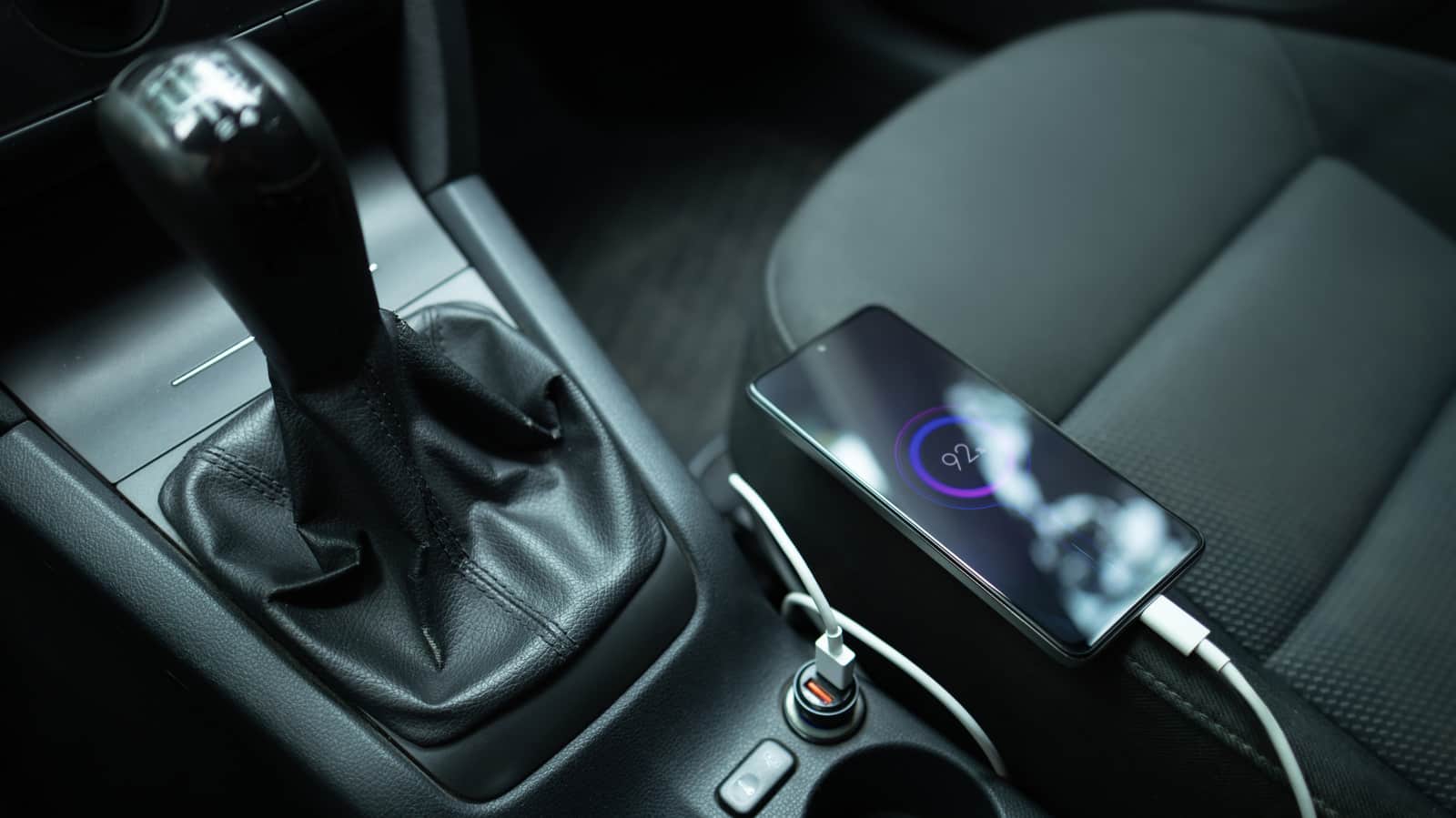
Image: Engadget
The short answer is no—not really. Charging a phone in a car does technically consume fuel, but the effect on mileage is so small that it should not affect an ordinary journey.
Skrypnykov Dmytro/Shutterstock
For motorists who regularly leave home with a heavily drained phone, a car charger can seem like a hidden cost—especially as gas prices rise. But the energy involved is tiny compared with other systems in the vehicle. A car’s air conditioning, for example, has a much larger effect on fuel economy.
Why phone charging uses fuel
Tom Merton/Getty Images
Like most electrical equipment in a car, a phone charger draws power from the vehicle’s alternator. The alternator gets that power from the engine, which consumes fuel to keep running.
Recommended reading
Tesla’s paid Robotaxi miles fell 36% in Q2
A charger typically uses only 5–15 watts. By comparison, a car’s air conditioning system draws thousands of watts and has a considerably greater impact on fuel consumption. Even the vehicle’s indicators use more electricity than a phone charger.
How much fuel does a phone charger use?
Nataliya Dmytrenko/Shutterstock
According to figures reported by Bloomberg, via How-To Geek, an average car charger reduces fuel economy by about 0.03 miles per gallon. If a vehicle normally achieves 20 MPG, leaving a phone charger active would reduce that figure to approximately 19.97 MPG.
That is a negligible difference and is unlikely to have any practical effect on a trip. For context, air conditioning can increase fuel consumption by up to 10%, according to Kwik Fit. Drivers concerned about efficiency—particularly hybrid owners—can also use five easy ways to get more range out of an EV.
Can charging a phone drain the car battery?
Stefan Tomic/Getty Images
With the engine running, the alternator supplies power to the car’s 12V battery and the phone. The extra electrical load is minimal and will not drain the vehicle’s battery flat.
The situation changes when the engine is off. In that case, the phone draws power directly from the 12V battery. Charging for several hours is unlikely to flatten it, but it is not impossible—especially if the car has not been driven for an extended period or the battery is old.
For everyday driving, there is no meaningful reason to worry about a phone charger’s effect on fuel economy or battery life. Just avoid leaving a phone plugged in for endless hours with the engine switched off.

Frontier Editor
Dan is our resident futurist, covering electric mobility, space exploration, and the smart home. He's interested in atoms just as much as bits. Whether it's a new battery chemistry, a reusable rocket, or a protocol that finally makes IoT devices talk to each other, Dan breaks down the engineering that pushes humanity forward.
via Engadget