• 2 min read
Tesla equips Cybercab prototype with Starlink V5
Tesla’s Cybercab prototype includes SpaceX’s Starlink V5 antenna alongside GPS and 5G, raising questions about satellite connectivity in robotaxis.
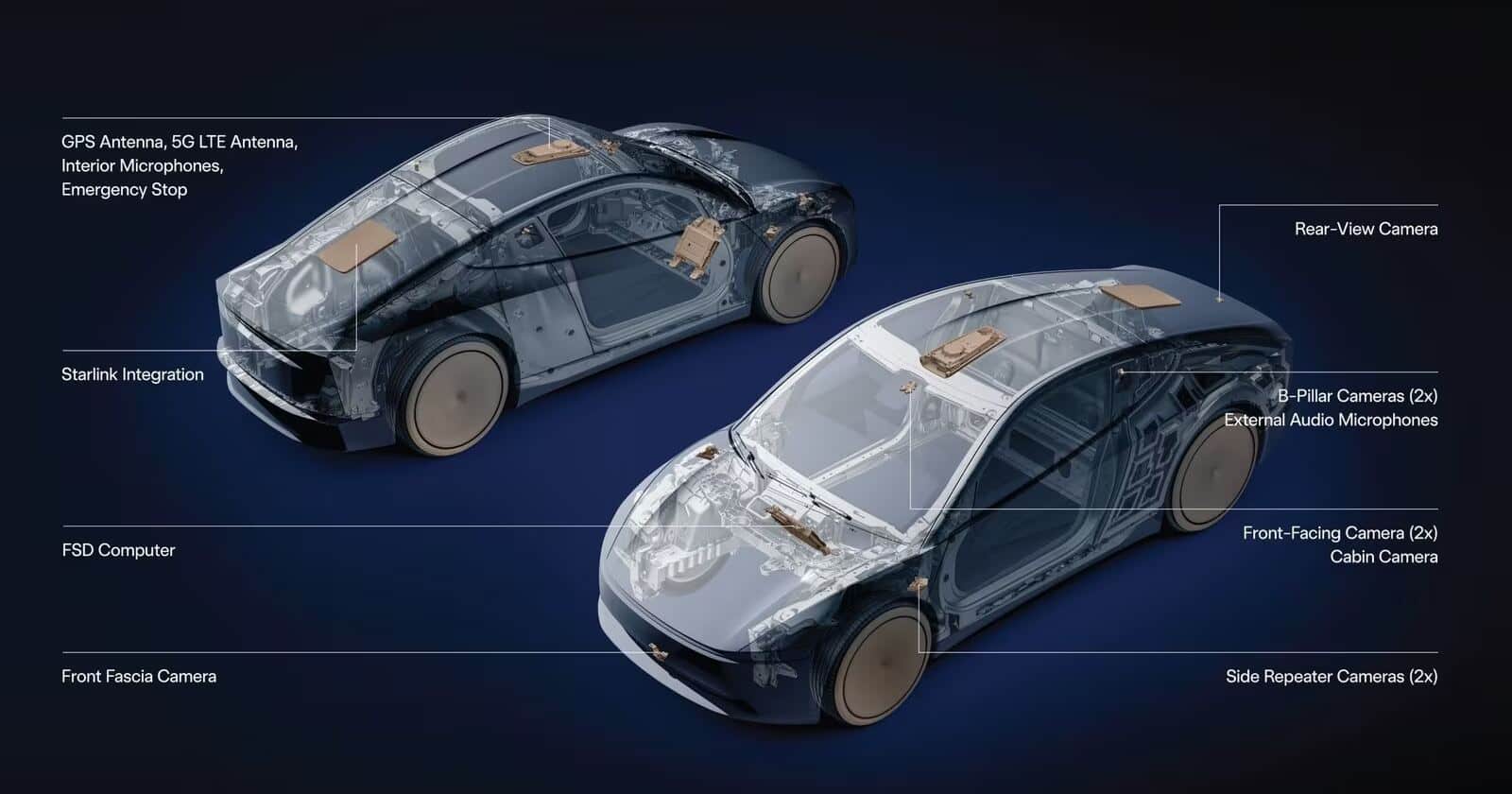
Image: ITzine
Tesla has shown a Cybercab prototype with an integrated Starlink V5 antenna from SpaceX. A cabin diagram places GPS, 5G LTE, and satellite connectivity side by side, suggesting the vehicle could have multiple internet options if one link fails.
Tesla presents satellite connectivity as part of the future of autonomous vehicles and specifies that the antenna uses Starlink V5, which SpaceX introduced last week. The new version is smaller and more energy-efficient, but its stated performance is lower than the previous generation: around 375 Mbps, compared with more than 400 Mbps for V4.
There is an obvious complication. Starlink’s website describes V5 as a home-internet product, while the company promotes Starlink Mini for travel. For a city vehicle that already has 5G, the choice looks unusual. A robotaxi is a different case: satellite connectivity could serve as a backup for navigation, remote support, and communication between vehicles.
Why Cybercab needs satellite internet
Tesla appears to have both operational and corporate reasons for the integration. The company has long built projects around shared technologies, and Elon Musk has made no secret of the fact that SpaceX and Tesla can operate within the same ecosystem. In that context, Starlink in Cybercab looks less like a fix for poor coverage and more like a way to avoid relying on a single communications channel.
Recommended reading
Stellantis picks Mobileye for hands-free driving
Whether a city car actually needs satellite internet remains unresolved. In the United States, average urban 5G speeds are estimated at about 175 Mbps—below Starlink V5's advertised rate, but generally sufficient for ordinary short trips. The more significant question is how Tesla would use Starlink in a robotaxi when cellular connectivity is already planned from the start.
Cybercab itself still exists more as a promise than as a deployed fleet. According to Robotaxi Tracker, only 39 driverless vehicles are currently on the roads, or 770 vehicles when test and supervised examples are included. Tesla has not said when new Cybercabs will appear, leaving the Starlink hardware’s status—production feature or showcase—unresolved until the next launch stage.

Frontier Editor
Dan is our resident futurist, covering electric mobility, space exploration, and the smart home. He's interested in atoms just as much as bits. Whether it's a new battery chemistry, a reusable rocket, or a protocol that finally makes IoT devices talk to each other, Dan breaks down the engineering that pushes humanity forward.
via ITzine