• 4 min read
China’s EV rise is built on brutal competition
China leads EV sales, exports and battery production. Competition, vertical integration and falling domestic demand are driving its global push.
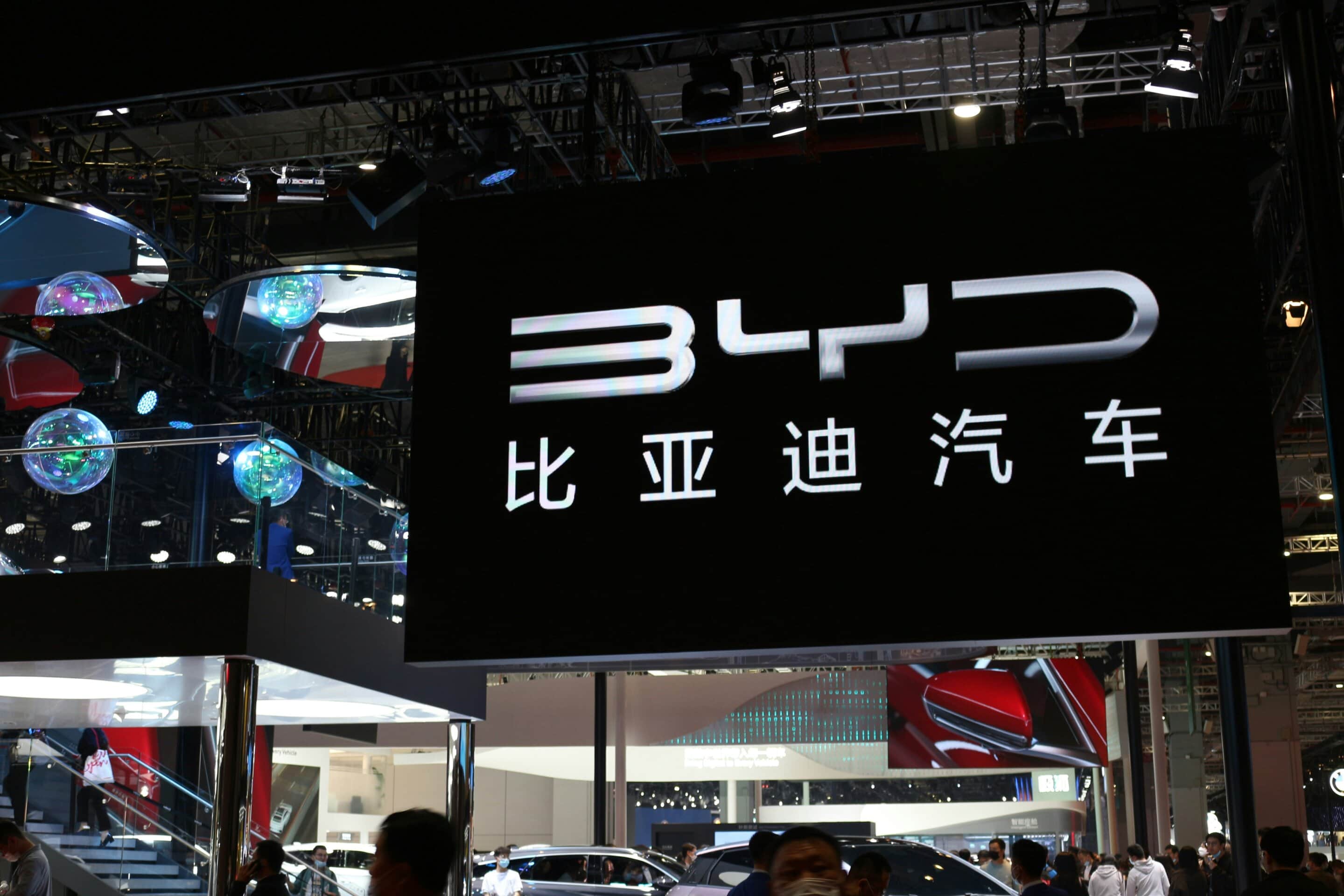
Image: TechXplore
China now leads the world in electric-vehicle sales and exports, covering both battery-powered cars and plug-in hybrids. Chinese companies also produce most of the rechargeable batteries used to power them.
Government support helped build that lead. Between 2009 and 2022, Beijing provided more than A$41 billion in subsidies and tax benefits for electric cars, taxis and buses. But public funding alone does not explain the industry’s rise. Over two decades, China built a manufacturing system centered on domestic competition, rapid production and company-level innovation.
How China built its EV lead
China’s EV push serves several strategic goals: reducing dependence on imported oil from countries including Iran, Russia and Venezuela, and challenging established carmaking powers such as Germany, Japan and the United States. In September 2020, those goals became part of a national decarbonization strategy.
Recommended reading
Stellantis picks Mobileye for hands-free driving
More than half of the new cars sold in China in 2025 were EVs. Chinese-made vehicles are also gaining ground overseas:
- EVs represented more than 30% of new-car sales in the United Kingdom in 2025.
- In Norway, they accounted for more than 95% of total car sales.
- In the United States, EVs made up just 10%, despite tariffs that restrict Chinese EV imports.
Australia has been slower to adopt Chinese-made vehicles, but the market reached a tipping point in June 2026, when EVs approached 30% of new-car sales. China also overtook Japan in 2026 as Australia’s leading source of new vehicles, ending Japan’s nearly three-decade run at the top.
Affordable models, rising fuel prices, a growing charging network and Australia’s New Vehicle Efficiency Standard all contributed to the shift. Tesla remains Australia’s largest pure battery-EV seller, with 28% of the market. BYD follows with 24%, while brands including Geely and XPeng have moved from the fringes into the mainstream.
Competition forced weaker companies out
China’s EV companies did not succeed overnight. At the height of the boom, more than 500 companies entered the sector, encouraged by cheap capital, local-government backing and startup enthusiasm. As subsidies were reduced and purchase incentives became less generous, roughly 90% of those early entrants were squeezed out.
The state created the initial market, but competition then punished companies that could not adapt. Several survivors combined expertise from different industries:
- Geely began as a refrigerator-parts maker, moved into motorcycles and scooters in 1994, and entered the automotive sector in 1997. It used Volvo’s international engineering expertise while developing its EV business and premium brand Zeekr.
- Xiaomi, founded in 2010 as a software startup, launched its first EV in 2024 after expanding from smartphone operating systems into smart-home appliances.
- BYD started as a battery manufacturer and became China’s largest rechargeable-battery producer by the early 2000s. After acquiring a struggling state-owned carmaker in 2003, it moved into EVs.
BYD now controls much of its supply chain, from power electronics and vehicle platforms to shipping. That vertical integration allows it to assemble one vehicle every 52 seconds. The company delivered a record 4.5 million cars globally in 2025.
Regional manufacturing hubs also speed the path from design to production. The Pearl River Delta, for example, combines Shenzhen’s electronics expertise with Guangzhou’s long automotive history.
Overseas markets are becoming essential
China’s EV sector is now under pressure from a saturated domestic market and shrinking profit margins. Chinese consumers spent nearly 13% less on cars in the first half of 2026 than during the same period a year earlier—the sharpest decline among the country’s major consumer-goods categories.
That makes overseas sales more than an expansion strategy. They are a pressure valve for excess production. Success abroad, however, will depend on more than low prices. Tariffs, data security, battery standards, charging infrastructure, resale values and consumer trust will shape whether Chinese EV brands become globally established.
For Australia, the shift creates a strategic tension. With no domestic car-manufacturing industry, it has less economic reason to impose tariffs matching those of the European Union or United States. Yet dependence on Chinese EVs could place part of its clean-energy transition at Beijing’s discretion.
The source argues that countries should strengthen standards for data security, vehicle safety and battery recycling, while investing in public charging networks. Without that preparation, Australia could import thousands of Chinese-made EVs without the infrastructure or safeguards needed to use them effectively.
Sadie Harley has a background in life sciences, ecology and microbiology, with experience covering pharmaceutical, oil, gas and renewable-industry news.
Andrew Zinin holds a master’s degree in physics and has research experience and a long-standing interest in science news.
This article was republished from The Conversation under a Creative Commons license.

Frontier Editor
Dan is our resident futurist, covering electric mobility, space exploration, and the smart home. He's interested in atoms just as much as bits. Whether it's a new battery chemistry, a reusable rocket, or a protocol that finally makes IoT devices talk to each other, Dan breaks down the engineering that pushes humanity forward.
via TechXplore