• 2 min read
NASA opens aerodynamic complex for Mars missions
NASA opened its first major aerodynamic facility in over 40 years, combining two older tunnels to test aircraft and planetary-entry vehicles.
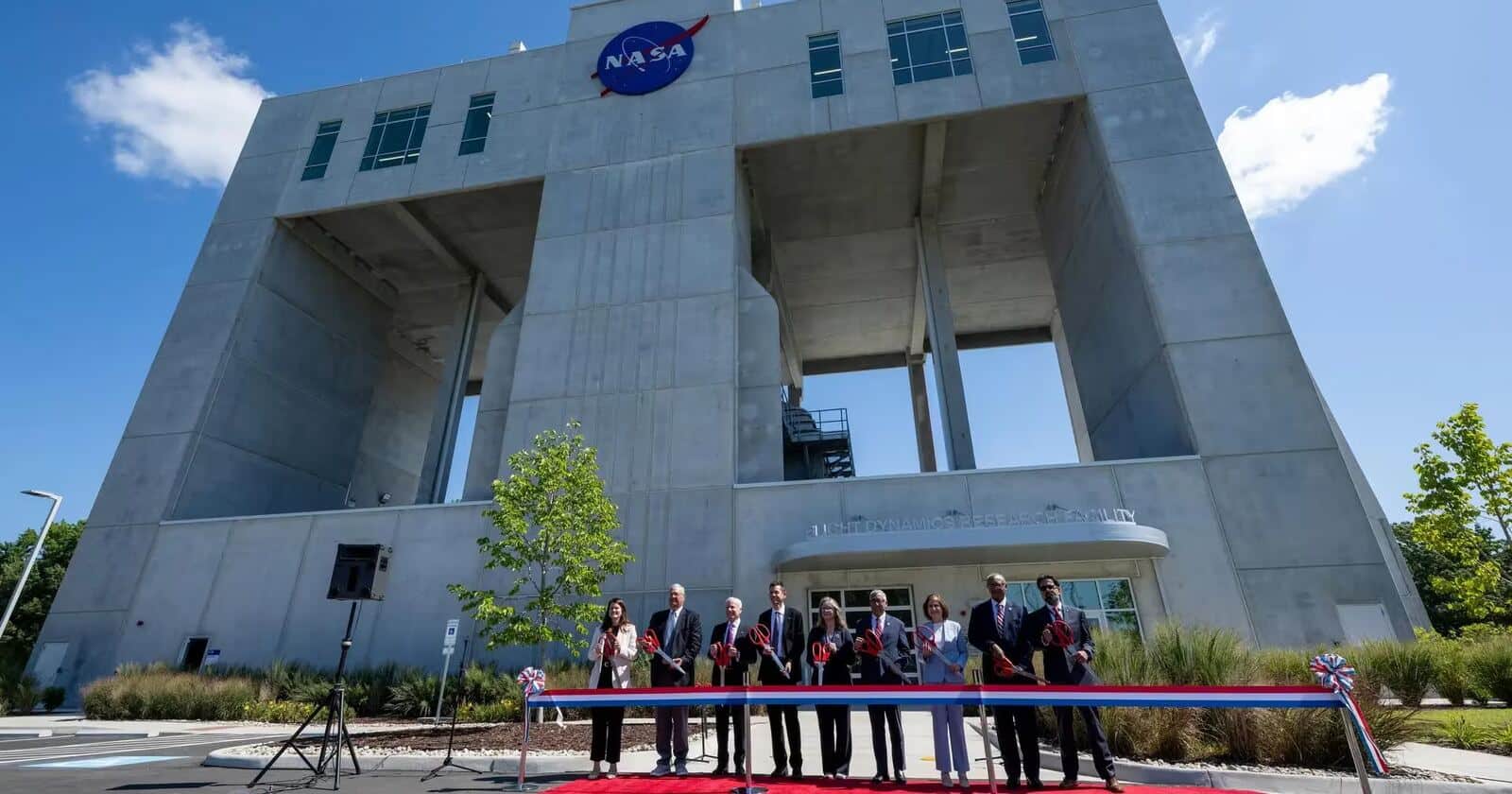
Image: ITzine
NASA has opened a new aerodynamic tunnel at its Langley Research Center in Hampton, Virginia—the agency’s first major aerodynamic test facility in more than 40 years.
The complex will support testing beyond conventional aircraft and drones. NASA will also use it for spacecraft capsules and vehicles designed to enter the atmospheres of other planets, including systems intended for Mars missions.
Specifications and testing capabilities
The facility covers 25,000 square feet and was built as part of a 20-year plan to modernize the Langley campus, with participation from the U.S. General Services Administration. It consolidates and upgrades the capabilities of two older installations: the 20-Foot Vertical Spin Tunnel and the 12-Foot Low-Speed Tunnel.
Instead of operating two separate sites, researchers now have a single, more flexible test environment. Its capabilities include:
- Four 750-horsepower motors
- Airflow speeds of up to 117 miles per hour
- 14-foot carbon-fiber fan blades
- Free-flight testing and tests of suspended models
- Evaluation of atmospheric entry, descent, and landing configurations
The facility is intended to support NASA’s long-term programs, including Artemis and development work on vehicles for Mars and other bodies with atmospheres. For those missions, aerodynamic errors can affect the outcome of an entire flight rather than simply requiring a minor correction.
Recommended reading
Falcon 9 Moon crash could be visible from Earth
A replacement for aging infrastructure
According to Trina Dial, director of NASA’s Langley center, bringing modernized testing capabilities under one roof should accelerate aerospace research. The new system is also designed to operate faster, require less maintenance, and allow researchers to adjust airflow more precisely during testing.
The source places the facility in the context of expanding lunar and interplanetary programs. China, Europe, and private companies are also expanding test infrastructure for spacecraft with demanding aerodynamic requirements. The article says demand for facilities supporting landers and atmospheric probes is likely to grow alongside lunar and Mars missions, but it does not provide a release date for specific tests or missions at the new complex.
Ilya Ignatov is a technical journalist and news writer. He graduated from the Moscow Technical University of Communications and Informatics with a degree in information security and has covered hardware, software, and consumer electronics since 2018.
Frontier Editor
Dan is our resident futurist, covering electric mobility, space exploration, and the smart home. He's interested in atoms just as much as bits. Whether it's a new battery chemistry, a reusable rocket, or a protocol that finally makes IoT devices talk to each other, Dan breaks down the engineering that pushes humanity forward.
via ITzine