• 2 min read
China powers megawatt turbine with pure helium
China has generated electricity with a megawatt-class pure-helium turbine, advancing high-temperature reactor technology while key deployment timelines remain unknown.
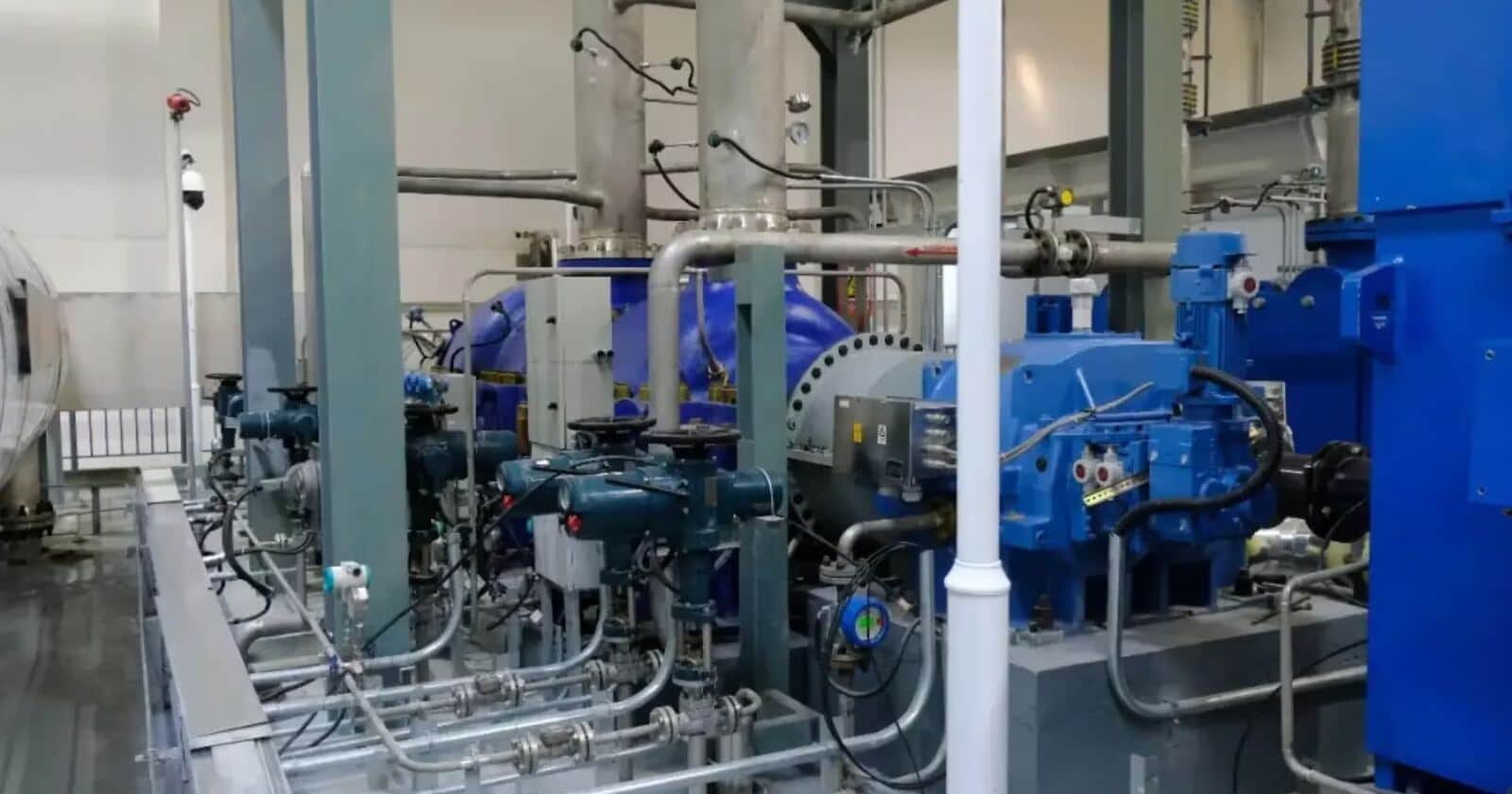
Image: ITzine
China has generated electricity for the first time on a megawatt-class turbine running on pure helium, according to a test conducted by CNNC Huaxing, a unit of the China National Nuclear Corporation. The company says it is the first successful launch in China of a megawatt-class turbine using helium as the working fluid in a closed loop.
Earlier work had focused mainly on testing individual components. This trial moved the technology to electricity generation on an integrated test stand, a step toward next-generation high-temperature gas-cooled reactors.
How the closed helium cycle works
The system circulates helium through a sealed circuit rather than releasing it. The gas is heated, expands, and drives the turbine before returning through the loop. According to the source, the cycle can reduce thermal losses, keep operating parameters more stable, and suit reactor systems that operate at very high temperatures.
Recommended reading
Porous 3D-printed feet cut robot power use
The design also creates demanding engineering problems. Helium can escape through microscopic defects, so pipes, seals, and joints must be manufactured and assembled to extremely tight standards. The turbine itself must be assembled with high precision because it operates at high speed. These challenges have kept similar projects in testing for years.
Helium turbines and China’s reactor program
Helium has long been considered a useful coolant for high-temperature gas-cooled reactors because it is inert, does not corrode materials, and transfers heat effectively. The same principles underpin projects involving small reactors and systems intended to supply industrial heat.
China already has operating experience with the technology. Its HTR-PM demonstration reactor is running in Shandong and is described by the source as one of the world’s first commercial projects of this type. CNNC’s latest test therefore represents a continuation of China’s work linking gas cooling with compact reactor systems and safety objectives, rather than an isolated experiment.
The trial also places China among countries pursuing high-temperature reactor designs that could be built and scaled more easily than large conventional nuclear units. The United States, Germany, and Japan have tested different high-temperature systems for decades, but the source says the field has not yet reached serial production.
A stable helium turbine integrated with a reactor could support both electricity generation and high-temperature industrial applications, including heat for chemical processing, metallurgy, and hydrogen production. The source does not say how many additional test cycles will be required before the system can move from a test stand to an operational energy facility.
Frontier Editor
Dan is our resident futurist, covering electric mobility, space exploration, and the smart home. He's interested in atoms just as much as bits. Whether it's a new battery chemistry, a reusable rocket, or a protocol that finally makes IoT devices talk to each other, Dan breaks down the engineering that pushes humanity forward.
via ITzine