• 2 min read
Cornell chip cuts microwave data eightfold
Cornell researchers demonstrated a microwave chip that cuts transmitted data eightfold while using less than 200 mW.
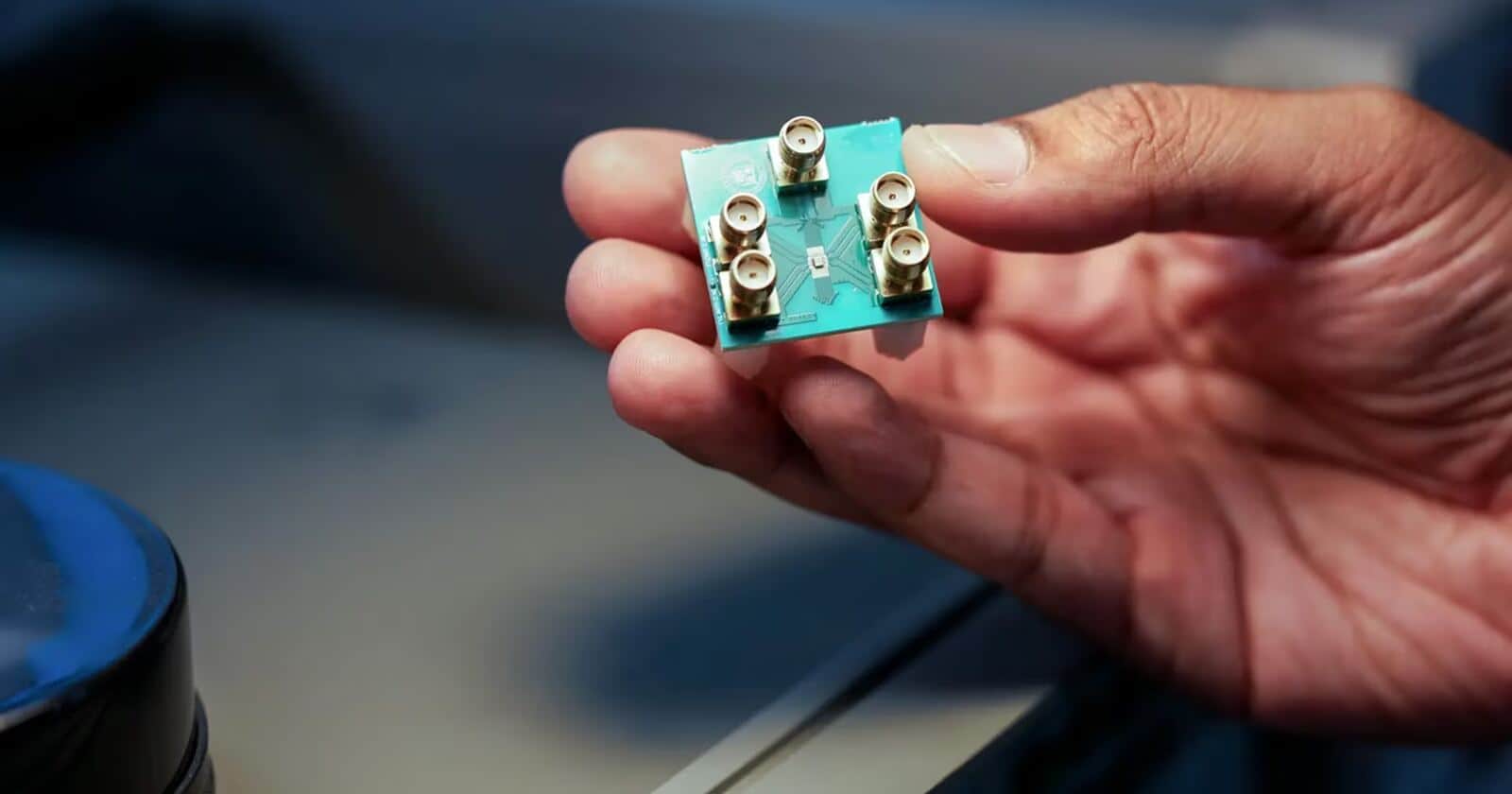
Image: ITzine
Cornell University researchers have demonstrated a microchip that processes radio signals directly in the microwave domain, without first converting them into digital data. The team says it is the world’s first processor of its kind, and is targeting applications where every millisecond and milliwatt matters, including satellites, drones and robots.
How microwave tokens work
The chip uses a technique the researchers call “microwave tokens.” Instead of sending data through a long sequence of digital operations, it encodes information as short pulses that connect separate parts of a signal. The concept resembles the way language models divide text into tokens, although here the tokens represent radio waves rather than words.
Keeping the radio processing in the microwave domain allows the system to reduce both data movement and power consumption. In a test involving an image of a tropical cyclone, the chip cut the amount of data that needed to be transmitted by approximately eight times while consuming less than 200 milliwatts.
That trade-off could be significant for small satellites. An additional watt can force a reduction in payload or require a heavier battery. Drones and other autonomous platforms face a similar constraint, where processing delays can affect how quickly a system responds.
From laboratory chip to commercial product
Space companies have been moving more processing onto spacecraft so they do not have to send raw data back to Earth. Edge-computing chipmakers are pursuing the same basic goal: place computation closer to the signal source and reduce unnecessary traffic. In most existing designs, however, the radio front end and computing hardware remain separate. Cornell’s approach combines the two more directly.
Recommended reading
Seagate’s 50TB HDDs may not reach stores until 2029
The researchers have already filed a patent application and plan to develop the technology into a commercial product through a university program. Compact satellites and unmanned systems are the most likely initial targets because they place the greatest value on conserving energy and communications bandwidth.
The team did not disclose a release date or commercial pricing. The source also provides no independent benchmark beyond the cyclone-image test, so the chip’s performance outside that demonstration remains unspecified.
Computing Editor
Tomas lives in the terminal. He covers chips, laptops, and operating systems with a focus on performance and efficiency. He reads kernel changelogs the way other people read fiction, and he's always on the hunt for the perfect mechanical keyboard switch. If it processes data, Tomas has an opinion on it.
via ITzine