• 2 min read
Chinese tandem solar cell reaches 29.71% efficiency
Chinese researchers achieved 29.71% efficiency in a perovskite-CIGS tandem cell, retaining more than 91% after 2,000 hours.
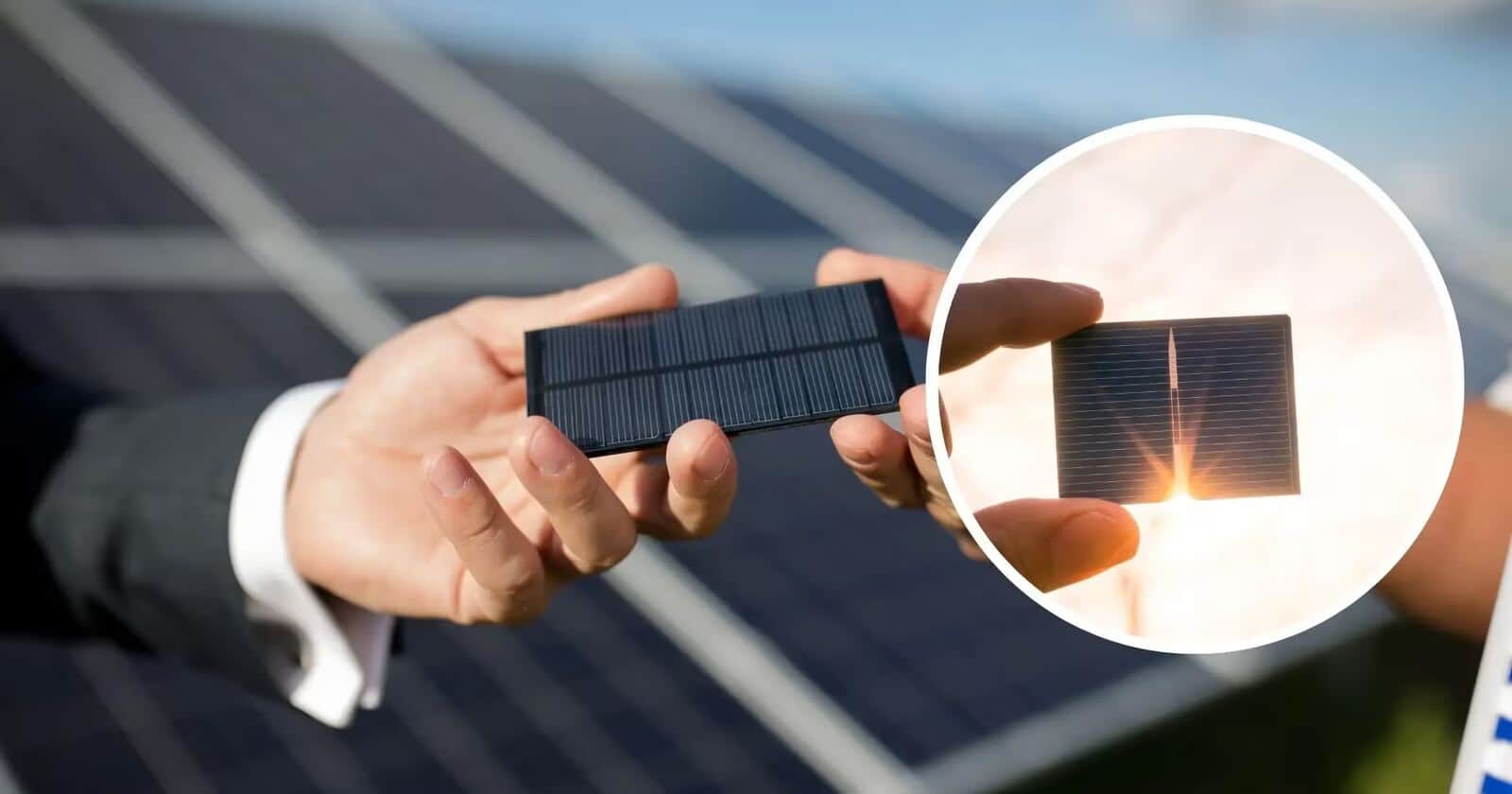
Image: ITzine
Chinese Academy of Sciences researchers have demonstrated a tandem solar cell with 29.71% efficiency that retained more than 91% of its efficiency after 2,000 hours of operation. The combination addresses two persistent challenges for perovskite devices: achieving high output and maintaining it over time.
How the perovskite-CIGS cell works
The two-terminal structure combines a perovskite top cell with a lower photoelectric layer based on CIGS—copper, indium, gallium and selenium. The perovskite layer absorbs the higher-energy portion of sunlight, while the CIGS layer captures light that passes through it.
The researchers modified the perovskite with 2PyS, or bis(2-pyridylmethyl) sulfide. The additive binds to lead ions, reducing defects in the crystal lattice and slowing the migration of charged particles. That migration is one reason perovskite layers can lose performance relatively quickly.
The treatment also produced a more uniform film and more ordered crystal growth. That reduces losses at grain boundaries and limits the number of sites where sunlight-driven degradation can begin. The resulting top cell reached 22.21% efficiency, while the tandem device reached 29.71%.
Efficiency and remaining hurdles
For comparison, commercial silicon panels commonly deliver around 22–24% efficiency, according to the source. Tandem cells therefore remain a major route toward higher power output from the same panel area.
Recommended reading
China powers megawatt turbine with pure helium
The Chinese result is not the only recent advance. UK-based Oxford PV is also developing perovskite-silicon modules and has reported record efficiency above 28%.
However, the demonstrated device is still a laboratory development. Moving from a working sample to a mass-produced panel requires larger-area manufacturing, technology refinement, certification and durability testing in real installations. The researchers did not provide a commercial release date or production plans.
- Tandem-cell efficiency: 29.71%
- Perovskite top-cell efficiency: 22.21%
- Efficiency retained after 2,000 hours: more than 91%
- Bottom cell: CIGS
If the team can reproduce these figures over larger areas and in industrial production, the design could deliver more power per square meter than today’s silicon modules.
Frontier Editor
Dan is our resident futurist, covering electric mobility, space exploration, and the smart home. He's interested in atoms just as much as bits. Whether it's a new battery chemistry, a reusable rocket, or a protocol that finally makes IoT devices talk to each other, Dan breaks down the engineering that pushes humanity forward.
via ITzine