• 2 min read
Hydrogen Power Hub: a floating port battery for cruise ships
A British maritime consortium says it has finished testing a floating hydrogen energy hub designed to feed cruise ships and other vessels with clean power while they sit in port. The Hydrogen Power Hub aims to skip shore
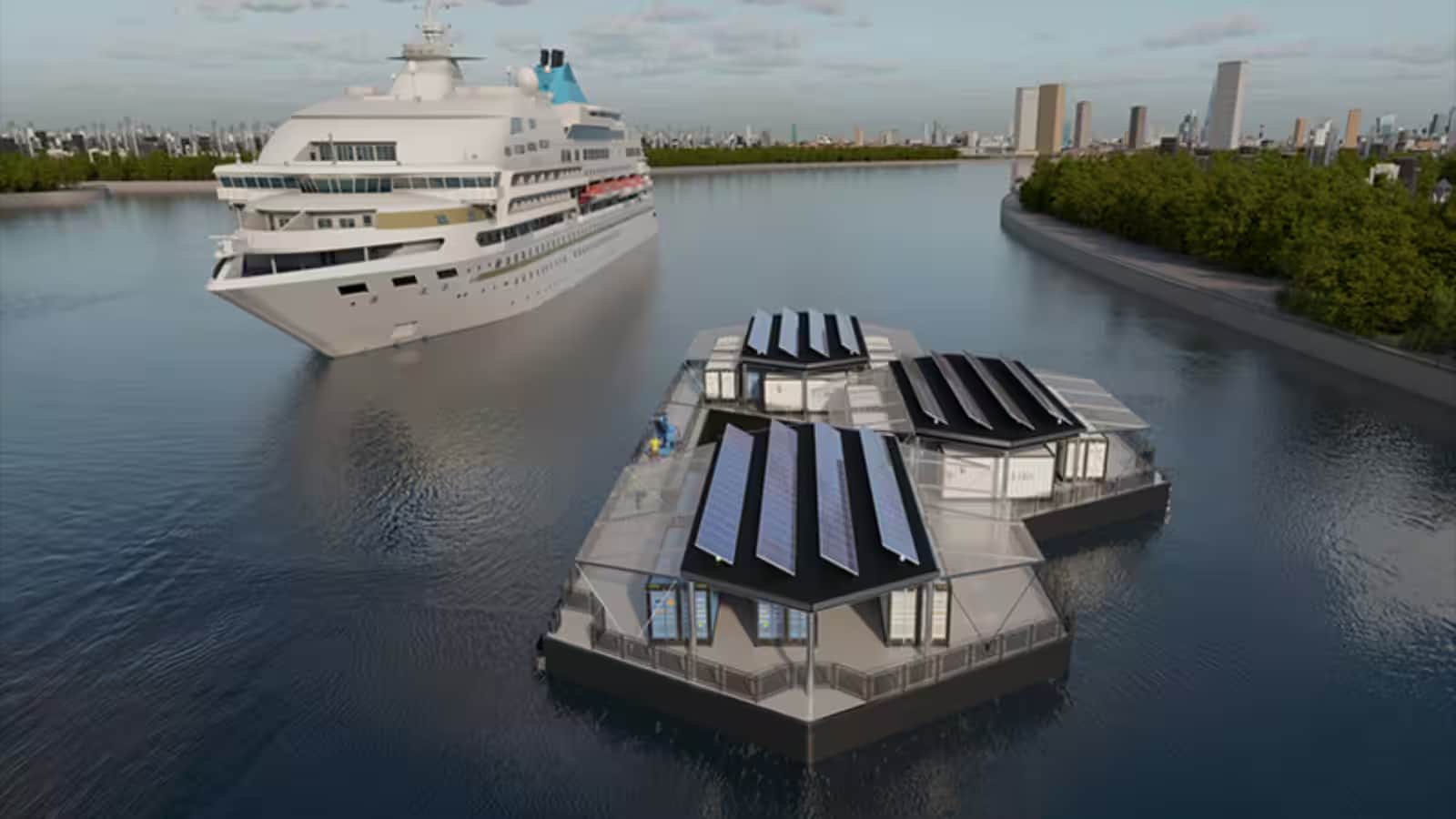
Image: ixbt.com
A British maritime consortium says it has finished testing a floating hydrogen energy hub designed to feed cruise ships and other vessels with clean power while they sit in port. The Hydrogen Power Hub aims to skip shore cables, avoid slow grid upgrades, and park a self-contained power plant on the water instead.
The system was trialed as part of a six-month demo program for marine environmental technologies backed by the UK regulator focused on cutting shipping emissions. The pitch matters because the biggest bottleneck for shore power is often not the technology on the ship, but the lack of spare capacity on land and the drawn-out approvals for new substations.
How the floating hydrogen hub is built
The platform uses three hexagonal floating modules that lock together into a single complex of about 1,200 square meters. Inside are about 45 MWh of battery storage, fuel cells rated at around 1.3 MW, hydrogen generators, and 146 kW of solar panels. Put together, that creates an autonomous electrical network that can send power directly to docked ships.
The design is hybrid by intent. Fuel cells keep topping up the batteries so the system can react quickly when a ship connects, while solar generation trims hydrogen use. Batteries handle the instant demand spike, hydrogen carries the heavier lifting, and solar helps stretch the fuel supply a little further.
Hydrogen Power Hub output and hydrogen use
In peak operation, the hub can deliver up to 5 MW of power and about 91 MWh of energy each week. The developers say it uses roughly 7.5-8 tons of hydrogen weekly, stored in seven modular tanks built into the platform, and needs refueling about twice a week to keep running without interruption.
Recommended reading
Graphite One advances Ohio battery-materials plant
- Storage: about 45 MWh
- Fuel cells: about 1.3 MW
- Solar: 146 kW
- Peak output: up to 5 MW
- Weekly energy: about 91 MWh
- Hydrogen use: 7.5-8 tons a week
Why ports may like this model
Floating infrastructure is less glamorous than a waterfront ribbon-cutting, but it solves a real headache. Ports that cannot easily expand their grids could use a system like this faster than building new land-based electrical infrastructure, and that could make it attractive for cruise terminals under pressure to cut emissions without waiting years for utility work.
The bigger question is whether this kind of offshore power station can move from successful trials to repeatable deployments. If it does, ports that are short on grid capacity may finally have an alternative to the usual mix of expensive upgrades, awkward scheduling, and a lot of patience.

Frontier Editor
Dan is our resident futurist, covering electric mobility, space exploration, and the smart home. He's interested in atoms just as much as bits. Whether it's a new battery chemistry, a reusable rocket, or a protocol that finally makes IoT devices talk to each other, Dan breaks down the engineering that pushes humanity forward.
via ixbt.com