• 5 min read
Comma 4 beats BlueCruise for this Ford owner
After nearly 1,000 miles, Comma 4 replaced BlueCruise in a Ford F-150 Lightning—despite steering limits and hands-on driver supervision.
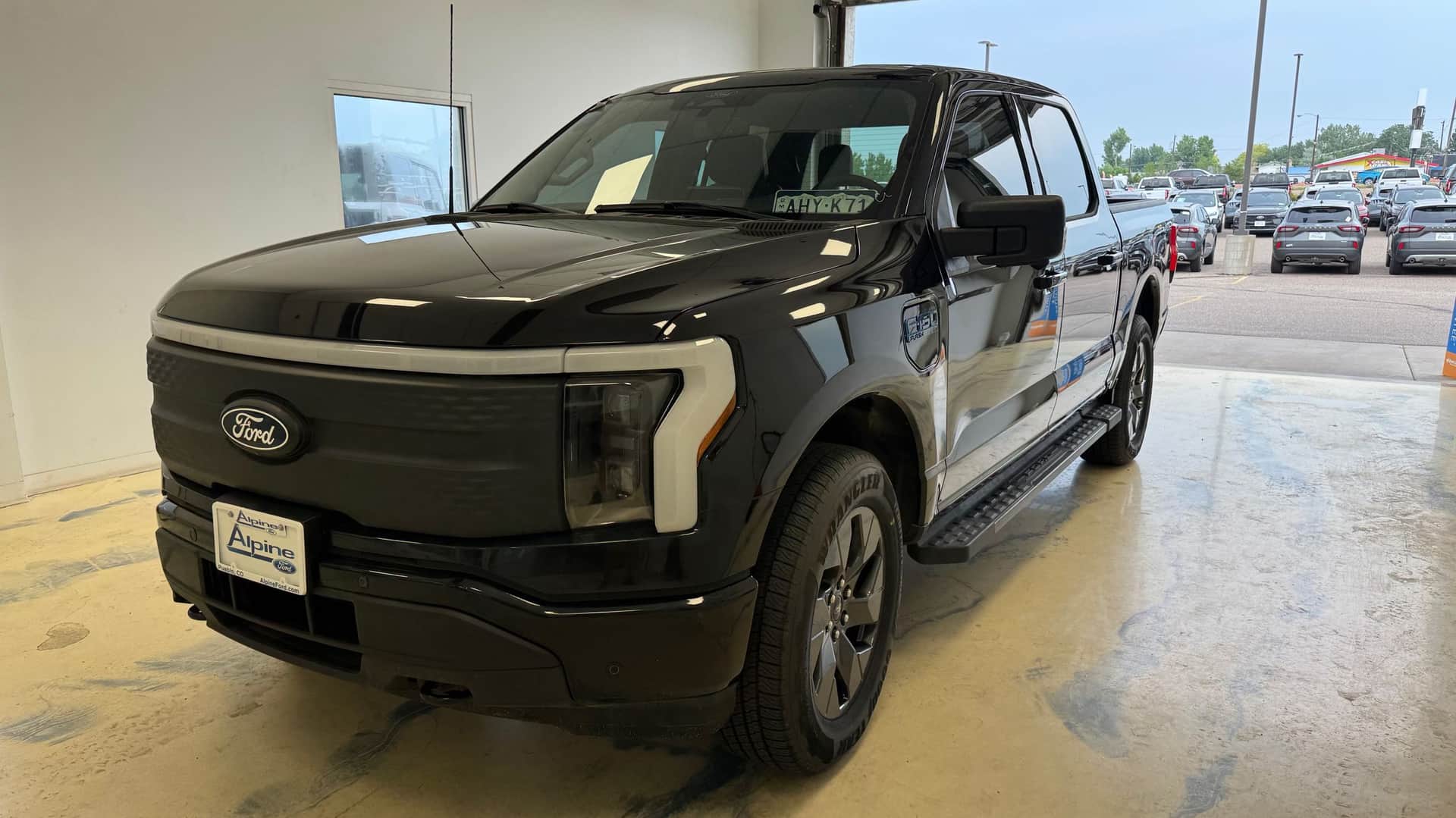
Image: TechRadar
Jason Cipriani spent nearly 1,000 miles testing Comma 4 in his 2025 Ford F-150 Lightning Flash. His conclusion: the $1,000 open-source-oriented driver-assistance device has replaced Ford’s BlueCruise for most of his driving, despite having clear limitations.
Cipriani previously owned a Tesla Model 3, bought in June 2019, and added Full Self-Driving (FSD) for $6,000 after Elon Musk announced that Tesla would raise the price by $1,000 every few months. He says he used FSD roughly 95% of the time he was behind the wheel and eventually felt safe using it, although he still had to supervise the system.
That changed when he traded the Tesla for the Ford pickup to tow a trailer for a pizza food truck. The Lightning included three free months of BlueCruise, Ford’s hands-free assistance system for highways. On standard roads, the truck offered only basic lane keeping, accompanied by Ford’s frequent “Keep Your Hands on The Wheel” warning.
Why Comma 4 replaced BlueCruise
After the BlueCruise trial ended, Cipriani initially declined Ford’s subscription, which costs $50 per month or $500 per year. He was not driving much on highways, so the highway-only feature did not justify the price.
Recommended reading
Uber’s autonomous-vehicle empire spans 30-plus partners
A shoulder surgery later required weekly one-hour drives to physical therapy. Cipriani used Ford Rewards points to obtain a temporary BlueCruise extension and found himself relying on the system: it could drive hands-free at up to 80 miles per hour, while a tap of the turn signal initiated an automatic lane change.
He then reconsidered the $500 annual subscription after a friend recommended Comma.ai. The company says its dashcam-sized device provides upgraded active driver assistance for more than 300 vehicles, including models from Toyota, Hyundai, and Ford.
“It’s upgraded active driver assistance for your Toyota, Hyundai, Ford, and more.”
Unlike BlueCruise, Comma’s system can provide hands-free assistance on marked roads beyond highways. The hardware and a vehicle-specific wiring harness intercept and send driver-assistance commands to the car. Cipriani acknowledged his concern about installing software created by an independent online community, but ordered the $1,000 Comma 4 after researching the system and consulting a Ford-focused Discord group.
Installing Comma 4 in the F-150 Lightning
The package arrived with the camera, Ford-specific harness, and no instructions. YouTube installation guides filled the gap. The harness had to be connected beneath the dashboard to the truck’s Image Processing Module A (IPMA), while an included OBD-C cable ran from the dash to the Comma 4 mounted near the rear-view mirror.
Installation took about an hour. The hardest step was connecting the harness in the IPMA’s small, difficult-to-reach space.
The Comma 4 ships with a minimal operating system that supports different driving-software versions, commonly called “forks.” Comma’s own OpenPilot software is not optimized for every vehicle. For the Lightning, Cipriani used BluePilot, a Ford-specific fork designed around the truck’s driver-assistance behavior.
Software setup took about 10 minutes, followed by a short calibration drive. The system uses the same controls as Ford’s lane-keeping and BlueCruise features. On the Comma 4 display, green lane-edge indicators show that the system is active, while a solid green center line indicates the truck’s planned path.
How the system behaves on the road
Comma 4 did not perform lane changes automatically out of the box. After enabling the feature, the driver still needs to activate the turn signal. Settings control how aggressively the truck changes lanes, how long it waits after the signal, and whether the driver must nudge the wheel to confirm the maneuver.
Cipriani also had to adjust the truck’s position within the lane. The default configuration kept the Lightning too close to the left side, but changing the relevant setting brought it close to the center. He still experiences occasional slow “ping-ponging,” in which the truck moves from one side of the lane to the other, though placing a hand on the wheel generally corrects it.
The most significant technical limitation is that, in the Ford, Comma 4 controls only lateral movement—steering and lane centering. Ford’s adaptive cruise-control system continues to handle longitudinal movement, including acceleration and braking. Cipriani says that division of responsibility is reassuring.
Limitations and the 1,000-mile verdict
Comma 4 is not a replacement for Tesla FSD’s point-to-point driving. The driver remains responsible at all times, and the device is an assistance system rather than one that takes over every control. Cipriani has not experienced an unexpected lane departure, but he says reports and feedback described a recent update doing so.
The Ford installation also has steering limits. Tight corners can be difficult or impossible, and a 90-degree turn is “all but out of the question.” A recent BluePilot update has improved the situation, but it has not removed the constraint.
Cipriani originally planned to use Comma’s 30-day no-questions-asked return policy before deciding whether to keep it. By the time he wrote the account, that period had expired. He was approaching 1,000 miles across 97 driving sessions and 26 total hours since installation, with an estimated 75% or more of those miles driven with Comma activated.
The system’s broader road coverage is the decisive difference for him: Comma handles backroads and city streets where BlueCruise stops working. After abandoning Ford’s $500-per-year highway subscription, he says the one-time $1,000 hardware purchase restored part of his former FSD experience while giving him software that continues to evolve through its community.
Frontier Editor
Dan is our resident futurist, covering electric mobility, space exploration, and the smart home. He's interested in atoms just as much as bits. Whether it's a new battery chemistry, a reusable rocket, or a protocol that finally makes IoT devices talk to each other, Dan breaks down the engineering that pushes humanity forward.
via TechRadar