• 6 min read
London’s Lift House bets on founders without burnout
London’s Lift House gives startup founders a co-living base built around journaling, fitness and sustainable ambition instead of burnout.
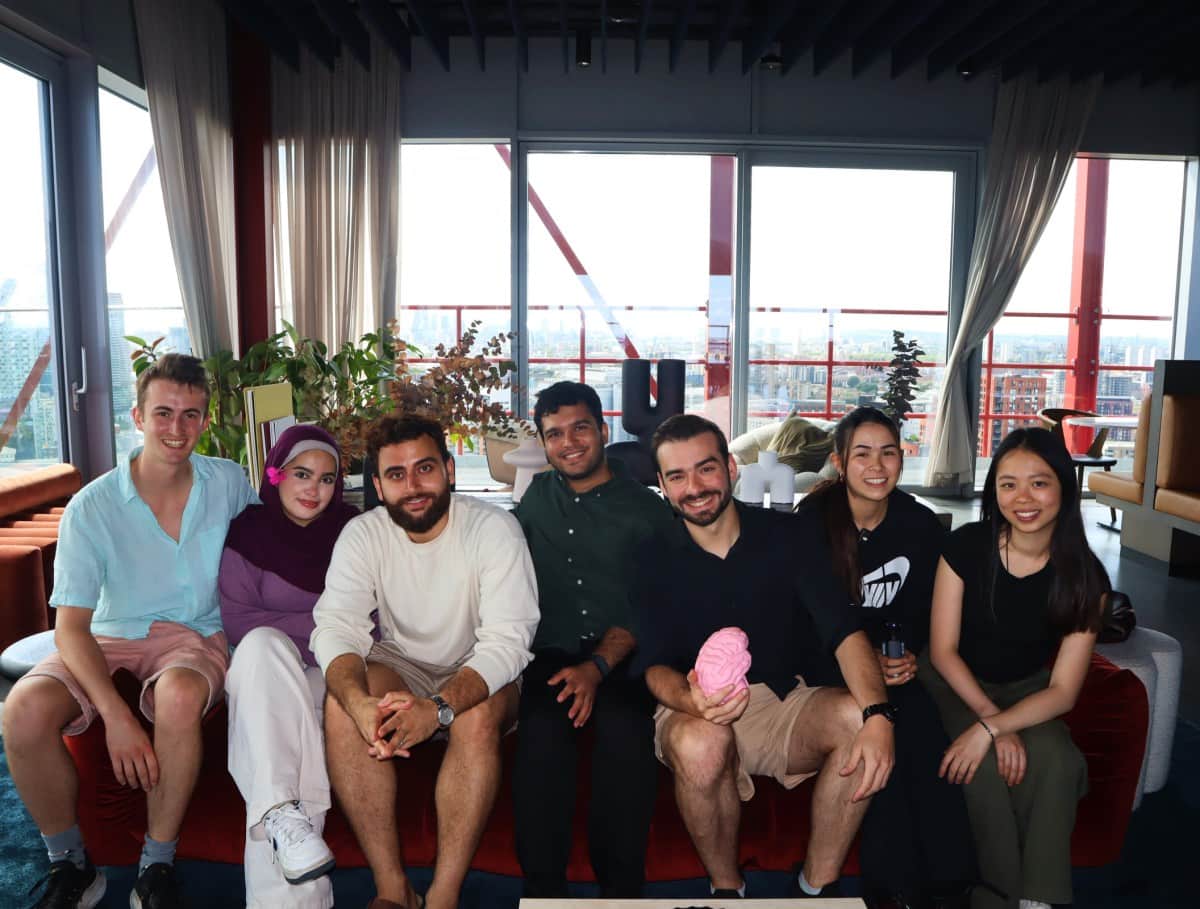
Image: TechCrunch
Six twentysomethings in East London are trying to build a founder house without the burnout culture associated with San Francisco’s hacker-house scene.
The London Island Founder House, known as Lift House, opened in March 2026. Rowan Aldean, 26, and his wife, Zahraa, 22, have lived there since May. Aldean, who said he sold his previous company for millions last year, now runs an “applied AI” startup that helps companies learn how to deploy agents. Zahraa is an upcoming pharmaceutical research PhD candidate.
Like other hacker houses, Lift House combines startup workspace and co-living. Its name refers both to the building’s elevator and to its stated mission: uplifting technology founders. But unlike the punishing work schedules and theatrical events sometimes associated with San Francisco houses, the residents say they are aiming for what Aldean calls a “holistic improvement in life,” rather than “12 weeks, Demo Day is coming.”
“I don’t expect the performative and over-the-top events will be a thing here.”
Lift House’s routine: journaling, volleyball and shared meals
Residents stay for different lengths of time. Some have spent a month at Lift House, while others plan to remain for at least six months. They buy their own groceries, although they often cook together and share ingredients. Cleaning is divided among the group, and everyone declined to disclose their rent.
Recommended reading
Buffett compares AI spending with railroad boom
The house’s approach is deliberately broader than company-building. On Sundays, residents journal together, a practice introduced by David Amor, 28, who runs a brain-coaching and training company for founders and business leaders. The sessions track time spent in nature, diet, exercise and other aspects of daily life.
“I’m eating healthier, working out more, and sleeping more. I always make sure to have lunch now, which is something that is simple, but I wasn’t doing before I lived here.”
Luke asked that his last name be withheld. His co-founder, Varun, 27, also asked that his last name not be published. The pair work together from the house, beginning around 9 a.m. with a team call.
Tuesday evenings are reserved for volleyball, with the residents playing on a house team in a local league. On other nights, Wan Ying L, 25, who recently left an AI startup and is working on a new idea, may play piano in the living room. The group also plays Catan and visits art exhibitions.
Presence Plumb, 25, a technology strategist, hosts rooftop dinners featuring dishes reflecting the residents' nationalities, from Iraqi to Spanish. Founders, researchers, investors and operators attend to discuss technology trends and investments.
“It’s a bit calmer, balanced, authentic in a way. They don’t want too much of that only startup tech bro vibe. They want a bit of balance.”
The residents still follow very different work schedules. Amor wakes by 8 a.m. and starts working after giving himself exactly 30 seconds. He takes a cold shower later, saying it increases dopamine by 250%. Luke usually gets up around 8:30 a.m., while Aldean rarely wakes before 10 a.m. unless he has something significant scheduled, such as a “crazy angel [investor] call.”
London’s startup culture and the “Londonmaxxing” bet
Aldean sees Lift House as part of “Londonmaxxing,” a trend in which founders try to make the most of London’s technology ecosystem. The city’s scene is less showy and less startup-bro-oriented than San Francisco, residents said, while still offering ambitions around success, wealth and market dominance.
The local AI funding figures reflect that momentum. According to Dealroom, London AI startups have raised $12 billion so far in 2026, compared with $14.7 billion raised by all London startups. Six companies have raised more than $500 million: Wayve, Superintelligence, ElevenLabs, Recursive, Ineffable Intelligence and Isomorphic Labs. The latter three were founded by DeepMind alumni.
Aldean contrasted the London approach with San Francisco hacker houses that founders have described as illegally operating from warehouses, hosting galas or imposing 72-hour “996” work sprints. He pointed to DeepMind as an example of British technology success achieved without such displays.
He also described a different pressure facing British founders: an aversion to risk, cultural expectations of humility and “tall poppy syndrome,” in which the media builds someone up before tearing them down after they become successful. That can make founders reluctant to publicize wins.
The residents said London offers strong networks, early capital and a life beyond technology. Luke and Varun have largely avoided venture-capital funding by using the U.K. government’s SEIS/EIS programs, which are intended to encourage angel investment in local startups.
“It’s a relatively fleeting market. You get quick wins. Here, it’s hard to close a customer, but if they close, they stay with you longer.”
Why U.K. startups still look to the U.S.
London gives founders access to talent from universities such as Oxbridge and a time zone that supports work across Europe, the Middle East, Asia and parts of North America. The United States offers the world’s largest economy and investors prepared to write large checks from pre-seed through growth stages.
Varun described the relationship as a “factory line”: startups can begin in one market and expand into the other. American investors are also encouraging British founders to relocate. Luke said an investor in Miami had urged him and Varun to move to the U.S., a request he called common. Their company has already begun its U.S. expansion, and the pair have not ruled out moving closer to customers.
“London is so diverse that if you look properly enough, you’ll always find something fun to get involved with, whether that’s a founder-run club, wellness events, [or going] to jazz nights.”
A small but growing London hacker-house network
Lift House has about a year remaining on its lease, and residents want to continue it for as long as possible. London has relatively few co-living hacker houses, although it hosts short-term gatherings such as the Solana Hacker House series.
The San Francisco-based The Residency expanded into London last year, while BaseJump is announcing a London version of its hacker-house program soon. In 2024, another project called The London Founder House took the opposite approach, with Sifted describing it under the headline “The people here don’t want work-life balance.” It required prospective residents to have raised at least $500,000 and wound down last year.
Lift House sets different entry requirements: applicants must demonstrate a hobby outside their company and an interest in fitness. Its proposition is that founders can pursue ambitious companies without sacrificing everything else.
“The culture is to build something that lasts, not necessarily burn out chasing a flash.”
Enterprise Editor
Marcus follows the money. He covers enterprise software, cloud architecture, and the tectonic shifts in Big Tech strategy. He translates dense earnings calls and complex M&A activity into actionable insights about where the industry is actually heading. If a tech giant makes a silent pivot, Marcus is usually the first to notice.
via TechCrunch