• 5 min read
Aston Martin F1 keeps humans at the center of AI
Aston Martin F1 is testing AI agents, but says experienced engineers and hands-on expertise remain the key to turning data into racing gains.
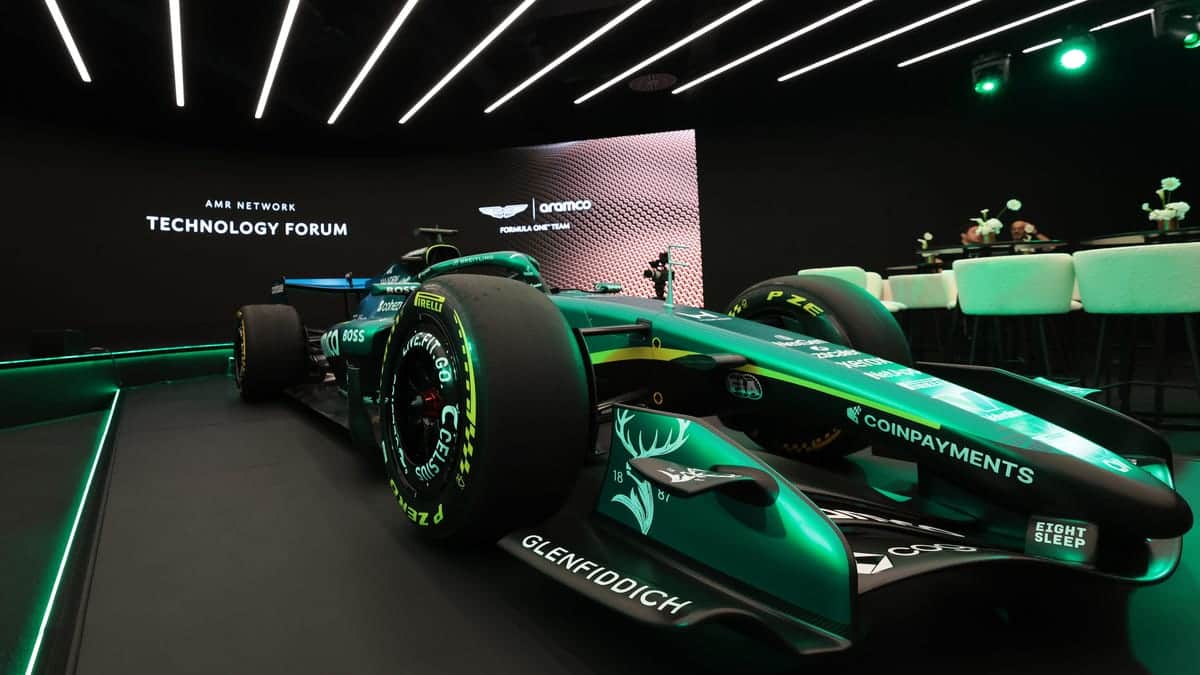
Image: ZDNET
Formula One teams may be adopting generative AI and AI agents, but Aston Martin Aramco F1 says its competitive advantage still depends on experienced people deciding how technology is used. In a sport defined by tiny performance differences, rapid data-powered decisions away from the track can determine the result on it.
The team’s approach puts engineers and other specialists at the center of digital transformation. Technology partners provide systems and models, but in-house professionals identify the problems worth solving, test new approaches, and interpret the results.
“If an idea is good, go through the process as fast as possible, and then get all the data back for the next iteration. This is where you win, and this is what we’re focusing on.”
Handcraft remains part of F1 performance
ZDNET saw that blend of digital and manual work during a visit to Aston Martin F1's headquarters near the Silverstone racetrack, ahead of the recent British Grand Prix. At the AMR Technology Campus, professionals were refining the cars both digitally and by hand.
Among them was Adrian Newey, the team’s managing technical partner and a world-renowned aerodynamicist, who was drawing new designs by hand in his office. Pilotti said this kind of handcraft remains valuable because F1 is a marginal-gain business: small, highly tailored changes from skilled specialists can affect performance.
New employees are sometimes surprised by how much detailed manual work remains inside a modern F1 team, Pilotti said. The reality does not always match their expectations of a technology-driven racing operation.

Recommended reading
Thomson Reuters says its model beats GPT-5.5
“They see what a team is like from the inside and they say, 'That’s not what I thought it would be like. It involves more detailed handcraft.'”
Pilotti described IT as a performance-enhancing function rather than a department that directly improves the car. Its job is to give engineers reliable data and digital tools, helping them manage faults and understand vehicle performance more effectively.
“IT is all about giving people the right tools. Our work is not exactly about the performance of the car, but we are increasing the capability of the engineers to operate.”
Aston Martin explores agents for engineering workflows
Current priorities for Aston Martin F1's IT department include refining enterprise applications and developing trackside systems. The team is applying AI agents tactically in software development and exploring how AI could improve optimization, including in enterprise resource planning systems.
Pilotti said the goal is not a dramatic, one-time transformation. Instead, the team is pursuing continuous improvements shaped by the needs of experienced professionals. In the longer term, users should be able to work with the data and resources they need without waiting for IT to build a new system.
“Whatever resources they need for their rear wing design, for example, they’re immediately available exactly in the format and the density they require, without having to wait three months for new systems. The future is about modular flexibility, so that the infrastructure can adapt to the team’s data requirements.”
The team is also working with Cohere to explore how sovereign AI models and agents could extract timely insights from telemetry, diagnostics, and simulation data. Ryan Lewis, Cohere’s head of UK and Northern Europe, said the aim is to automate routine work so professionals can focus on decisions.
“We want to give people the power to automate the mundane things that are slowing them down from making executive decisions.”
Pilotti said partners such as Cohere will help the team investigate tailored agentic AI use cases that operate within its firewall and keep token usage in check. The source does not provide details on specific deployments, performance gains, or a release date for these systems.
Keeping sensitive F1 data inside the infrastructure
Cohere also emphasized the security challenge of working with data that teams consider too sensitive to place in an external model or service. Lewis said the technology can instead be deployed within the organization’s own infrastructure, keeping data and processing together.
“When you have data that’s tucked away, and people would never even think about putting that information into a model or a system for fear of spillage of trade secrets, that challenge can be solved by building in such a way where you can deploy the technology within the infrastructure, keeping everything together and cohesive to produce results.”
The discussion took place alongside the Aston Martin Technology Forum, where executives from the team’s technology partners joined panels and roundtables on digital transformation in auto racing. The specific technical architecture, model names, and security controls for Aston Martin F1's work with Cohere were not disclosed.
Experience turns AI output into racing advantage
Technology partners are only one part of the team’s performance system. Eric Ernst, Aston Martin F1's commercial technology ambassador, told forum attendees that trusted internal expertise becomes more valuable as AI capabilities expand.
“With AI, we can’t outsource the experience. The experience is still with the team, but AI gives our people the cognitive scalability to do more than they can today.”
F1 teams have long used machine-learning systems to analyze car data and identify performance signals. Generative and agentic AI could allow teams to respond more proactively to difficult scenarios, but the final interpretation still belongs to engineers who understand the car and its operating context.
“The engineer is the person who’s able to say, 'OK, I’ve got three options, and my experience tells me that’s the option we should be choosing.' It’s that experience that’s crucial to driving value from AI.”
AI Editor
Ava covers the rapidly evolving world of artificial intelligence, from foundational models and research labs to the real-world economics of intelligence. With a background in computational linguistics, she cuts through the hype to find out what actually works. She firmly believes that benchmarks are just marketing until reproduced in the wild.
via ZDNET