• 2 min read
SpaceX’s ASOG passes 150 Falcon 9 landings
SpaceX’s ASOG has now handled more than 150 successful Falcon 9 first-stage landings, and new high-resolution drone footage shows the booster standing on deck after its latest return from orbit. The clip, published by Je
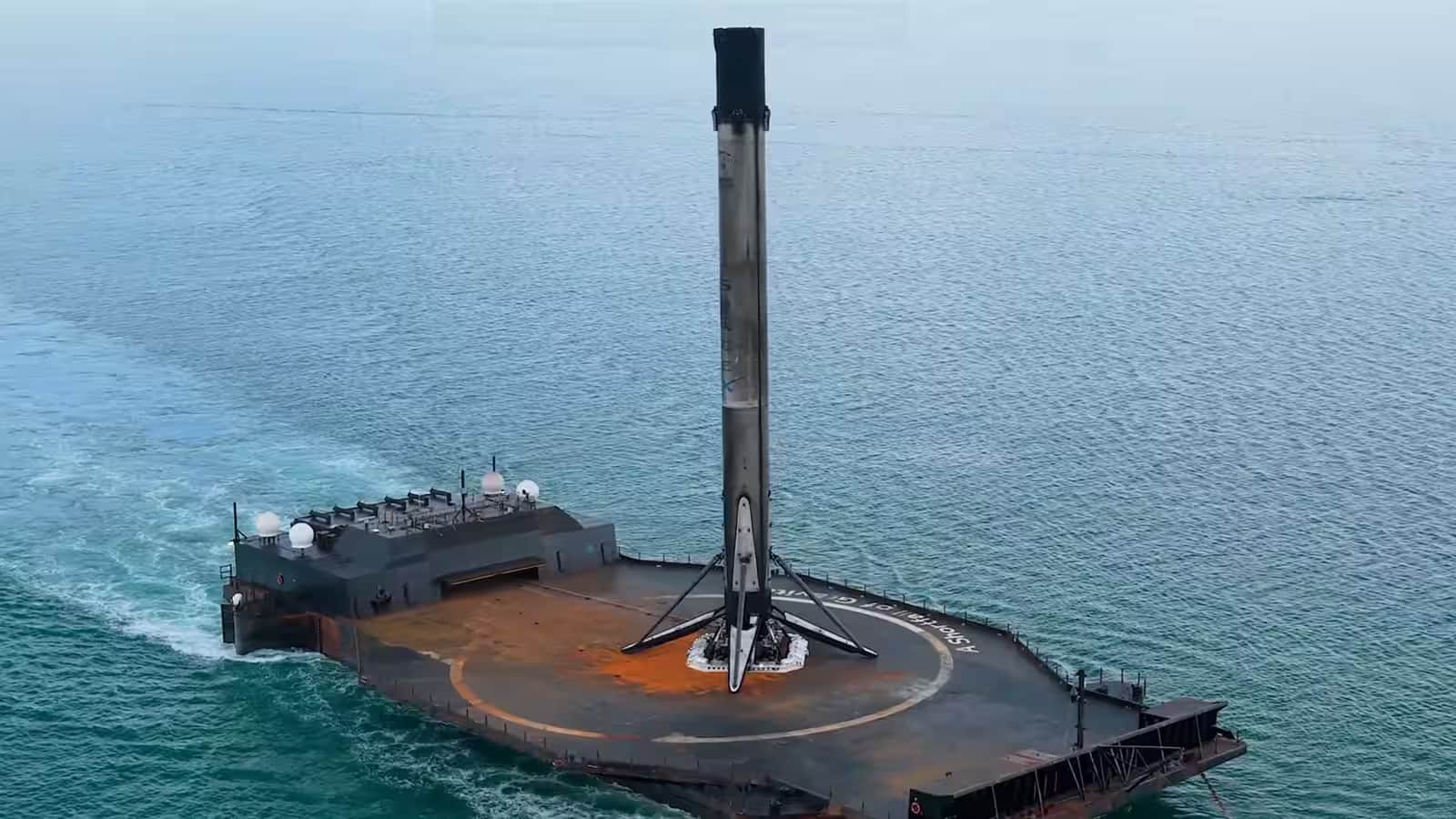
Image: ixbt.com
SpaceX’s ASOG has now handled more than 150 successful Falcon 9 first-stage landings, and new high-resolution drone footage shows the booster standing on deck after its latest return from orbit. The clip, published by JerryPikePhoto and uploaded at 60 fps, also captures the ship being towed across the Atlantic toward Port Canaveral, Florida.
The booster in question, B1085, just completed its 16th flight on the Starlink 10-53 mission. It lifted off from SLC-40 at Cape Canaveral on 29 May and delivered 29 Starlink v2 Mini satellites to orbit before landing roughly 8.5 minutes after launch. SpaceX has turned that kind of reuse into routine, and routine is exactly the point: fewer surprises, faster turnaround, and a lot less hardware headed for the ocean floor.
B1085's 16th flight ends on ASOG
Falcon 9 boosters are no longer fragile one-and-done rockets; they are workhorses that keep coming back. B1085's 16th trip is a tidy reminder of how far SpaceX’s refurbishment model has gone, especially as the company leans harder on repeat launches for the Starlink network. Competitors are chasing reusability too, but SpaceX still sets the pace by flying often enough to make the concept look boring.

Recommended reading
Zinc flow battery runs for 5,128 hours
- Mission: Starlink 10-53
- Booster: B1085
- Flight count: 16
- Payload: 29 Starlink v2 Mini satellites
- Landing time: about 8.5 minutes after launch
ASOG passes 150 Falcon 9 landings
A Shortfall of Gravitas has become one of SpaceX’s most visible pieces of infrastructure, and the 150-plus landing mark shows how central the drone ship has become to the company’s launch cadence. The timing is not accidental: SpaceX is pushing Starlink launches at a pace that now looks industrial, with missions reportedly flying about once every three days. That kind of tempo only works if the recovery side is equally relentless.
What happens after the port arrival
Once ASOG reaches Port Canaveral, the booster will be readied for another mission. That next flight is the real story behind the victory lap: the landings are impressive, but the business advantage comes from how quickly SpaceX can put the same hardware back to work. If the company keeps this rhythm, the number to watch is not just how many landings the drone ship has seen, but how quickly it reaches the next 150.

Frontier Editor
Dan is our resident futurist, covering electric mobility, space exploration, and the smart home. He's interested in atoms just as much as bits. Whether it's a new battery chemistry, a reusable rocket, or a protocol that finally makes IoT devices talk to each other, Dan breaks down the engineering that pushes humanity forward.
via ixbt.com