• 3 min read
3D chips move up as transistor shrinking runs out of road
A team at the University of Illinois Urbana-Champaign says it has found a way to keep chip performance climbing without shrinking transistors any further: stack the circuitry vertically, layer by layer, and do it with a
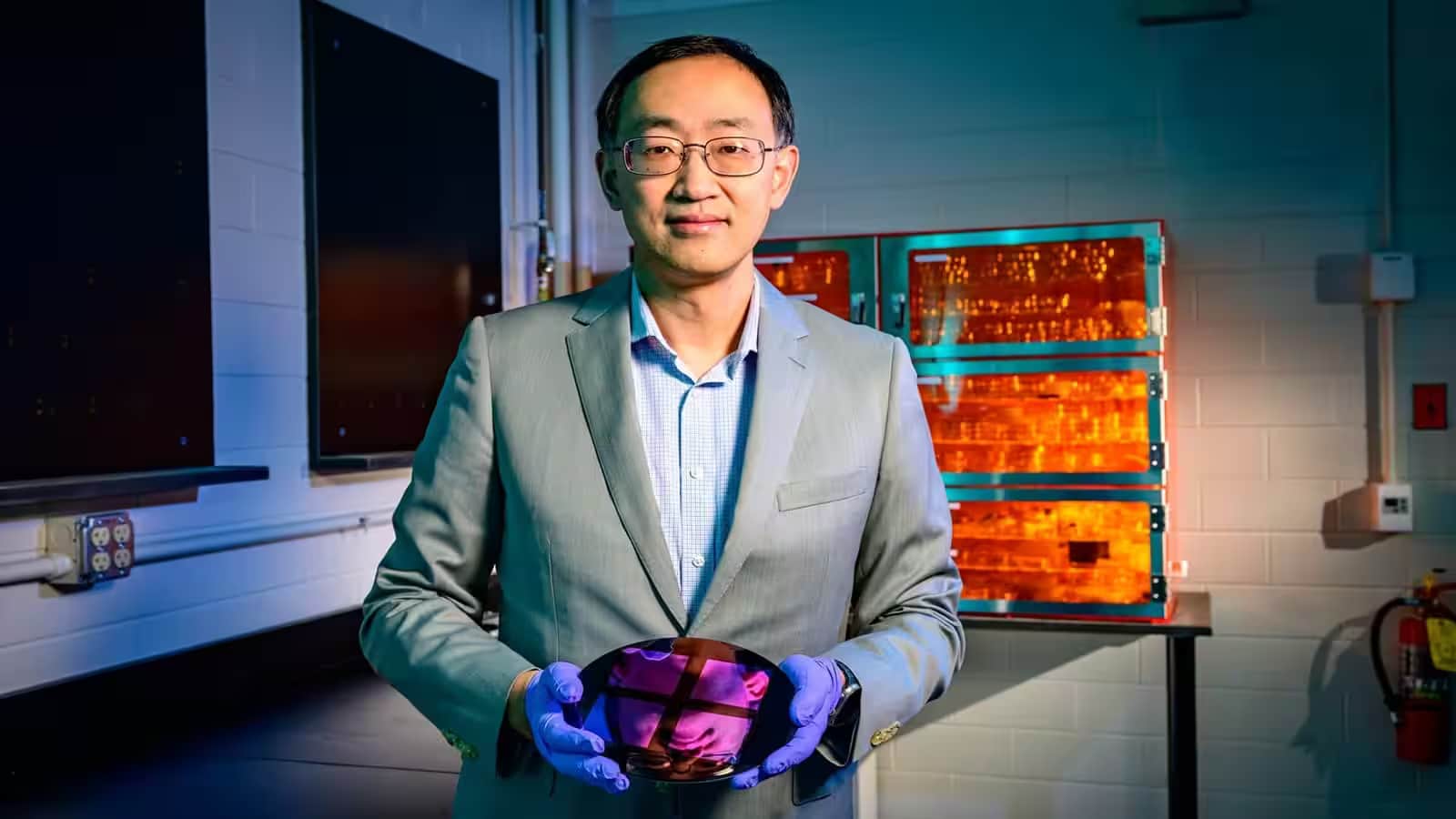
A team at the University of Illinois Urbana-Champaign says it has found a way to keep chip performance climbing without shrinking transistors any further: stack the circuitry vertically, layer by layer, and do it with a yield high enough to make fabs pay attention. The result is a 3D chips approach that could sidestep one of the semiconductor industry’s nastiest bottlenecks as silicon scaling slows and the old playbook gets expensive fast.
The headline numbers are hard to ignore. The researchers built a three-layer stack with 625 transistors on each level, then reported a yield of 98% to 100%. Even better for the people who actually have to manufacture this stuff, the low-temperature process produced transistors comparable to standard ones made at 1000 C.
Why vertical stacking is different
Commercial 3D chips already exist, but most rely on bonding separately made wafers together. That works, but the connections between layers are comparatively chunky, which limits how dense the stack can get. The Illinois method takes a more aggressive route: each new layer is grown directly on top of the previous one, creating much finer vertical links and tighter alignment.
There is also a very practical reason the industry has been circling this idea for years. Modern chipmaking still leans heavily on high-temperature steps, yet once the first layer is finished, subsequent processing cannot push anywhere near the same heat without damaging what is already there. The team’s answer was to transfer ultrathin single-crystal silicon membranes and bond them at no more than 200 C, safely below that threshold.

Recommended reading
Zinc flow battery runs for 5,128 hours
What the 98% to 100% yield suggests
- Three stacked silicon layers were demonstrated.
- Each layer contained 625 transistors.
- Yield was reported at 98% to 100%.
- Bonding temperature stayed at or below 200 C.
- Working 3D logic circuits and SRAM cells were shown.
That yield figure matters because 3D integration has often looked elegant in papers and messy in production. The semiconductor industry does not care much for beautiful slides; it cares whether a process can survive factory realities, and whether it can do so without torching power consumption or cost. A process that preserves transistor quality while staying within thermal limits is the kind of development that can pull a lab demo into the conversation with actual chipmakers.
IBM, Intel and TSMC are already in the picture
The researchers say IBM, Intel, and TSMC are helping adapt the technique for real fabrication lines. That is a sensible move: no one has to guess whether the rest of the industry sees the direction of travel. With transistor shrinking nearing its physical and economic limits, the fight is shifting toward packing more computing into the same footprint, and 3D stacking is one of the few routes that still looks scalable.
The open question is how quickly this can move from an impressive stacked prototype to something fabs can repeat at volume. If the process holds up beyond three layers, the chip industry may start building not just smaller chips, but taller ones too.

Frontier Editor
Dan is our resident futurist, covering electric mobility, space exploration, and the smart home. He's interested in atoms just as much as bits. Whether it's a new battery chemistry, a reusable rocket, or a protocol that finally makes IoT devices talk to each other, Dan breaks down the engineering that pushes humanity forward.