

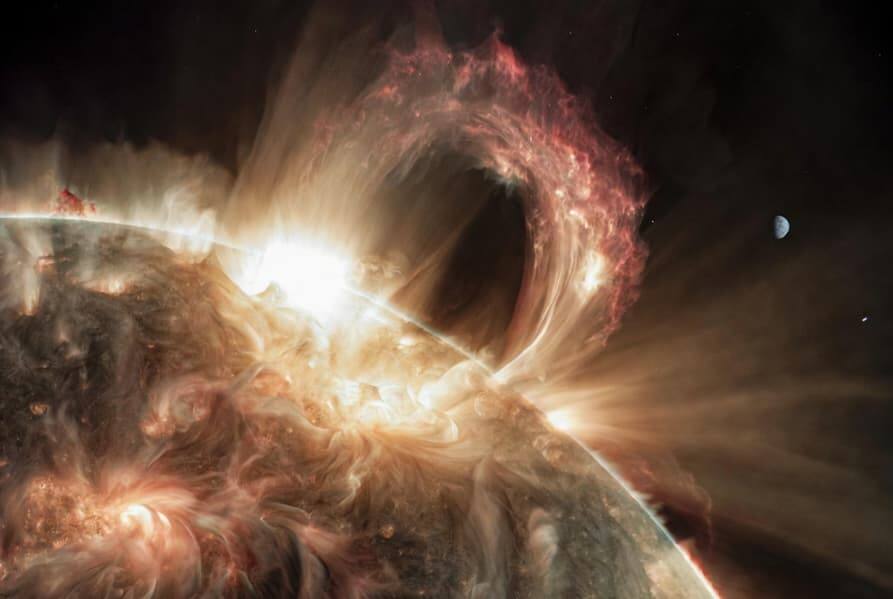
The Sun has just served up its strongest flare in about 2.5 months: an X2.5 solar flare that flashed at 04:07 Moscow time and threw a visible cloud of plasma into space. The good news is that the blast came from near the edge of the solar disk, and the ejecta is aimed away from Earth, so the planet looks set to dodge the main punch.
That still leaves a slightly annoying wrinkle: the star is far from quiet. This X2.5 solar flare ranks near the top tier of recent solar activity, trailing only an X4.2 event recorded in early February, and forecasters are not ruling out more strong eruptions later in the day. In other words, Earth may miss the direct hit, but the Sun is clearly not done showing off.
What an X2.5 solar flare means
Solar flares are ranked by class, and X-class events are the heavy hitters. An X2.5 flare is not the sort of thing you dismiss with a shrug, even if the geometry is kind to us this time. The placement near the limb of the Sun matters because it changes the odds: the farther the active region sits from the center of the disk, the less likely a blast is to be pointed straight at Earth.
- Flare class: X2.5
- Time: 04:07 Moscow time
- Strength comparison: strongest in about 2.5 months
- Earlier benchmark: X4.2 in early February
Why the plasma cloud is probably a near miss
Images from space observatories show the plasma cloud clearly, but the trajectory points away from Earth rather than toward it. That means the most likely outcome is a glancing encounter with the edge of the cloud, if anything at all. Space weather can still be twitchy in this setup, but the dramatic version of the event appears to be happening somewhere else in the solar system, which is a pleasant change for anyone who enjoys their electronics un-fried.
The bigger story is not this one flare on its own. It is the fact that solar activity remains elevated, and the next strong burst could arrive without much warning. For satellite operators, radio users, and anyone tracking geomagnetic conditions, that is the number to watch, not whether this particular blast lands a direct blow.
What could happen next
If the current trend holds, the next few hours may bring more eruptions from the same active region or nearby ones. The most likely scenario is more solar theatrics with limited impact on Earth, but the Sun has a habit of making quiet forecasts look silly. For now, the safest bet is that this flare will be remembered more for its size than for any damage it causes here.