• 2 min read
This Screen Blooms From a Small Box
UChicago researchers built BloomBeacon, a small device whose soft arms spin into an interactive touchscreen only when needed.
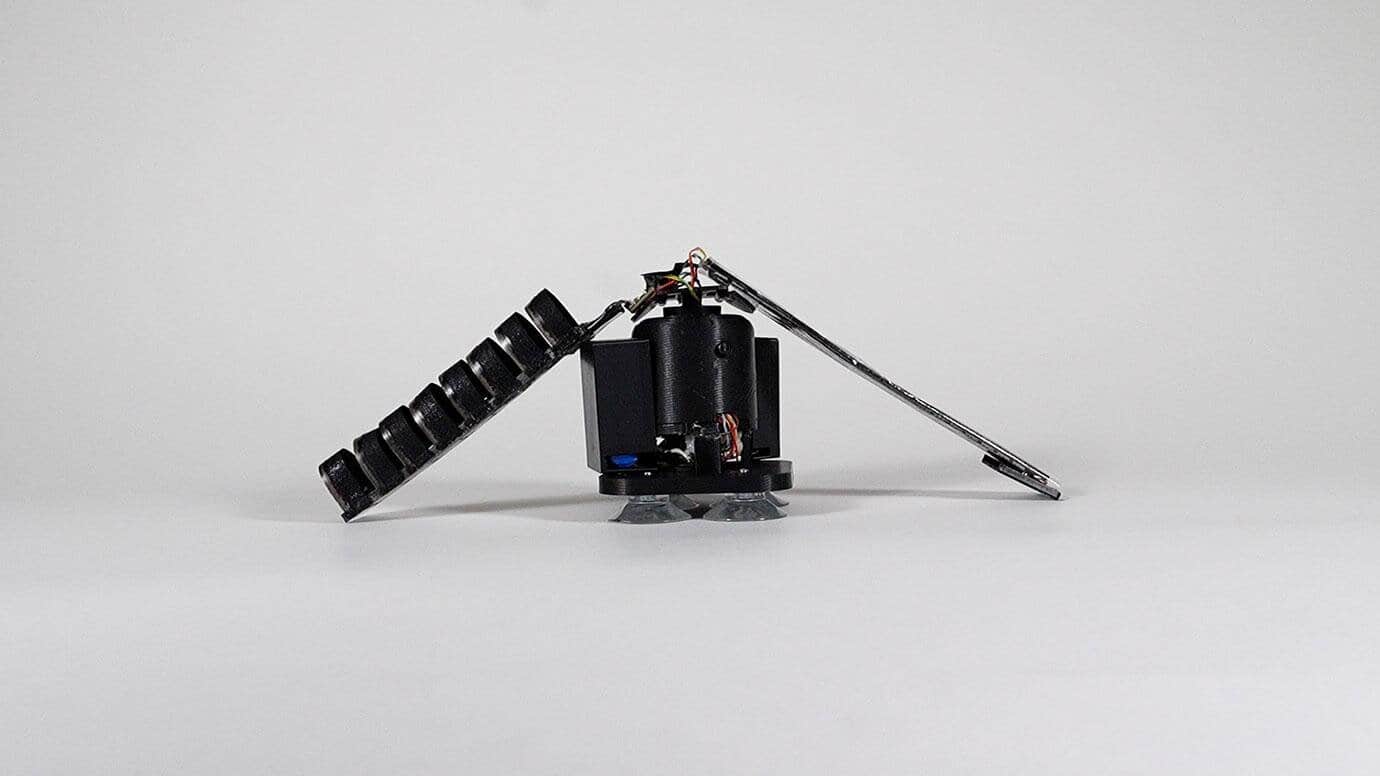
Image: TechXplore
A small box developed by University of Chicago computer scientists can unfold into an interactive touchscreen, then disappear when it is no longer needed. The device, called BloomBeacon, uses two soft arms that spin rapidly to create a display in midair.
One arm carries LEDs that form the visual display, while the other is touch-sensitive. The rotating arms remain soft during operation and are designed to spin down if they hit an obstacle such as a user’s arm or hair.
The project was created by graduate student Willa Yang, supervised by assistant professor Ken Nakagaki in UChicago’s AxLab. The work is titled BloomBeacon: Blooming Physical Touch Display Surfaces via Persistence-of-Vision Motion and is associated with CHI2026.
“Screens are a powerful medium for displaying digital information and supporting interaction, but we either need to carry them, as with phones and tablets, or dedicate space for them in the environment, which creates visual clutter and limits where interaction can happen. BloomBeacon blooms into a larger surface only when needed. This keeps our environments responsive without permanent screens or clutter.”
BloomBeacon’s proposed uses
BloomBeacon is designed to make ordinary objects and surfaces interactive without permanently adding a screen. The researchers envision it being used in schools, libraries, design offices, homes and public spaces.
Potential applications include:

Recommended reading
AMD Radeon Drivers Hint at 8x Frame Generation
- Adding weather or heat-map overlays to paper maps.
- Displaying album art and touch controls beside a speaker.
- Providing safety alerts at the edge of a shelf.
In one demonstration, BloomBeacon detected someone reaching for a bottle of chemicals without safety gloves and displayed a warning.
The concept draws on flexible interfaces portrayed in science fiction: a display that appears only when context requires it, rather than occupying space permanently.
“This can allow everyday environments to become interactive without being permanently filled with screens. The concept broadens the possibility of where interactive content can be placed and tangibly interacted with.”
Yang said future versions could use faster sensors and smarter algorithms to respond more dynamically. Her longer-term vision is a display that collapses to a dot and blooms only when needed.
“People should be able to shape their environments instead of adapting themselves to fixed technologies.”
Citation: Scientists create interactive screens that can appear on demand (2026, July 17), retrieved 17 July 2026 from https://techxplore.com/news/2026-07-scientists-interactive-screens-demand.html

Computing Editor
Tomas lives in the terminal. He covers chips, laptops, and operating systems with a focus on performance and efficiency. He reads kernel changelogs the way other people read fiction, and he's always on the hunt for the perfect mechanical keyboard switch. If it processes data, Tomas has an opinion on it.
via TechXplore