• 2 min read
This Robotic Hand Switches Grippers With One Motor
A Kanazawa University robotic hand switches between multiple grippers with one motor, using gravity to redirect torque and simplify the design.
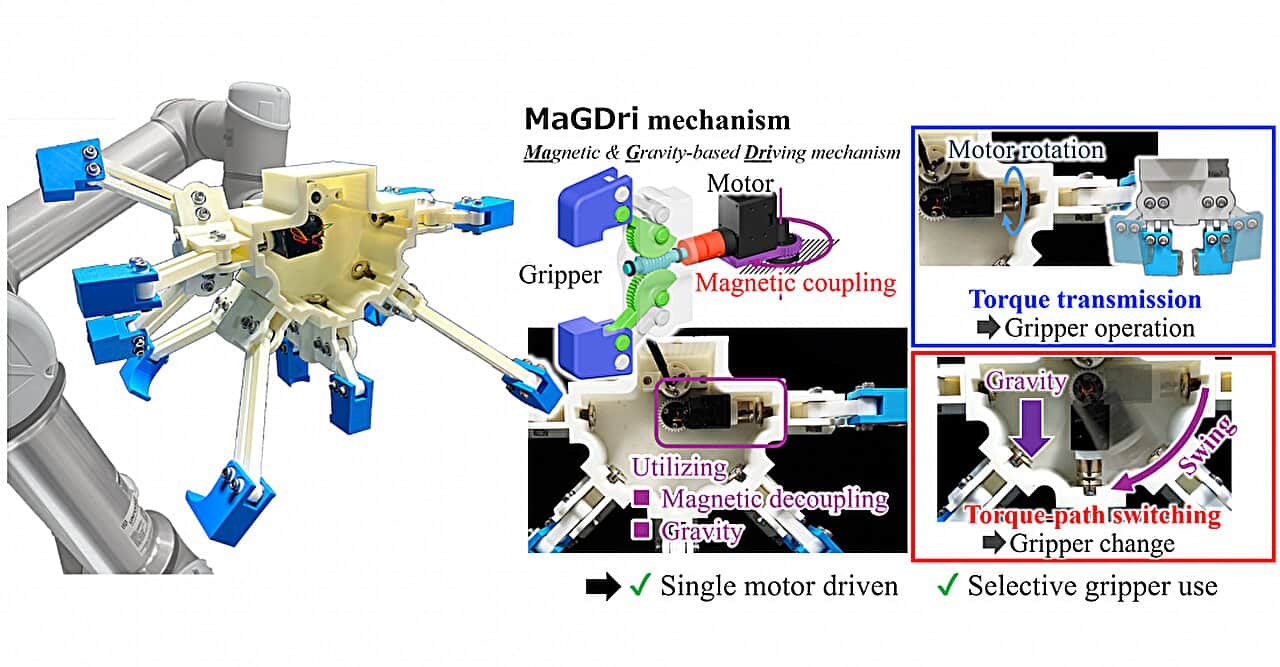
Image: TechXplore
A robotic hand developed at Kanazawa University can switch between multiple grippers while using just one motor, potentially reducing the weight, cost and complexity of multifunctional robotic systems.
The prototype uses a mechanism called MaGDri—short for Magnetic and Gravity-based Driving—which treats gravity, normally considered a disturbance in robotics, as a useful source of mechanical power. Gravity switches the hand’s torque path, directing the motor’s output to the appropriate gripper.
How the single-motor hand works
Researchers from Kanazawa University’s Institute of Science and Engineering equipped the hand with several gripper types. Prototype tests showed that it could select suitable grippers for objects with different shapes and sizes without adding actuators or relying on complex control systems.
Conventional robotic hands typically use multiple motors or external tool changers to handle a broad range of objects. By contrast, the new design switches motor power between its built-in grippers through a gravity-driven mechanism.
That approach offers a simpler architecture while supporting multiple grasping actions. The researchers say it could reduce the hand’s space requirements and cost, as well as its weight.
Recommended reading
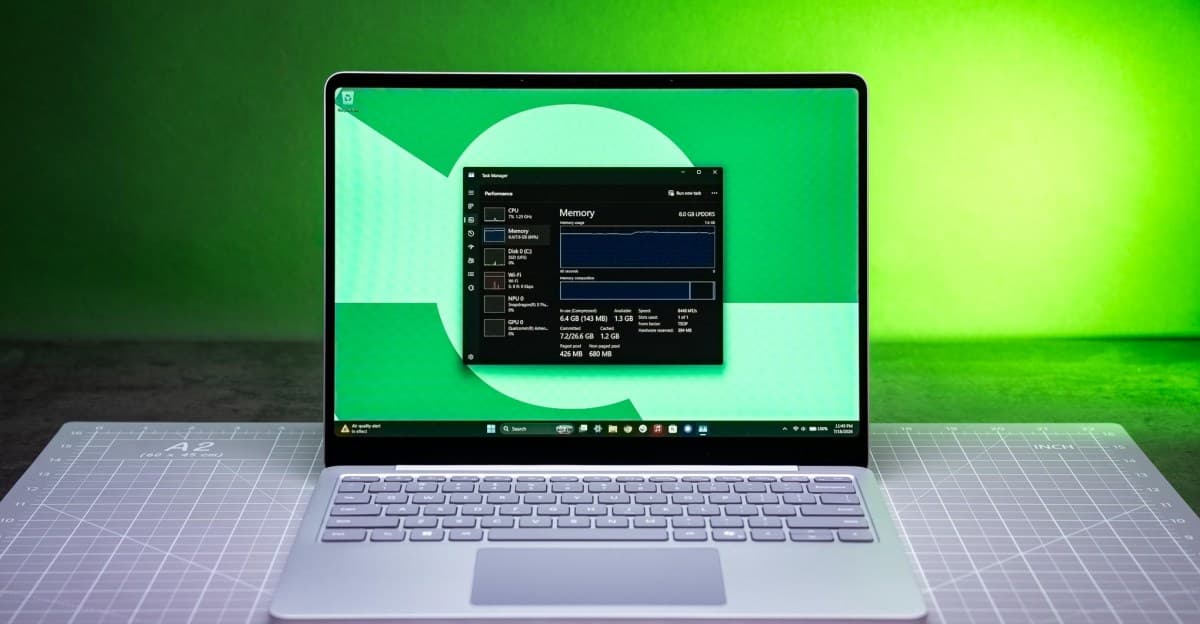
Microsoft’s $950 Surface Laptop Can’t Handle 8GB of RAM
Potential applications and research details
The team points to possible uses in household tidying, nursing and social-care tasks, retail, logistics, industrial operations, mobility systems and disaster-response robots. A hand that can switch grasping methods could help robots safely handle objects that vary in shape, size and rigidity.
The study, “Single-Motor-Driven Robotic Hand With Multiple Grippers Using Gravity-Driven Torque-Path Switching Mechanism,” was published in IEEE Robotics and Automation Letters in 2026. The authors include Toshihiro Nishimura. DOI: 10.1109/lra.2026.3685935.

Computing Editor
Tomas lives in the terminal. He covers chips, laptops, and operating systems with a focus on performance and efficiency. He reads kernel changelogs the way other people read fiction, and he's always on the hunt for the perfect mechanical keyboard switch. If it processes data, Tomas has an opinion on it.
via TechXplore