• 2 min read
Tesla’s AI6 chip targets twice the speed of AI5
Elon Musk says Tesla’s AI6 chip will be twice as fast as AI5, use LPDDR6 memory, and target cars, robots, and other edge AI systems.
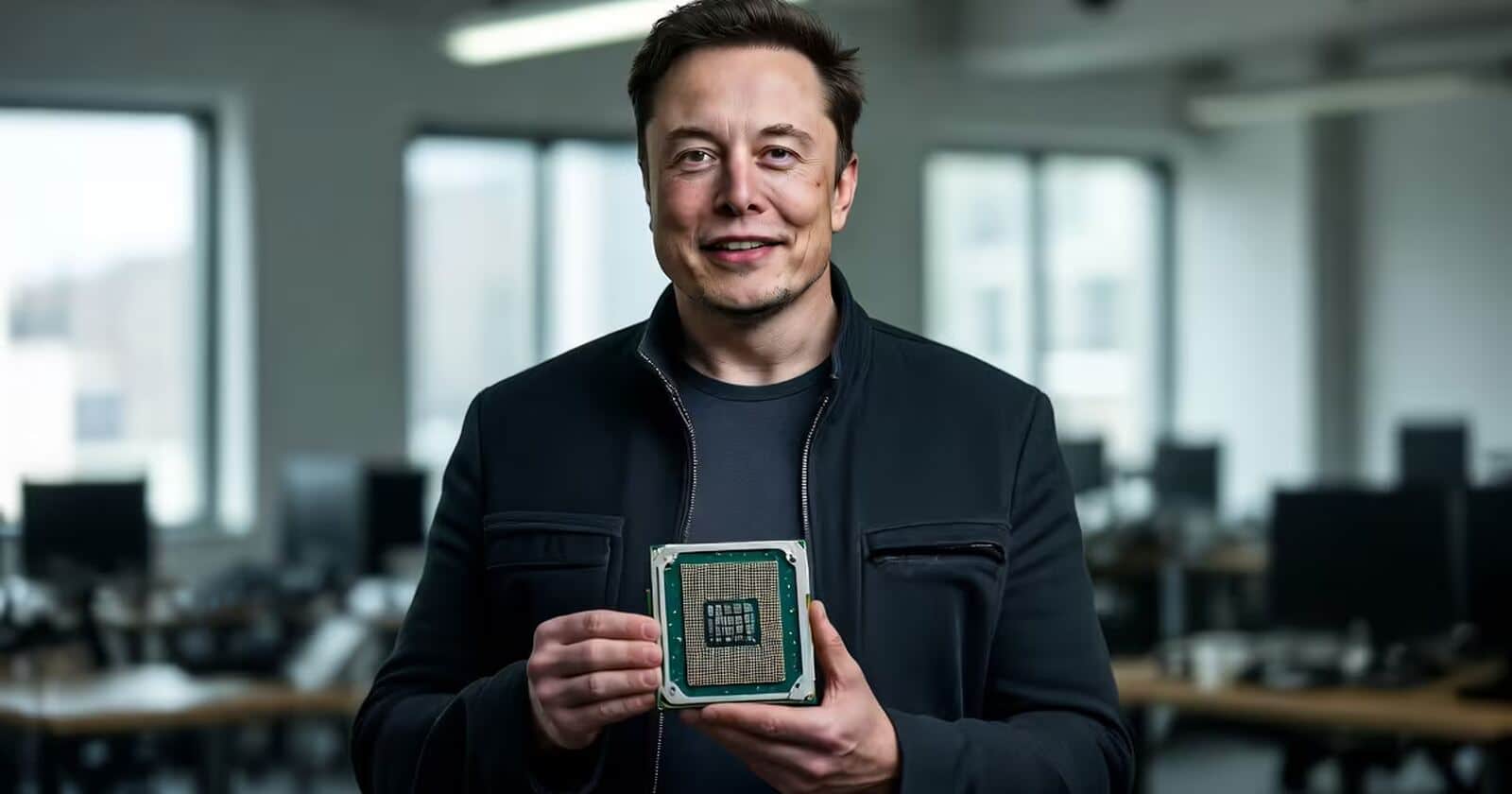
Image: ITzine
Tesla’s AI6 chip is being positioned by Elon Musk as the company’s most powerful processor for edge computing. According to Musk, it should deliver roughly twice the performance of AI5 and switch to LPDDR6 memory from LPDDR5X.
The comments came during renewed discussion of Tesla’s in-house chips, the Cybercab robotaxi, and the Optimus humanoid robot. For Tesla, the effort is about more than a product announcement: the company is trying to retain control over the computing infrastructure needed for driver-assistance systems, robotics, and future AI services.
The market is already crowded. Nvidia dominates data-center revenue, AMD is pursuing AI accelerators, and automakers and electronics suppliers are increasingly bringing more computing inside their own systems to reduce exposure to shortages and the prices of external chips.
What Tesla promises for AI6
Musk described AI6 as the next major step after AI5, with Tesla focusing on energy efficiency and computational density. The move to LPDDR6 matters because AI workloads can be constrained by memory bandwidth and data transfer speeds rather than by peak core performance alone.
If Tesla achieves the claimed improvement, AI6 could strengthen its position against both automotive-computing suppliers and makers of chips for edge AI devices. Those systems must balance heat, power consumption, and speed, so a “twice as fast” claim will ultimately be judged by real-world workloads rather than a presentation.
Recommended reading
DeepSeek says China is nearing US AI capability
Tesla’s plans also extend beyond autonomous driving. The edge-computing market includes specialized hardware for cameras, industrial systems, vehicles, and robotics. If Tesla can scale its architecture, AI6 could support several product lines, from cars to humanoid robots.
Tesla’s in-house silicon and supply chain
Tesla has spent several years reducing its dependence on outside suppliers. It already has experience developing chips for driver-assistance systems, and is now pursuing a broader model in which hardware, software, and manufacturing operate as one chain.
Musk also discussed Terafab, a project intended to reach monthly production of 1 million silicon wafers. That target is highly ambitious even by industry standards. Volumes of that scale require funding as well as reliable access to equipment, materials, and manufacturing capacity.
For future projects, Musk said Tesla is counting on TSMC and Samsung plants in the United States as key production links. The company has also secured memory supplies from Micron Technology on acceptable terms despite rising chip prices.
Tesla’s chief financial officer, Vaibhav Taneja, warned that capital spending will increase in the second half of 2026 and exceed $25 billion for the full year. With the company also investing in robotaxis, Optimus, solar energy, and semiconductors, AI6 will face its first serious test in Tesla’s balance sheet and supply schedules—not on a stage.

AI Editor
Ava covers the rapidly evolving world of artificial intelligence, from foundational models and research labs to the real-world economics of intelligence. With a background in computational linguistics, she cuts through the hype to find out what actually works. She firmly believes that benchmarks are just marketing until reproduced in the wild.
via ITzine