• 2 min read
SpaceX’s Gigabay grows into a Starship factory
SpaceX’s Gigabay is expanding beside Starship and Super Heavy, signaling plans to turn Starbase into a high-volume Starship factory.
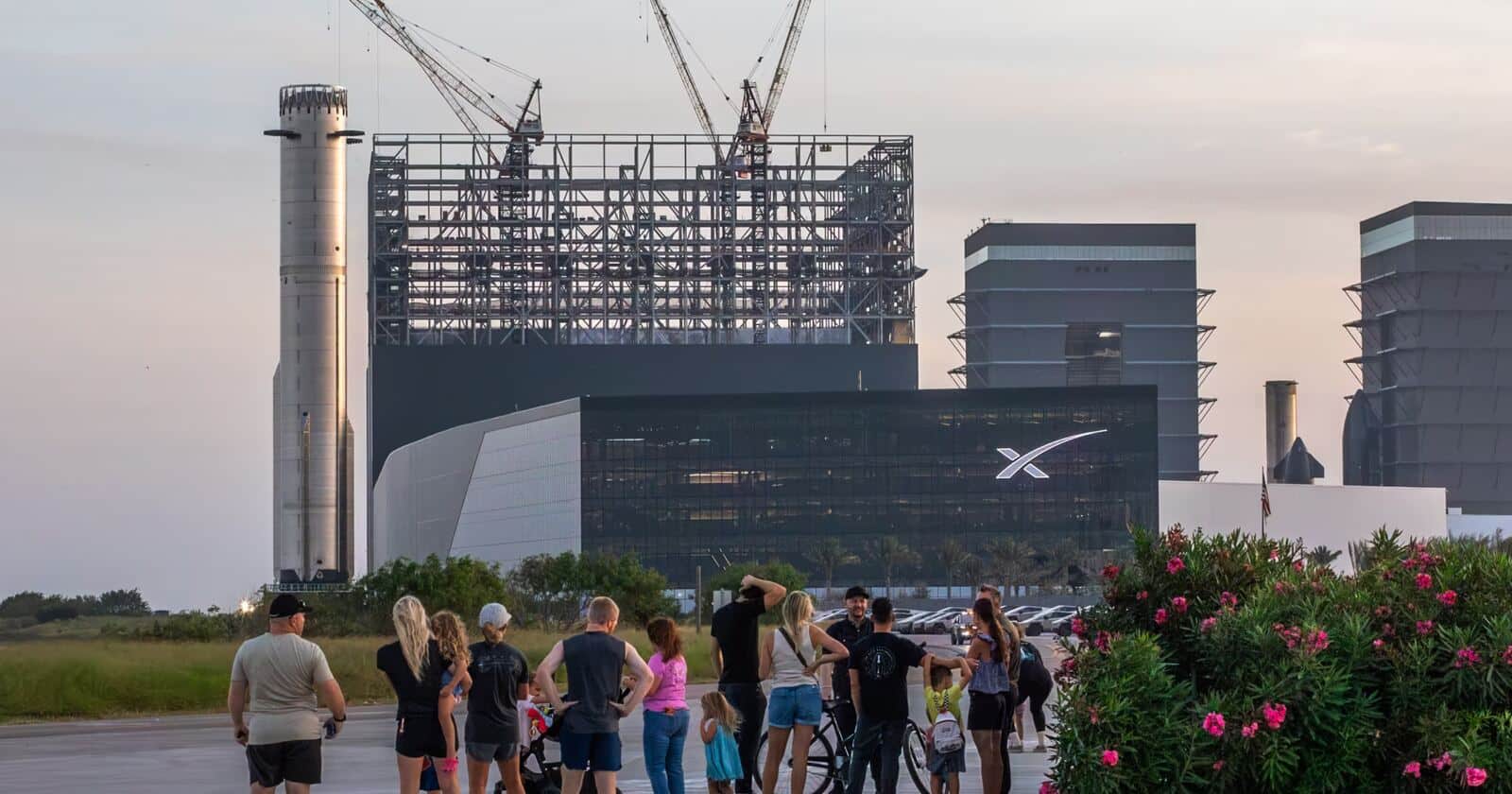
Image: ITzine
SpaceX’s Gigabay has grown large enough to dominate the Starbase site in Texas, standing alongside the company’s Super Heavy booster and Starship spacecraft. A recent photo shows the facility moving beyond the scale of a typical launch-site construction project and becoming a major part of the complex.
Gigabay is being built as a high-capacity assembly building for future Starships. As its structure expands, it increasingly overshadows familiar facilities such as Megabay. The project appears designed to address a production bottleneck created by the limited size of SpaceX’s existing infrastructure.
Elon Musk previously said Gigabay would become one of the world’s largest structures of its type and could support production of up to 1,000 Starships per year. For comparison, SpaceX conducted five test launches of the Starship system in 2025. That contrast makes Gigabay look less like a showcase construction project and more like an investment in sustained, high-volume operations.
Recommended reading
Starship V3 returns to Starbase for July 24 launch
Why SpaceX is building Gigabay
Starship remains SpaceX’s most ambitious rocket program, and manufacturing capacity will determine how quickly it can move beyond testing. Each prototype requires large-scale assembly, stage integration, modifications and rapid replacement of components. In cramped facilities, those steps add delays and make it harder to keep work moving.
Gigabay’s larger footprint should allow SpaceX to store more structural elements nearby and bring them together faster. The company is effectively building a production line for Starship, which is intended for both orbital launches and future interplanetary missions.
Starbase has changed significantly over the past several years. Launch pads and experimental prototypes once dominated views of the site; increasingly, its ground infrastructure is becoming just as prominent. For a super-heavy launch system, these buildings are nearly as critical as the rockets themselves: without repeatable production capacity, even a successful launch remains an isolated event.
The facility also reflects the pressure to increase launch frequency and accelerate Starship upgrades while competitors expand their own heavy-lift vehicles and manufacturing operations. If SpaceX reaches its stated target of 1,000 Starships per year, Starbase will no longer function primarily as a test site. It will operate on the cadence of a factory.

Frontier Editor
Dan is our resident futurist, covering electric mobility, space exploration, and the smart home. He's interested in atoms just as much as bits. Whether it's a new battery chemistry, a reusable rocket, or a protocol that finally makes IoT devices talk to each other, Dan breaks down the engineering that pushes humanity forward.
via ITzine