• 2 min read
DeepSeek says China is nearing US AI capability
DeepSeek founder Liang Wenfeng says Chinese AI is nearing US capability, but chip production—not model ideas—is now the key constraint.
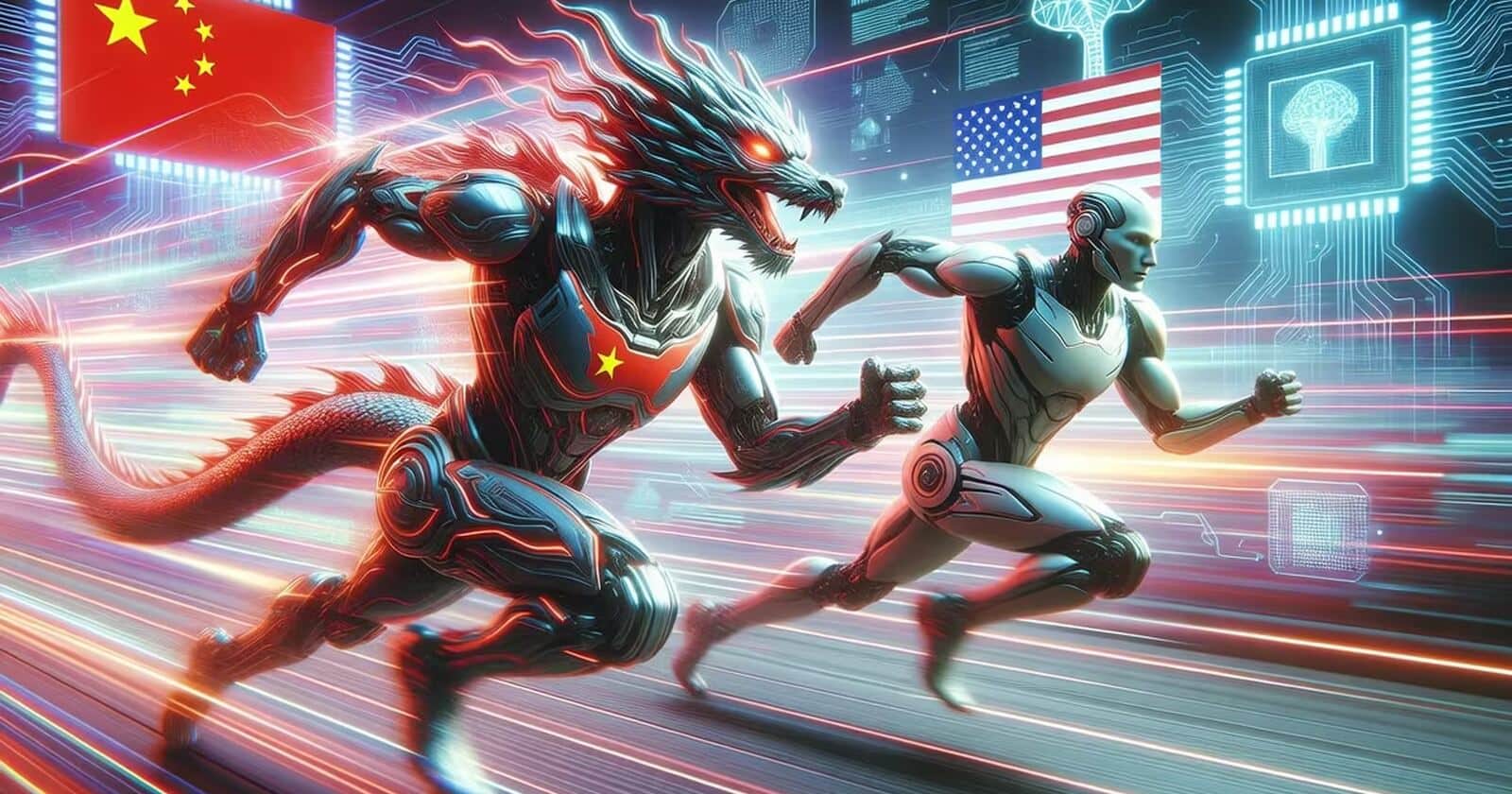
Image: ITzine
Chinese AI models and chips have sharply narrowed the gap with the United States over the past year. Liang Wenfeng, founder of DeepSeek, said in a recent interview that Chinese systems are now close to American models in capability—and that the industry’s biggest shortfall is no longer ideas, but the number of chips it can produce.
The interview was recorded in May, before the release of Kimi K3. At that point, Liang considered the gap with leading US systems more substantial. He now describes a faster shift: Chinese models improved more quickly than expected, while competition between China and the US increasingly depends on access to computing capacity as well as model quality.
Chinese models raise pressure on US AI companies
The latest catalyst is Kimi K3, developed by Moonshot AI and presented as the world’s largest open-source AI model. That positioning puts direct pressure on US companies that have long led both closed and open-source model development.
Liang’s assessment points to a change in how China competes. The country once relied primarily on lower development costs to catch up with the US. The focus is now shifting toward scaling quickly and building the large infrastructure needed to train and run advanced models.
Recommended reading
Tesla’s AI6 chip targets twice the speed of AI5
US cloud and AI companies remain heavily dependent on Nvidia accelerators, including the GB200 and GB300 platforms, which have become standards for next-generation systems. Chinese developers are instead trying to build an infrastructure ecosystem around domestic chips and server platforms, reducing dependence on US supplies.
Huawei Atlas 950 targets Nvidia’s GB200 and GB300
Liang said Chinese AI chips do not face a fundamental compatibility problem with the broader ecosystem. The main constraint is production: manufacturers have not yet reached the volumes the market requires.
That distinction—between having a technology and deploying it at market scale—is especially important in competition with Nvidia. The US company sells more than accelerators; it also sets conventions for AI infrastructure, making any alternative dependent on software, compatibility and supply chains.
Liang separately said Huawei’s Atlas 950 servers will be able to compete with Nvidia’s GB200 and GB300 in both performance and price. If Chinese companies can deliver those platforms in large quantities, AI infrastructure could gain a second major center of power, with data centers gradually reducing their dependence on US accelerators.
The test will come in shipment reports and in how quickly Chinese cloud companies can expand clusters for new models—not in product presentations. That will show whether the current advance becomes a practical Nvidia alternative or remains a series of high-profile announcements.

AI Editor
Ava covers the rapidly evolving world of artificial intelligence, from foundational models and research labs to the real-world economics of intelligence. With a background in computational linguistics, she cuts through the hype to find out what actually works. She firmly believes that benchmarks are just marketing until reproduced in the wild.
via ITzine