• 2 min read
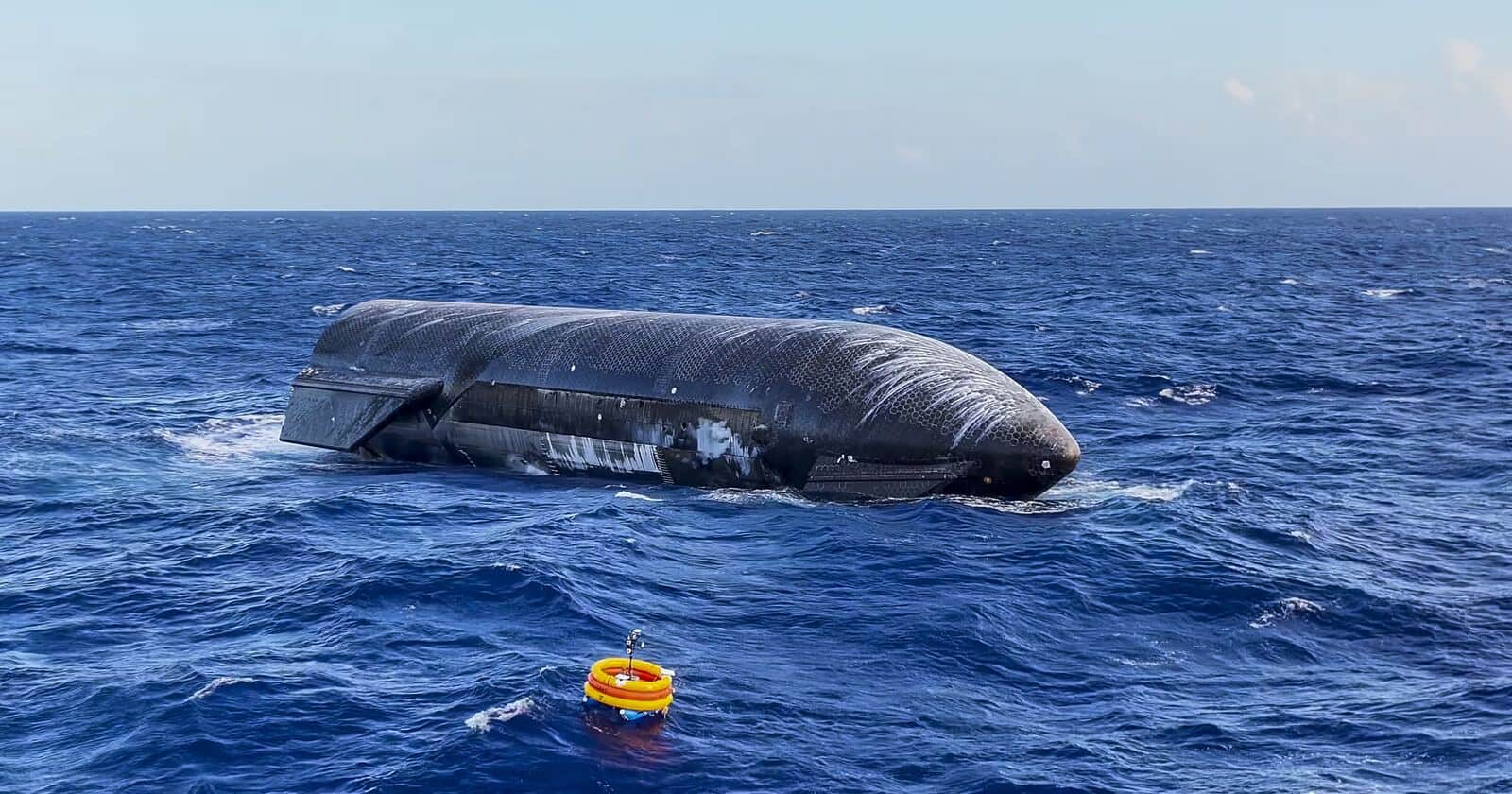
Starship survives first intact ocean splashdown
Drone footage shows Starship surviving its first intact vertical ocean splashdown after Flight 13, with SpaceX planning a recovery operation.
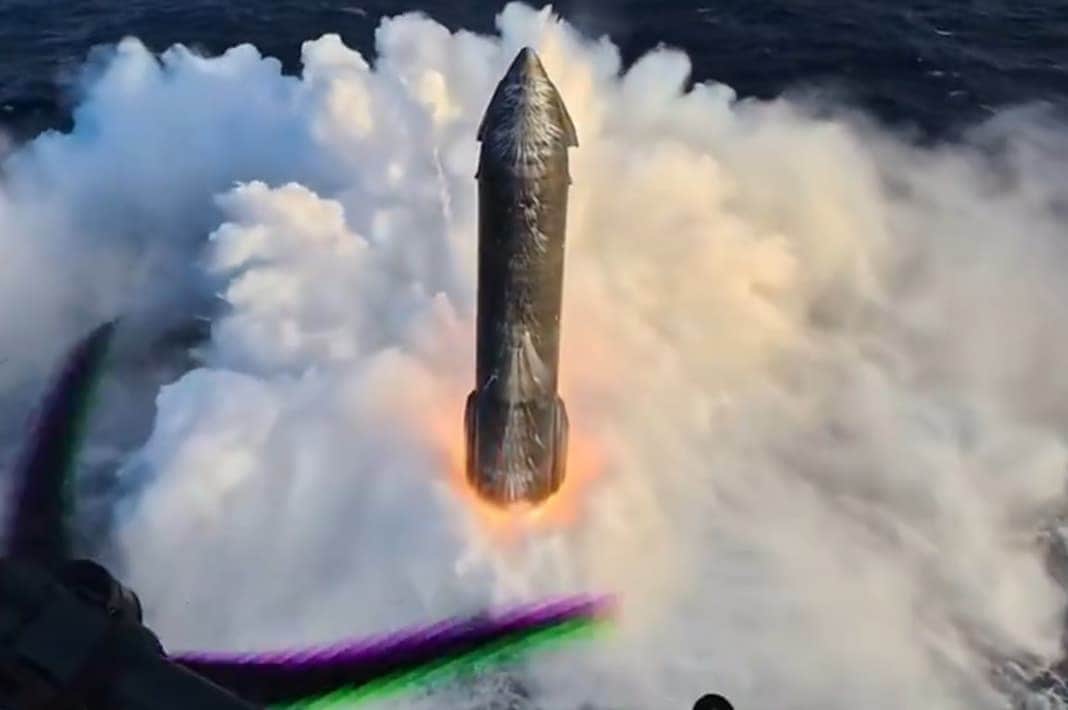
Image: iXBT
SpaceX’s Starship remained afloat after its IFT-13 test flight, giving engineers the first opportunity to examine a vehicle that survived a controlled ocean landing intact. Drone footage published on July 29, 2026, shows the ship standing vertically in the Indian Ocean after completing its engine-powered braking maneuver.
What happened after splashdown
The ship stayed upright for a time before slowly tipping onto its side. It continued floating and transmitting telemetry despite the rollover. The footage makes the scene look almost computer-generated, but the vehicle’s survival allowed SpaceX engineers to inspect its heat shield and other exterior components after a complete atmospheric-entry and splashdown cycle.
The controlled splashdown took place in the Indian Ocean on July 24, 2026, during Flight 13. According to the report, it was the first time Starship completed this type of landing and preserved its structural integrity after contacting the water.
SpaceX plans to recover Starship S40
SpaceX is preparing a recovery operation for the Starship S40 prototype, with the longer-term goal of retrieving the vehicle from the ocean. Elon Musk has said the next major milestone for the program will be a successful capture of Starship by the Mechazilla launch tower.
Recommended reading
Starship S40 drifts for five days as SpaceX plans recovery
Musk previously praised the latest version of Starship’s thermal-protection coating:
“Looks magnificent.”
The source also reports that Musk explained why SpaceX selected stainless steel for the spacecraft. Separately, SpaceX engineer Michael Nichols, who works on Starlink and artificial-intelligence projects, said the company had successfully completed an important verification stage for all 20 Starlink V3 satellites.
Frontier Editor
Dan is our resident futurist, covering electric mobility, space exploration, and the smart home. He's interested in atoms just as much as bits. Whether it's a new battery chemistry, a reusable rocket, or a protocol that finally makes IoT devices talk to each other, Dan breaks down the engineering that pushes humanity forward.
via iXBT