• 2 min read
Katalyst’s space robot tumbles before NASA telescope rescue
Katalyst’s LINK spacecraft is tumbling after two reaction-wheel failures, threatening NASA’s mission to raise the Swift observatory’s orbit.
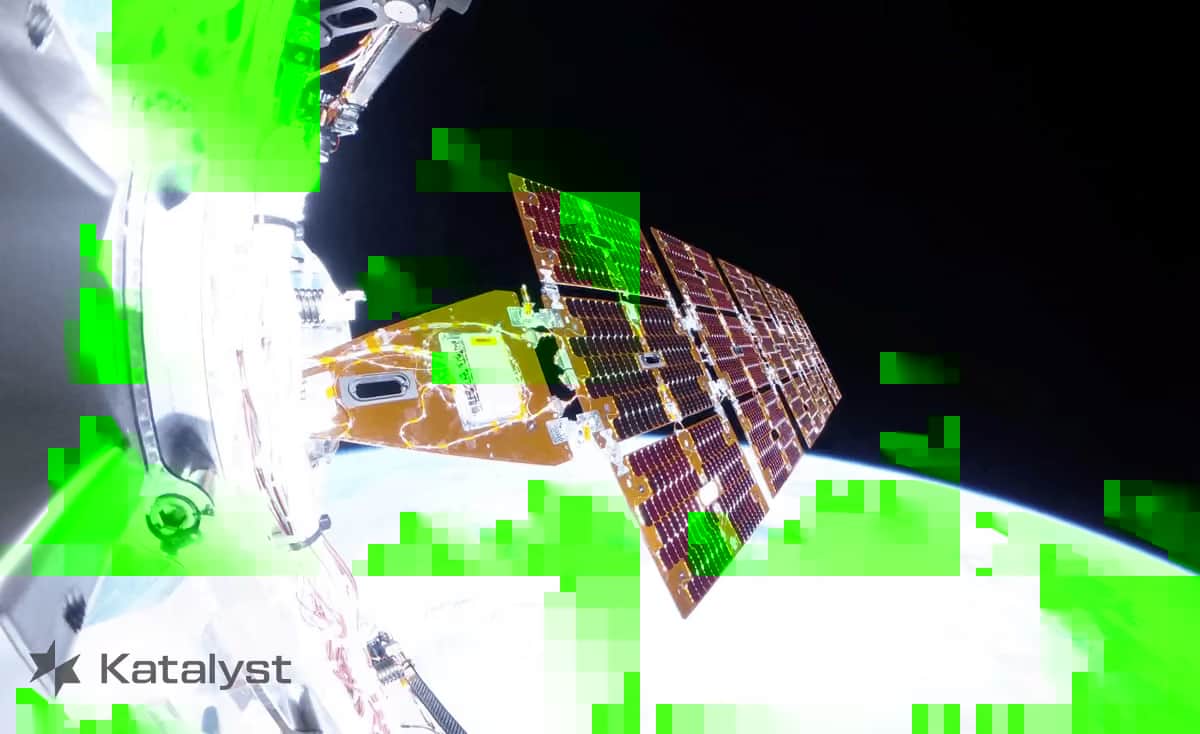
Image: TechCrunch
A Katalyst Space robot launched to capture a space telescope and raise it to a higher orbit is tumbling out of control, NASA and the company said on July 28, 2026.
The mission was the first time NASA hired a private company to lift one of its observatories into a higher orbit, extending its operations beyond the expected lifespan of the Neil Gehrels Swift Observatory. Launched in 2004, Swift detects fleeting events such as gamma-ray bursts, but its orbit has gradually decayed and must be raised for the spacecraft to continue working.
The LINK spacecraft launched on July 3 aboard a Northrop Grumman Pegasus rocket. After several weeks of commissioning, flight controllers began experiencing problems controlling the vehicle. It started spinning over the weekend, making communications difficult as its antenna repeatedly pointed away from Earth.
NASA attempts to stabilize the LINK spacecraft
NASA said two of LINK’s three reaction wheels—the components used to control the spacecraft’s alignment—have failed. The spacecraft also has problems with one of its thruster systems.
Flight controllers are using another set of thrusters to slow the spin. NASA said the team had “already begun this series of burns and are seeing the intended effect.”
Recommended reading
China tests 400-volt power system in orbit
Katalyst chief engineer Kieran Wilson previously told reporters that the spacecraft was built exceptionally quickly because Swift needs to be raised within the next few months.
“All this is challenging and risky. There’re a lot of spacecraft that have had far longer development cycles with far more funding behind them that have failed for mundane reasons.”
Katalyst raised a $12 million funding round in June from Fortitude Ventures and Geodesic Capital to support the mission. The company has also received funding from the U.S. military, which is interested in vehicles capable of servicing satellites or surveilling rival spacecraft.
Frontier Editor
Dan is our resident futurist, covering electric mobility, space exploration, and the smart home. He's interested in atoms just as much as bits. Whether it's a new battery chemistry, a reusable rocket, or a protocol that finally makes IoT devices talk to each other, Dan breaks down the engineering that pushes humanity forward.
via TechCrunch