• 3 min read
China tests 400-volt power system in orbit
China has tested a 400-volt spacecraft power system in orbit, targeting heavier vehicles, lunar missions and future deep-space infrastructure.
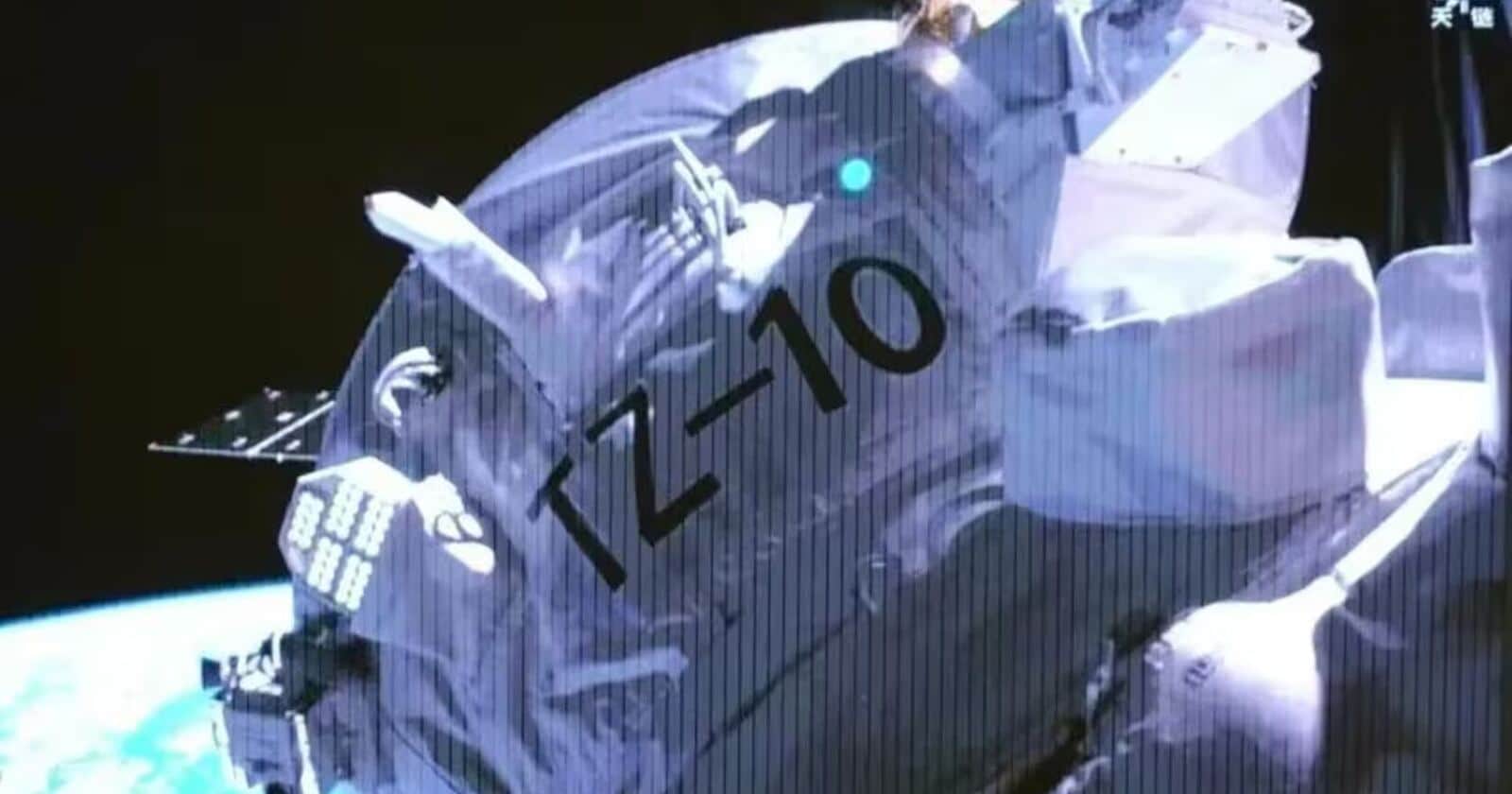
Image: ITzine
China has successfully tested a 400-volt spacecraft power system in orbit for the first time, completing both test series without failures. Developed by the China Academy of Space Technology (CAST), the system was carried into space aboard the Tianzhou-10 cargo spacecraft.
The test is intended as more than a one-off demonstration. Chinese developers are positioning the platform for heavy spacecraft, lunar missions and future infrastructure beyond low Earth orbit. All reported parameters matched the calculations after the system reached orbit, exposing it to radiation, temperature swings and tight spacecraft constraints rather than laboratory conditions alone.
The system covers the full power cycle:
- Generation
- Energy storage
- Distribution
- Power transmission
CAST says the project keeps control of the main components and avoids dependence on foreign technologies. That gives China a domestic foundation for high-power spacecraft, which will be needed as missions move beyond compact satellites.
Recommended reading
Katalyst’s space robot tumbles before NASA telescope rescue
Why spacecraft need 400 volts
Spacecraft commonly use 28-volt and 100-volt architectures. Moving to 400 volts reduces current at the same power level, allowing lighter and thinner cables. It also cuts energy losses and simplifies equipment cooling—advantages that become more significant on large spacecraft carrying propulsion systems, high-performance computers and large energy reserves.
The idea is not new in aviation or terrestrial power systems, where higher voltages help manage substantial loads. The challenge in space is stricter: engineers must reduce mass, heat and the volume required for wiring and power electronics. China’s orbital test indicates that the approach can operate in the actual space environment, not just in simulations or on a test bench.
Space technology specialist Pan Zhihao said the move to 400 volts could support more efficient use of silicon-carbide components. These devices are suited to high-power converters and can improve the efficiency of spacecraft power systems. That could eventually support megawatt-class equipment, which has been constrained by the mass of cabling, power losses and heat management.
Lunar missions and heavy spacecraft
CAST directly links the new architecture to China’s largest planned projects. The system is intended to power electric propulsion systems, crewed lunar spacecraft, landers, rovers and components of a future lunar research station. It could also serve scientific instruments and life-support systems—equipment needed for extended operations in lunar orbit and on the surface.
Higher onboard power would give mission designers more room to increase payload capability for deep-space missions. Large spacecraft cannot rely on the compact batteries and lightweight wiring used by small satellites, so the power architecture becomes a central constraint on what they can carry and how long they can operate.
The immediate goal is for the 400-volt architecture to become a base platform for lunar expeditions. The United States and Europe are also working on high-voltage spacecraft platforms, but China’s program now has an orbital result to build on rather than laboratory calculations alone. If follow-up tests confirm the initial performance, the system could move from an experimental technology toward a standard for heavy spacecraft headed first for the Moon and eventually farther into space.
Frontier Editor
Dan is our resident futurist, covering electric mobility, space exploration, and the smart home. He's interested in atoms just as much as bits. Whether it's a new battery chemistry, a reusable rocket, or a protocol that finally makes IoT devices talk to each other, Dan breaks down the engineering that pushes humanity forward.
via ITzine