• 2 min read
SpaceX releases striking images from Starship flight 13
SpaceX published striking images from Starship’s July 24 test flight, including Ship 40, Starlink V3 satellites and its Indian Ocean splashdown.
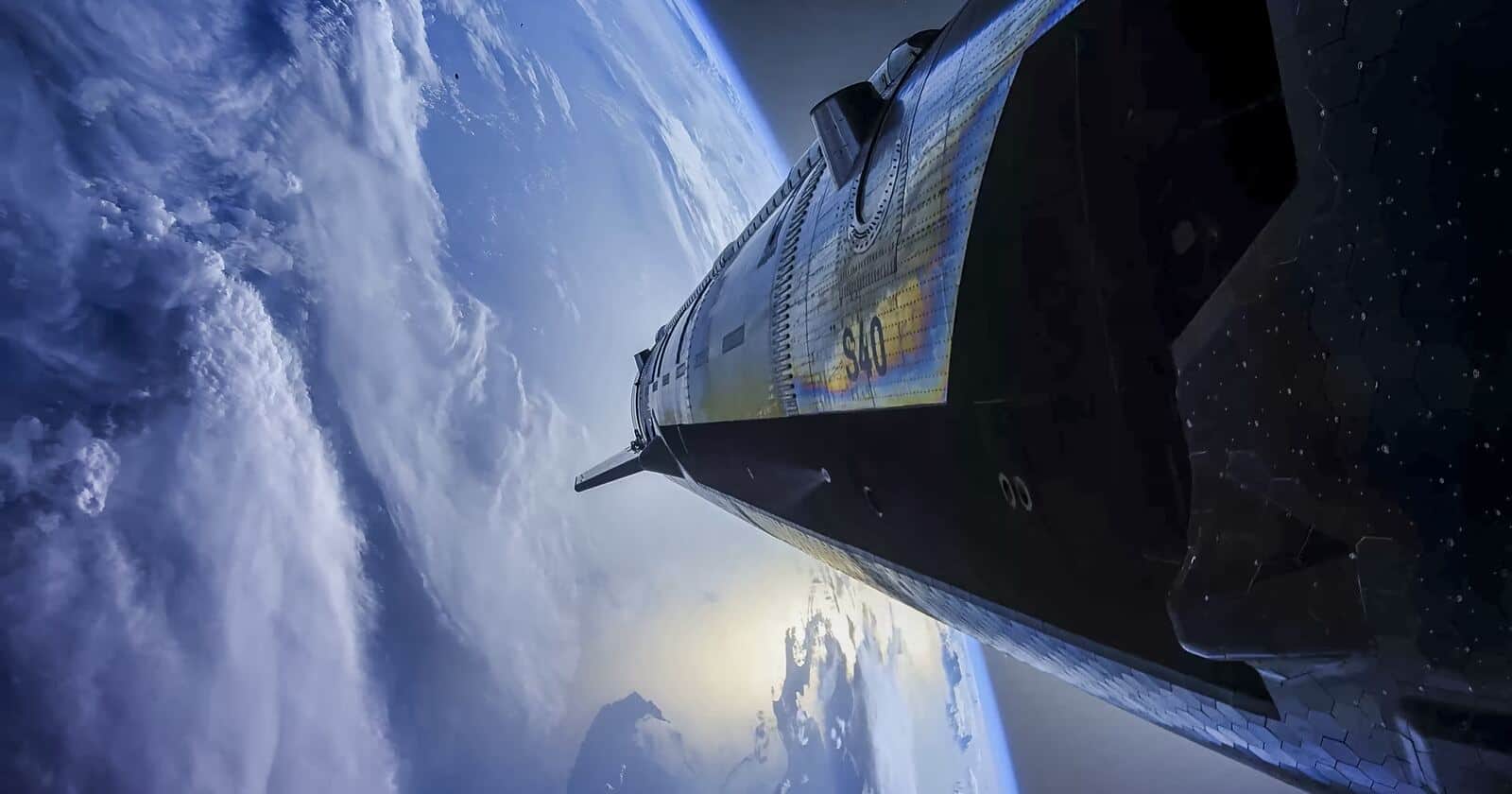
Image: ITzine
SpaceX has released a new series of images from Starship’s 13th test flight, showing Ship 40 from several angles against the Earth. The photos also capture the vehicle separating from its Super Heavy booster and close views of its heat-shield tiles.
— Photo: SpaceX
The flight took place on July 24, 2026, and was Starship’s second test as part of its third generation. During the mission, the spacecraft sent 20 full-sized Starlink V3 satellites onto a suborbital trajectory for the first time. It also restarted one of its Raptor engines while in space.
After completing its planned objectives, the upper stage made a controlled atmospheric reentry and performed a soft splashdown in the Indian Ocean. The mission tested more than trajectory and engine performance: Ship 40 remained intact after landing, giving SpaceX engineers data on how the vehicle’s structure and heat shield handled the return from space.

Recommended reading
NASA staff cuts hit 25 major programs
Maxim Tretyakov is a technical commentator who writes mainly about the mobile-phone market and automotive technology. He has prepared 740 articles covering flagship smartphone launches, including Xiaomi and Apple products, neural-network features in consumer devices, and the state of Russia’s domestic auto industry. His expertise also includes hardware ranging from graphics-card concepts to smart rings, as well as technology-market regulation.
Frontier Editor
Dan is our resident futurist, covering electric mobility, space exploration, and the smart home. He's interested in atoms just as much as bits. Whether it's a new battery chemistry, a reusable rocket, or a protocol that finally makes IoT devices talk to each other, Dan breaks down the engineering that pushes humanity forward.
via ITzine