• 2 min read
China starts deploying 120-satellite debris-tracking network
China has begun deploying Gande, a 120-satellite commercial constellation for AI-assisted space-debris tracking across multiple orbits.
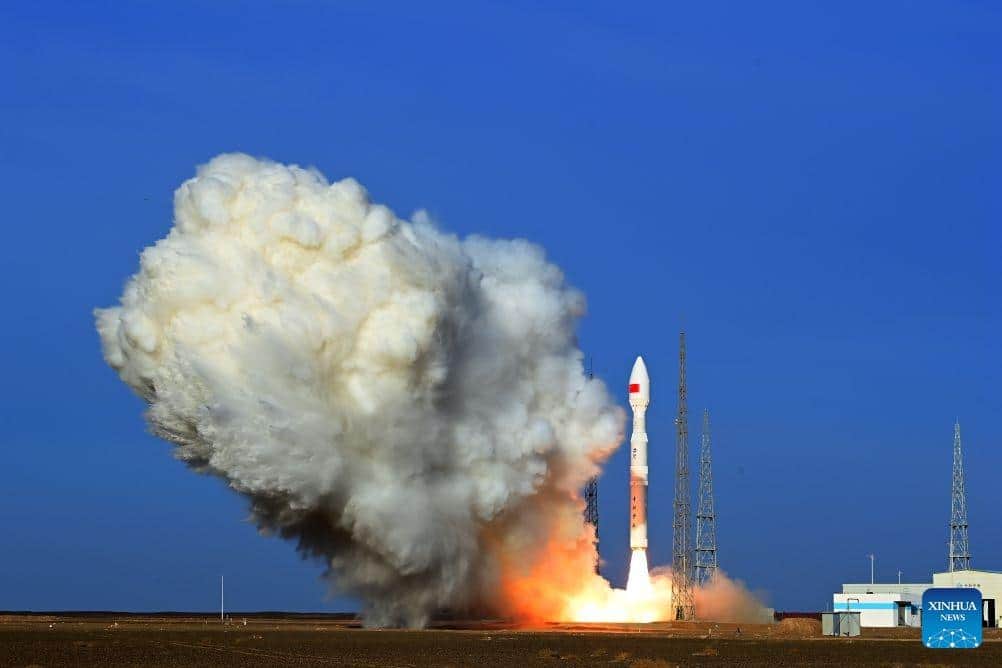
Image: iXBT
China has begun deploying Gande, its first commercial satellite constellation dedicated to tracking space debris. The first satellite was launched aboard the commercial Lijian-1 rocket from a spaceport in the country’s northwest.
Developed by Beijing-based private aerospace company ATmoto Technology, Gande is planned to comprise 120 satellites. The network is designed to detect and monitor objects around the clock across low, medium, and high Earth orbits, with full deployment scheduled by 2030.
Gande constellation deployment stages
The first phase, called LX630, includes 14 satellites being developed with Liangxi Aerospace Technology Group. They will observe space objects and help build a catalog of debris and other orbital targets.
The first spacecraft carries an AI-enabled onboard computer that can monitor its surroundings, track targets quickly, and handle emergency tasks without continuous control from the ground. It also has an orbital maneuvering system for approaching objects and carrying out other operations in orbit.
The second phase will add 36 satellites equipped with high-resolution cameras and electromagnetic-environment sensors. The third calls for another 70 AI-powered spacecraft capable of recognizing objects, analyzing their behavior, and making decisions autonomously.
Recommended reading
SpaceX completes first Mechazilla tower at Cape Canaveral
Chinese media cited the number of potentially hazardous debris fragments larger than 1 centimeter at more than 1 million. These objects travel at about 7.9 kilometers per second and can seriously damage satellites or space stations in a collision. Gande’s completed deployment is intended to expand China’s ability to track debris and manage orbital traffic.
Frontier Editor
Dan is our resident futurist, covering electric mobility, space exploration, and the smart home. He's interested in atoms just as much as bits. Whether it's a new battery chemistry, a reusable rocket, or a protocol that finally makes IoT devices talk to each other, Dan breaks down the engineering that pushes humanity forward.
via iXBT