• 2 min read
Scientists create first ferromagnetic semiconductor MXene
Researchers created the first lanthanide MXene combining semiconductor behavior with stable ferromagnetism, opening paths to spintronic devices.
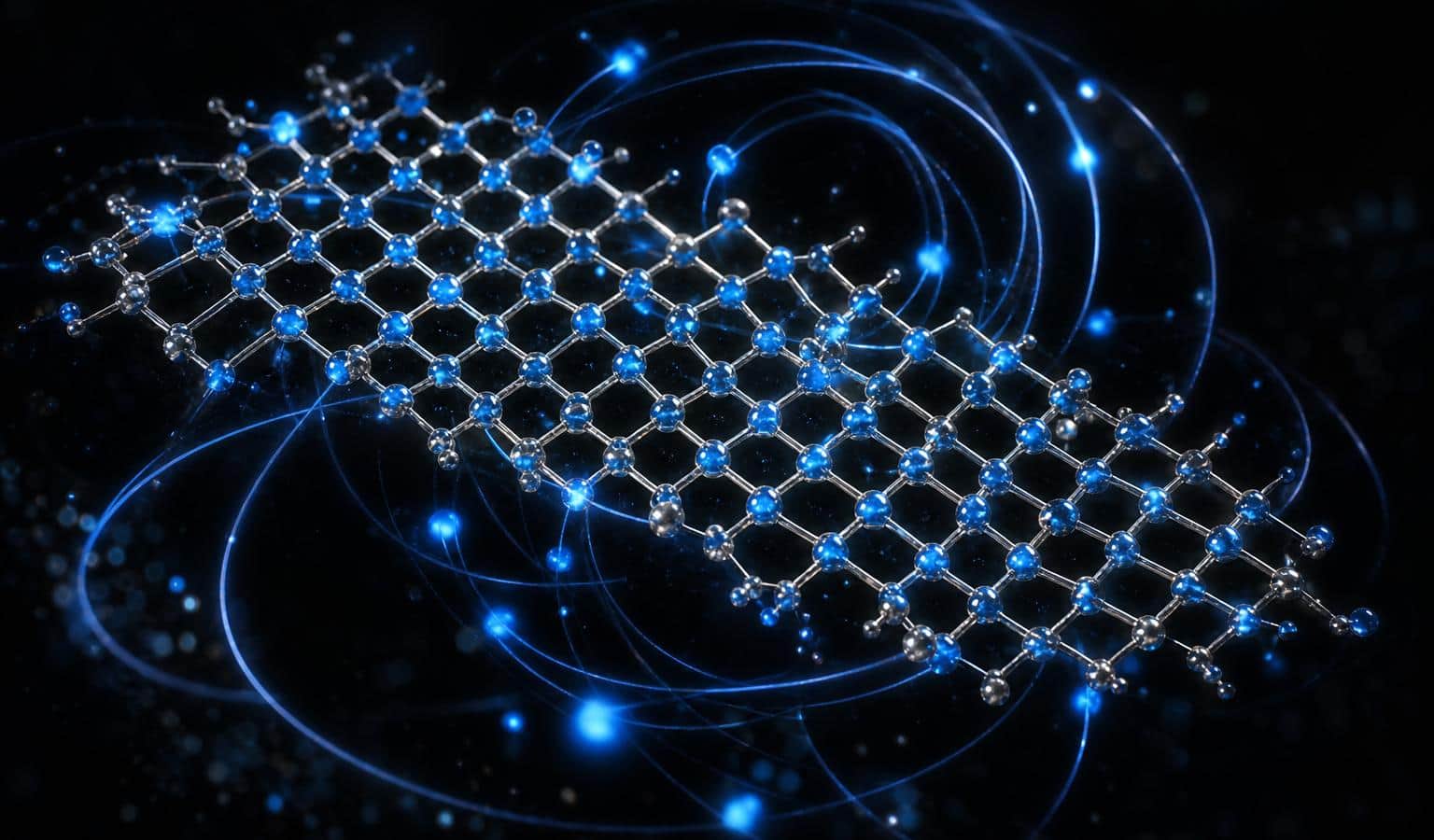
Image: iXBT
Researchers from the Ningbo Institute of Materials Technology and Engineering of the Chinese Academy of Sciences, Zhejiang University and a laboratory have created what they describe as the world’s first lanthanide two-dimensional MXene. The work was published in Nature on July 26, 2026.
Like graphene, MXenes are atomically thin materials. But while graphene consists of carbon atoms, MXenes are made from layers of transition metals such as titanium, vanadium, niobium and molybdenum combined with carbon or nitrogen.
The new material combines two properties that have rarely appeared together in MXenes: semiconductor behavior and stable ferromagnetism. Most earlier MXenes were based on early transition metals and offered high electrical conductivity, but were less suited to devices that need simultaneous control of electrical and magnetic properties.

Recommended reading
China starts deploying 120-satellite debris-tracking network
How the new MXene was made
The researchers developed a synthesis technique based on “chemical scissors.” At the atomic level, the method selectively removes, replaces or rearranges layers, allowing the structure—and its eventual electrical, magnetic and optical properties—to be designed in advance.
The process has two stages:
- A lanthanide metal reacts with a copper halide to form an intermediate compound.
- At high temperature, that compound reacts with graphite, creating a layered MXene structure with alternating metal, carbon and halogen atoms.
Testing confirmed that the resulting material is both a semiconductor and a ferromagnet. That combination is a major target in materials science because it could support electronics that use electrical charge and magnetism together.
The authors point especially to spintronics, which exploits an electron’s spin as well as its charge. Potential applications include energy-efficient logic processors, high-frequency communications systems, magnetic sensors, next-generation memory and components for future quantum computers.
The synthesis method may prove as significant as the material itself. The researchers believe chemical scissors could enable a broader family of two-dimensional materials with precisely engineered properties.
Frontier Editor
Dan is our resident futurist, covering electric mobility, space exploration, and the smart home. He's interested in atoms just as much as bits. Whether it's a new battery chemistry, a reusable rocket, or a protocol that finally makes IoT devices talk to each other, Dan breaks down the engineering that pushes humanity forward.
via iXBT