• 2 min read
Starship Flight 13 could launch Thursday night
SpaceX plans Starship’s 13th full-scale test flight on Thursday, with 20 functional Starlink V3 satellites and heat shield tests onboard.
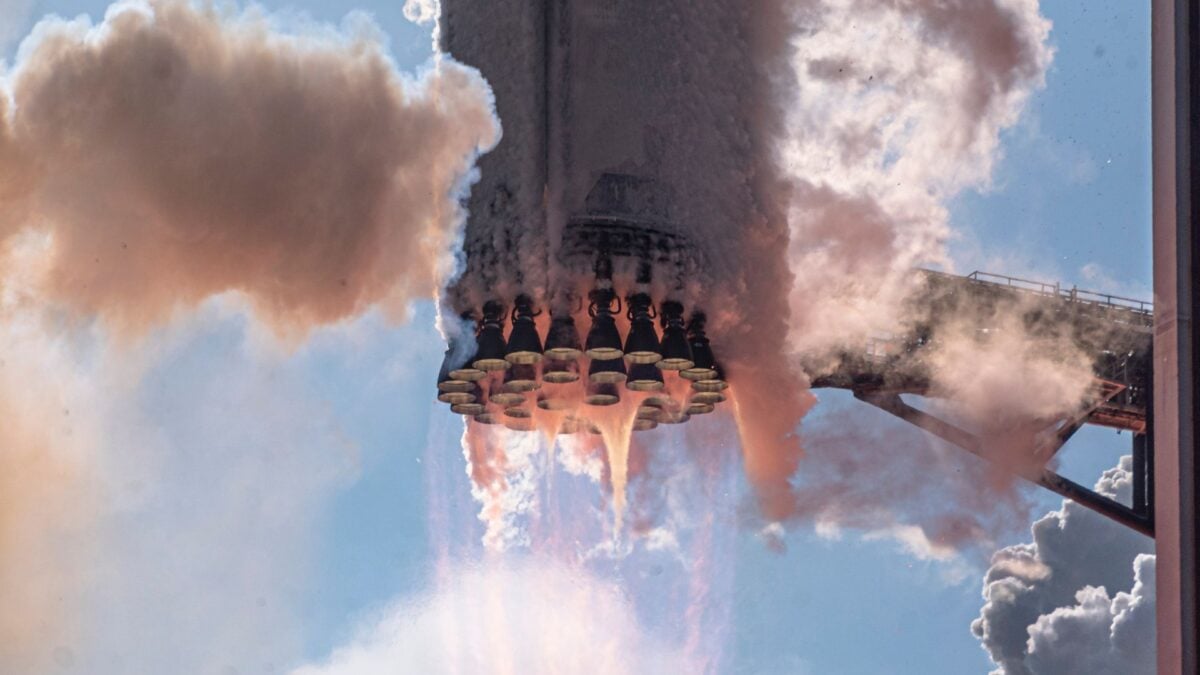
Image: Gizmodo
SpaceX is preparing Starship Flight 13, the 13th full-scale test flight of its giant rocket and the second launch attempt using Starship V3. The company says the vehicle could lift off from Starbase, Texas, during a 90-minute launch window opening at 6:45 p.m. ET on Thursday.
Viewers can watch the mission from liftoff to splashdown on SpaceX’s website, its X account, or through third-party livestreams cited by the source. The test follows Starship V3's first flight in May, when the rocket reached its planned trajectory, deployed 20 dummy Starlinks, and completed a controlled splashdown in the Indian Ocean.
That earlier mission was not flawless. One of Super Heavy’s 33 Raptor 3 engines shut down during ascent, the booster failed to relight all the engines needed for its boostback burn after stage separation, and it ended in a hard splashdown in the Gulf of Mexico. The upper stage also lost an engine on the way to space.

Recommended reading
Luch-5 satellites kept Soyuz MS-29 linked to the ISS
For Flight 13, SpaceX says engineers changed Super Heavy to improve engine re-light reliability and updated engine alarms and abort logic for the realities of multi-engine flight. The company also adjusted the booster’s engine startup sequence after the Flight 12 flip maneuver was off by about 90 degrees, and it says it addressed the causes of the upper-stage engine failure.
Flight 13 test objectives
This time, Starship will carry 20 real, functional Starlink V3 satellites into space for the first time. After deployment, the satellites will extend solar arrays and antennas and try to connect with the wider Starlink constellation, but they will not join the operational network. Instead, they will stay on Starship’s suborbital trajectory and burn up on reentry about 20 minutes after deployment.
Six satellites will carry cameras to inspect Starship’s heat shield and send images back to operators before reentry. SpaceX also painted some heat shield tiles white to imitate missing tiles and give those cameras clear imaging targets.
The company is also testing changes to the heat shield itself, including:
- new tile attachment methods
- tiles placed in different locations
- sensor-equipped tiles designed to measure forces during higher dynamic pressure on ascent
According to SpaceX, those higher loads are meant to simulate increased payload-to-orbit capacity. If the mission goes as planned, Super Heavy will make a controlled splashdown in the Gulf of Mexico, and the upper stage will follow with a controlled splashdown in the Indian Ocean.

Frontier Editor
Dan is our resident futurist, covering electric mobility, space exploration, and the smart home. He's interested in atoms just as much as bits. Whether it's a new battery chemistry, a reusable rocket, or a protocol that finally makes IoT devices talk to each other, Dan breaks down the engineering that pushes humanity forward.
via Gizmodo