• 2 min read
Sega’s $5M bet kept Nvidia alive in 1995
Jensen Huang thanked Sega in Tokyo for the $5 million investment that kept Nvidia from running out of cash in 1995.
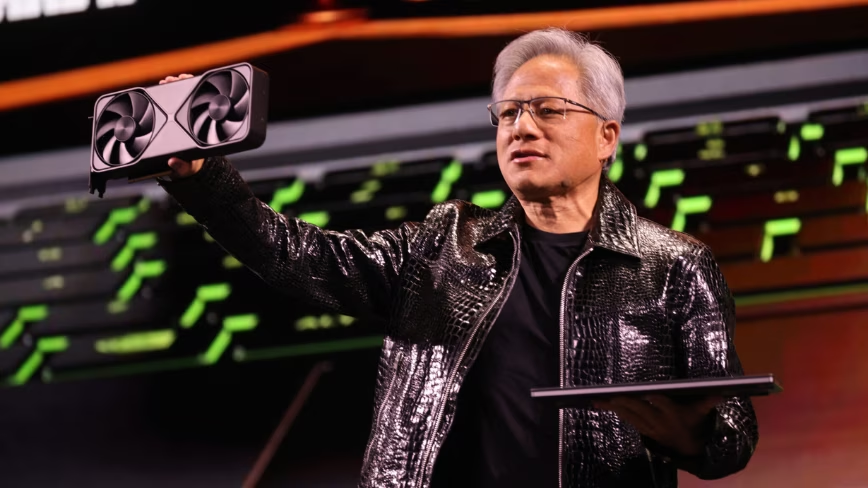
Image: TNW
Nvidia nearly ran out of money in 1995. This week in Tokyo, CEO Jensen Huang thanked Sega for the $5m investment that he says kept the company alive.
Huang met former Sega boss Shoichiro Irimajiri and game designer Yu Suzuki on Wednesday, according to Reuters. The visit marked 30 years since Sega wrote the check.
“If not for what Sega did for Nvidia, Nvidia would not be here today.”
Huang added that Nvidia had “chosen exactly the wrong technology” at the time, and said Sega’s belief in the company still means a great deal to him.
In 1995, Nvidia shipped its first chip, the NV1, which rendered graphics using curved shapes instead of triangles. The approach was mathematically elegant, but the market moved the other way after Microsoft made triangles the standard for PC graphics with DirectX. A follow-up chip Nvidia had been building with Sega was then scrapped.
By the mid-1990s, the startup had about 30 days of cash left, as Tom’s Hardware notes. Huang flew to Japan and asked Sega to convert a contract payment into an equity investment, warning Irimajiri that the money would most likely be lost. Irimajiri backed the plan and convinced Sega’s board to approve it.

Recommended reading
Musk quietly bought APR Energy for AI power
That $5m bought Nvidia roughly six more months. The company used the time to build the RIVA 128, a triangle-based chip that launched in 1997 and sold 1 million units in four months. Nvidia went public in 1999. Sega later sold its stake for about $15m.
Had Sega held on, that stake would be worth roughly $1tn today. Nvidia is now the world’s most valuable company, and Huang used the anniversary visit to close the loop with the people who helped it survive. The companies also marked the occasion with a new Virtua Fighter game heading to Nvidia hardware.

Enterprise Editor
Marcus follows the money. He covers enterprise software, cloud architecture, and the tectonic shifts in Big Tech strategy. He translates dense earnings calls and complex M&A activity into actionable insights about where the industry is actually heading. If a tech giant makes a silent pivot, Marcus is usually the first to notice.
via TNW