• 2 min read
ChatGPT now shows Kalshi World Cup odds
OpenAI has started displaying Kalshi’s World Cup prediction market odds in ChatGPT search results, its first deal with a regulated betting exchange.
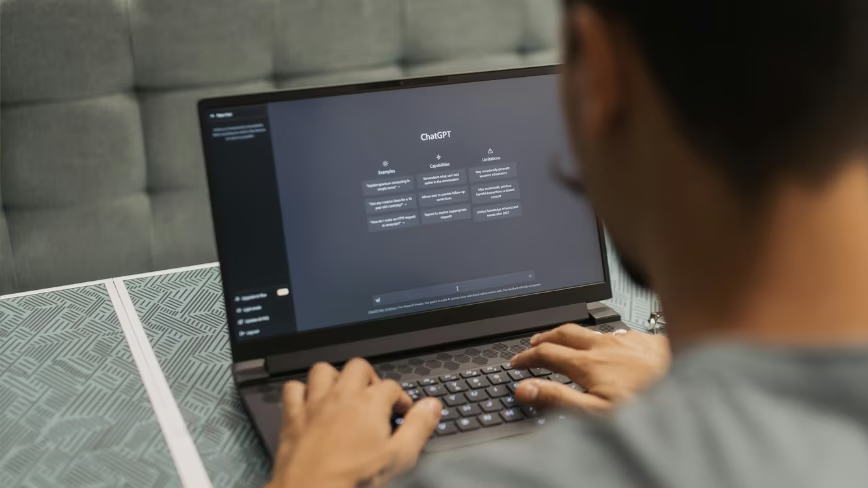
Image: TNW
OpenAI has begun showing Kalshi prediction market odds for 2026 FIFA World Cup matches inside ChatGPT search results, in what the New York Times described as the company’s first partnership with a regulated betting exchange.
The feature displays real-time odds with a “Source: Kalshi” label, but without outbound links or visible Kalshi branding. Users also cannot place bets through ChatGPT. OpenAI’s help page says the data is limited to World Cup-related queries and is provided strictly for informational purposes.
The rollout arrived alongside the World Cup semifinals. At the time, ChatGPT showed France at roughly 60 percent to beat Spain, and England at roughly 55 percent to beat Argentina, based on Kalshi’s prediction market contracts.
Neither company has publicly promoted the arrangement, and OpenAI has not said whether money changed hands or whether the deal includes revenue sharing. The feature appears to surface only when users ask about upcoming World Cup matches.

Recommended reading
Sega’s $5M bet kept Nvidia alive in 1995
The deal adds to a broader push by prediction markets into mainstream platforms. Kalshi signed an exclusive partnership with CNN in late 2025, bringing its odds into news broadcasts through anchor Harry Enten. In January, rival Polymarket struck its own exclusive deal with Dow Jones, putting prediction market data in The Wall Street Journal, Barron’s, and MarketWatch.
Google has also added data from both Kalshi and Polymarket to Search and Google Finance, exposing the two biggest US prediction market platforms to a far wider audience. Kalshi, which is regulated by the Commodity Futures Trading Commission, has raised roughly $1 billion at a valuation of about $22 billion.
For OpenAI, this marks a new kind of data integration for ChatGPT after adding advertising and shopping features to search results earlier this year. It also places the company in a sensitive area between information and gambling promotion, especially as regulators continue to scrutinize prediction markets. State regulators have challenged both Kalshi and Polymarket over some contract types, and Google said it will ban prediction market browser extensions starting in August.
With ChatGPT now used by more than 1 billion people weekly, even a tightly limited World Cup rollout gives prediction markets another high-profile route into everyday search behavior.
Enterprise Editor
Marcus follows the money. He covers enterprise software, cloud architecture, and the tectonic shifts in Big Tech strategy. He translates dense earnings calls and complex M&A activity into actionable insights about where the industry is actually heading. If a tech giant makes a silent pivot, Marcus is usually the first to notice.
via TNW