• 2 min read
Why SpaceX chose stainless steel for Starship
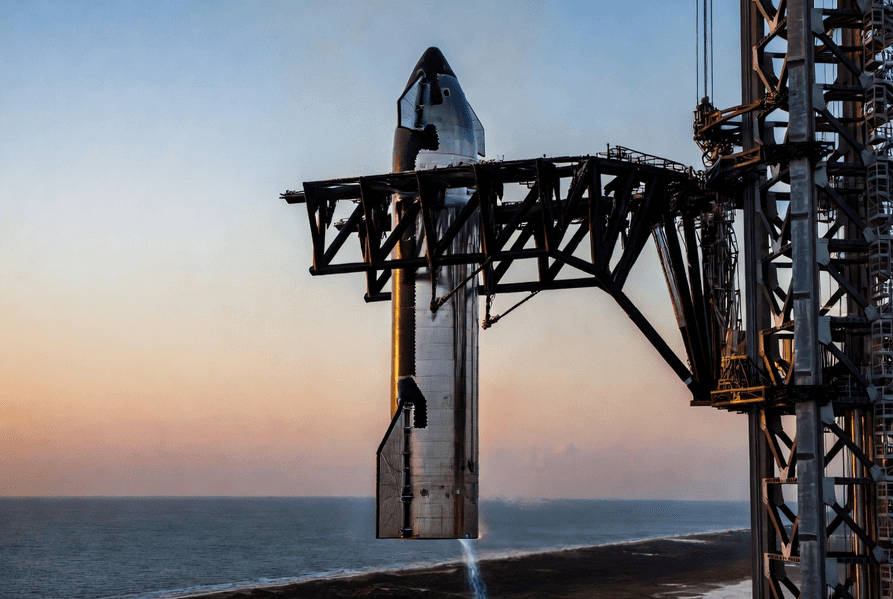
Elon Musk says SpaceX chose stainless steel for Starship because it is cheaper, easier to manufacture, and better suited to cryogenic flight.

Image: ITzine
Elon Musk says SpaceX chose stainless steel over carbon fiber for Starship because it offered a better balance of cost, strength, and manufacturability for a vehicle of this scale. The SpaceX chief shared a video explaining the engineering trade-offs behind the decision.
Carbon-fiber composites remain expensive, are produced in relatively small batches, and create complications when used with cryogenic propellants such as liquid oxygen. The material must also withstand heating during atmospheric reentry, making it less convenient for Starship’s operating cycle.
According to Musk, stainless steel handles extremely low temperatures better, is easier to process, and costs significantly less to manufacture. That allows SpaceX to move faster from a design concept to a full-size prototype. For Starship, he argued, rapidly building a large, functional vehicle matters more than achieving a few additional percentage points of theoretical mass savings.
Why SpaceX considered carbon fiber
Carbon fiber was long viewed as close to an ideal material for spacecraft: it is light, rigid, and well suited to missions where every kilogram affects performance. Boeing, Airbus, and several satellite manufacturers have used composites for years, while their market share has grown through savings in mass and fuel.
Recommended reading
SpaceX may catch Starship on its next flight
The trade-off is that composites are expensive, technologically demanding, and poorly suited to some of the conditions Starship faces during fueling and reentry. For a reusable heavy-lift system, that affects more than the specifications. It can also influence assembly, testing, and repair rates.
Stainless steel and Starship’s test program
Stainless steel is not new to spaceflight. It has been used for tanks, structural elements, and components where temperature tolerance and strength matter more than minimum weight.
SpaceX has effectively returned to a material that performs worse on density charts but may hold up better across Starship’s real operating cycle. The approach has already helped the company move more quickly into testing and structural refinement.
After Flight 13, the vehicle reportedly retained its integrity after reentry for the first time and completed a controlled splashdown in the Indian Ocean. The result makes the material choice look less like a presentation theory and more like a practical engineering strategy. The next Starship flights will show whether that strategy can support the pace needed for regular reuse.
Frontier Editor
Dan is our resident futurist, covering electric mobility, space exploration, and the smart home. He's interested in atoms just as much as bits. Whether it's a new battery chemistry, a reusable rocket, or a protocol that finally makes IoT devices talk to each other, Dan breaks down the engineering that pushes humanity forward.
via ITzine