• 2 min read
Snapping knitted fabric counts steps and switches LEDs
Harvard SEAS researchers built machine-knitted textiles that snap between stable shapes, acting as soft switches, sensors, and light controls.
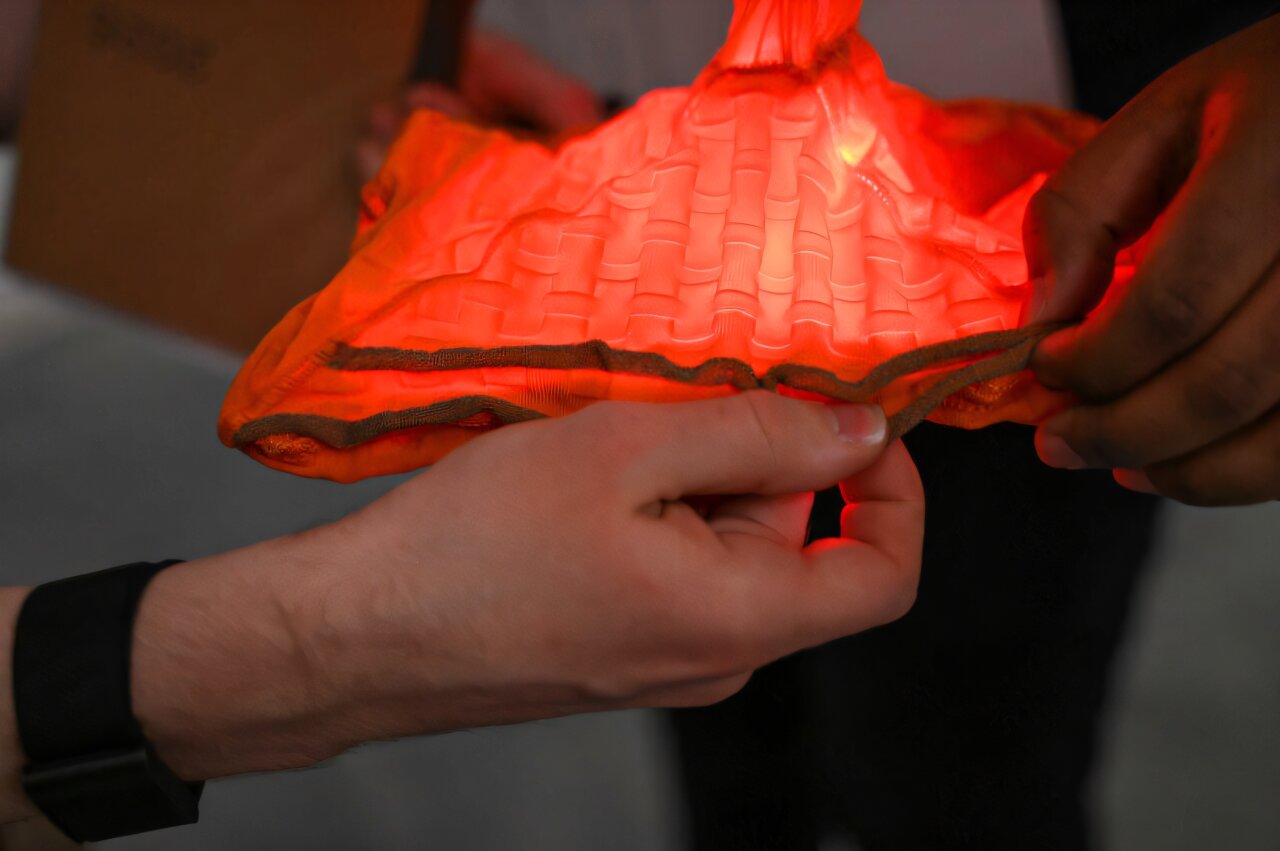
Image: TechXplore
Knitting is being pushed well past sweaters and blankets. Researchers at the Harvard John A. Paulson School of Engineering and Applied Sciences (SEAS) have developed machine-knitted fabrics that can snap between multiple stable shapes, turning textiles into switches, sensors, and programmable devices.
The work was led by Kausalya Mahadevan, a recent Ph.D. graduate now working as a postdoctoral associate in the lab of Katia Bertoldi, the William and Ami Kuan Danoff Professor of Applied Mechanics. The study appears in Advanced Functional Materials.
“I’ve always been excited about fabrics and textiles, and what we can engineer and build with them,” Mahadevan said.
The team used weft knitting, the same industrial process commonly used for hats and gloves, to create textiles with multistability—a physics term for structures that can rest in more than one stable state. Instead of relying on molded polymers and programmed residual stress, the researchers achieved complex curved forms using only highly elastic yarns and a technique called plating, which exposes different yarns on each side of the fabric.
Recommended reading
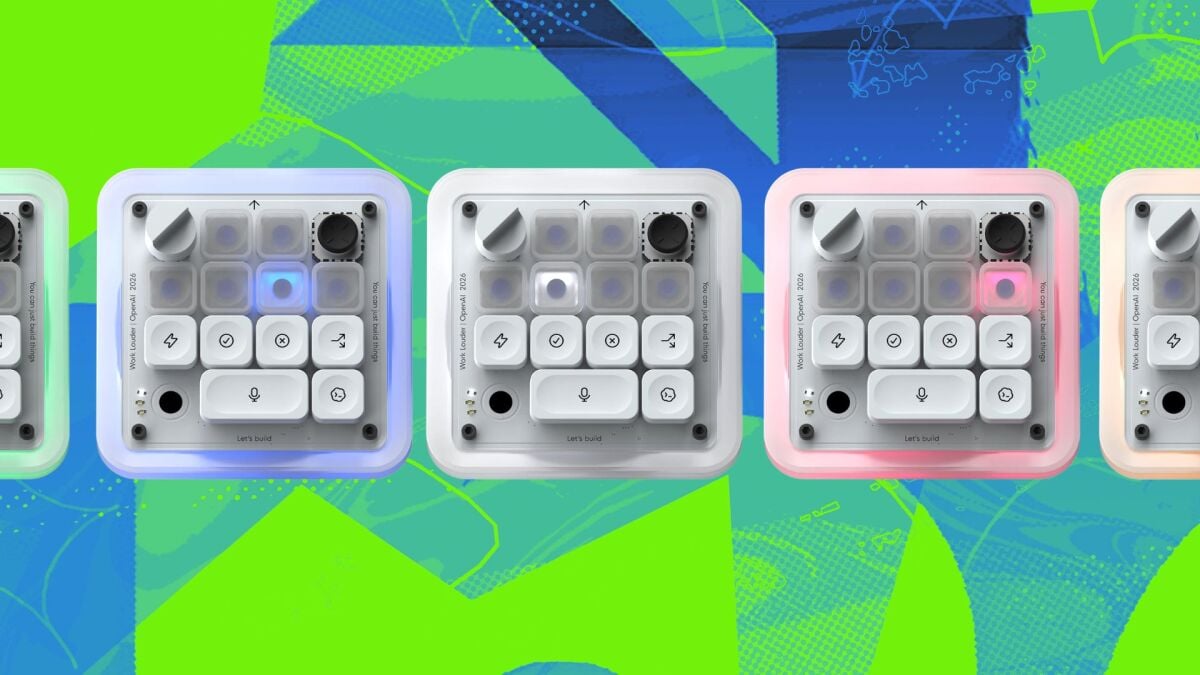
OpenAI’s first gadget is a $230 coding keypad
By combining horizontal and vertical stripes, they produced dense textiles that curl into three-dimensional forms and snap between configurations. The researchers also modeled the behavior with simulations that treat the fabric as a continuous material, rather than tracking every individual yarn.
Prototype devices built from the fabric
To show practical uses, the team embedded fine conductive yarns into the knits, creating soft electrical switches that change state as the fabric snaps:
- a multistable knitted shell that turns an LED on and off
- a wearable textile switch mounted over the knee or elbow that can be read by an Arduino to count steps
- a reconfigurable lampshade with three separate multistable switches, each controlling a different light color
These devices were also featured in a recent Art Lab installation.
Because the machines used are similar to standard industrial knitting machines found in garment factories, the researchers say the approach could scale quickly. Mahadevan and the team see a path toward textiles that monitor movement unobtrusively, provide tactile feedback, or change shape on demand.
The paper is “Knitting Multistability” by Kausalya Mahadevan et al, published in 2026 in Advanced Functional Materials, DOI: 10.1002/adfm.76385.

Computing Editor
Tomas lives in the terminal. He covers chips, laptops, and operating systems with a focus on performance and efficiency. He reads kernel changelogs the way other people read fiction, and he's always on the hunt for the perfect mechanical keyboard switch. If it processes data, Tomas has an opinion on it.
via TechXplore