• 2 min read
OpenAI’s first gadget is a $230 coding keypad
OpenAI has launched Codex Micro, a 13-key mechanical keypad built with Work Louder for its Codex coding assistant.
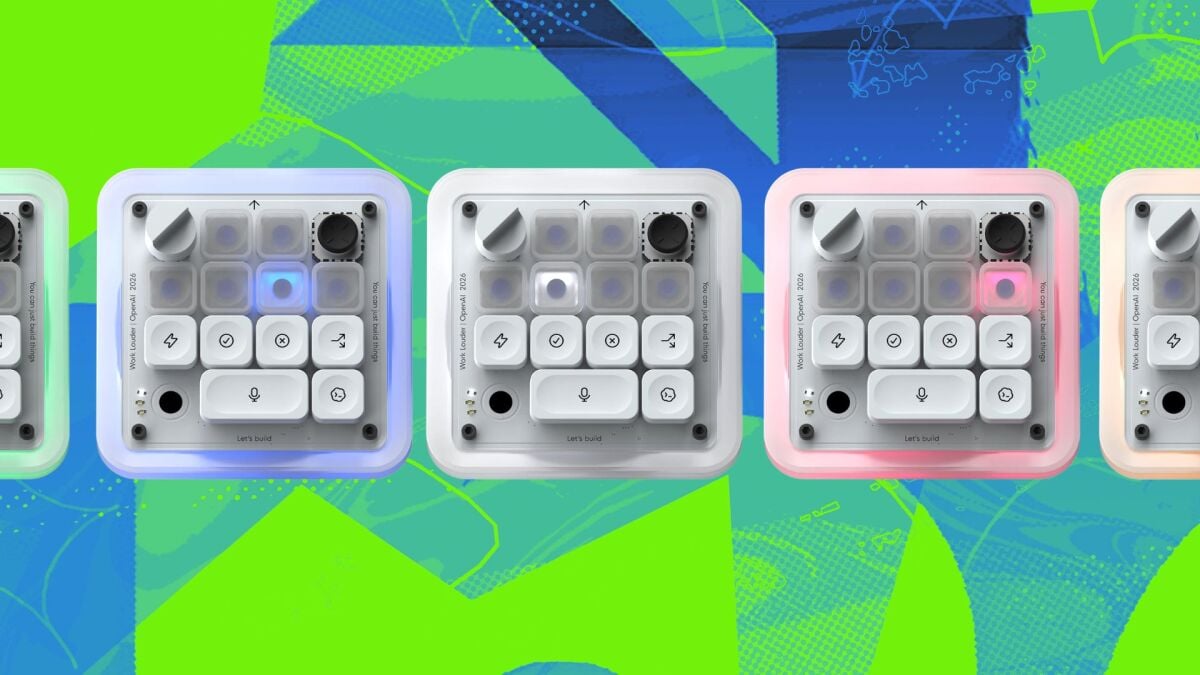
Image: Mashable
OpenAI’s first consumer hardware release is not the much-rumored Jony Ive device. Instead, the company has unveiled Codex Micro, a $230 mechanical keypad made with peripheral brand Work Louder and sold through OpenAI’s Supply Co. storefront as part of a Work Louder Co-Lab collaboration.
Designed to sit beside a keyboard rather than replace one, Codex Micro is a compact 13-key controller built for use with OpenAI’s Codex coding assistant. It includes:
- a rotary dial for changing the AI’s “reasoning level”
- a joystick for triggering workflows such as reviewing pull requests or debugging errors
- programmable command keys for actions like accepting or rejecting suggestions
- RGB backlighting that changes color based on what an active Codex session is doing
It ships with 32 interchangeable keycaps, supports Bluetooth and USB-C, and works with both Mac and Windows. Pre-orders currently show an estimated ship date of July 24.
Recommended reading
macOS 27's Siri Stays Out of Your Way
The release stands apart from OpenAI’s other hardware project, a screenless, “humanlike” AI companion being developed with former Apple designer Jony Ive. OpenAI acquired Ive’s startup io last year, but that device — described in recent reporting as able to track a user’s surroundings and habits — has not yet launched.
Mashable notes that earlier AI hardware products such as Humane’s AI Pin and the Friend pendant struggled after release. Online reaction to Codex Micro has also been mixed, with some Reddit users questioning whether the product was a joke and arguing that $230 is expensive for a niche developer accessory.
Disclosure: Ziff Davis, Mashable’s parent company, filed a lawsuit against OpenAI in April 2025, alleging the company infringed Ziff Davis copyrights in training and operating its AI systems.

Computing Editor
Tomas lives in the terminal. He covers chips, laptops, and operating systems with a focus on performance and efficiency. He reads kernel changelogs the way other people read fiction, and he's always on the hunt for the perfect mechanical keyboard switch. If it processes data, Tomas has an opinion on it.
via Mashable