• 2 min read
System76's Adder Pro packs OLED and RTX 5070 for $2,680
System76 has launched the 15.3-inch Adder Pro with a 165Hz OLED panel, Intel Core Ultra 7 356H, and up to RTX 5070 Laptop graphics.
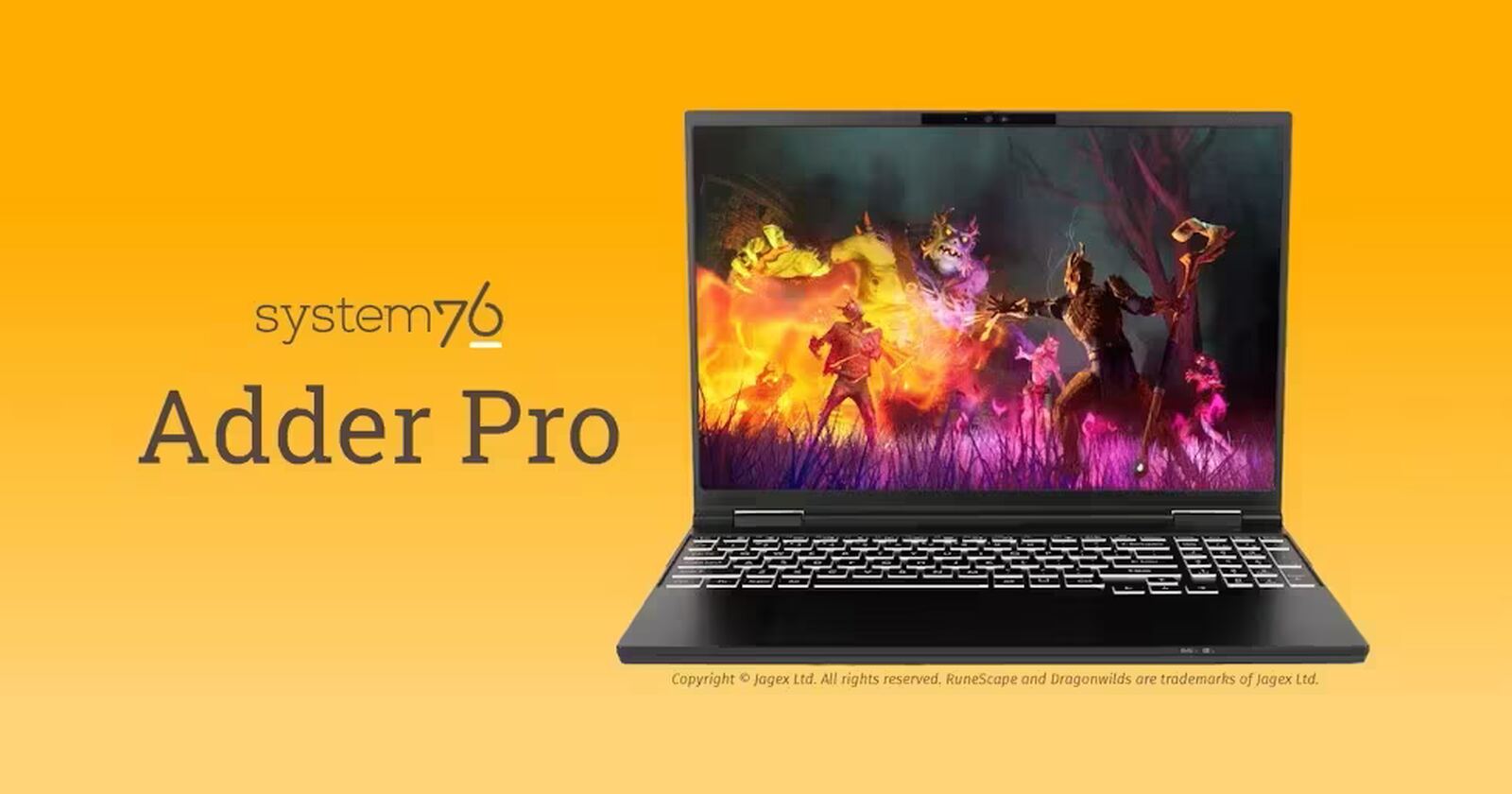
Image: ITzine
System76 has introduced the Adder Pro, a 15.3-inch laptop that pairs a 165Hz OLED display with Intel Core Ultra 7 356H and up to GeForce RTX 5070 Laptop graphics. The company is asking $2,680 for the configuration highlighted by the launch, a notably aggressive price for this class of machine.
That makes the release stand out for System76, which is better known for Linux laptops running Pop!_OS than for gaming systems. Based on the company’s positioning, the Adder Pro leans on practicality rather than unusual design choices: it weighs 1.6 kg, supports a second SSD, and starts with 16GB of RAM and a 1TB SSD.
The base price covers a model with GeForce RTX 5060 Laptop, while stepping up to RTX 5070 Laptop adds $180. Against better-known gaming laptops, the offer looks competitive. Machines such as the Razer Blade and ASUS ROG Zephyrus with OLED panels and graphics at this level typically start well above $3,000, especially when they already include a 1TB SSD.
System76's long history with Linux is another differentiator. The company sells its systems with Pop!_OS or Ubuntu preinstalled, something still relatively uncommon in gaming laptops.

Recommended reading
OpenAI’s first gadget is a $230 coding keypad
System76 Adder Pro specifications
- Display: 15.3-inch OLED, 1600p
- Refresh rate: 165Hz
- Brightness: 500 nits
- Processor: Intel Core Ultra 7 356H
- Base GPU: GeForce RTX 5060 Laptop
- GPU upgrade: RTX 5070 Laptop for $180
- Memory and storage: 16GB RAM and 1TB SSD as standard
- Connectivity: Wi‑Fi 7, Bluetooth 6
- Battery: 60Wh
There are pricier versions too. On System76's site, buyers can configure the Adder Pro with up to 96GB of RAM and as much as 4TB SSD storage. At that point, the top-end price reaches $5,270, putting it in the same bracket as not just gaming notebooks but also mobile workstations.
A few details help the laptop stand out beyond the usual spec sheet. A 500-nit, 165Hz OLED panel is still more common in pricier 15-inch and 16-inch systems, and 96GB of memory in a chassis this size is far from standard. The inclusion of a second SSD slot is also a practical advantage over many thin gaming laptops with more limited upgrade options.
For System76, the bigger test is whether the Adder Pro can appeal beyond Linux loyalists to mainstream buyers who want a compact gaming laptop without a heavy premium. If the price gap versus larger brands stays at even a few hundred dollars, the combination of OLED, RTX 5070, and real upgradeability could give it a clear niche.

Computing Editor
Tomas lives in the terminal. He covers chips, laptops, and operating systems with a focus on performance and efficiency. He reads kernel changelogs the way other people read fiction, and he's always on the hunt for the perfect mechanical keyboard switch. If it processes data, Tomas has an opinion on it.
via ITzine