• 4 min read
Samsung details its open Dolby Atmos rival
Samsung details how Eclipsa Audio uses open IAMF metadata for adaptive spatial sound, with concerts first and sports, films, and TV next.
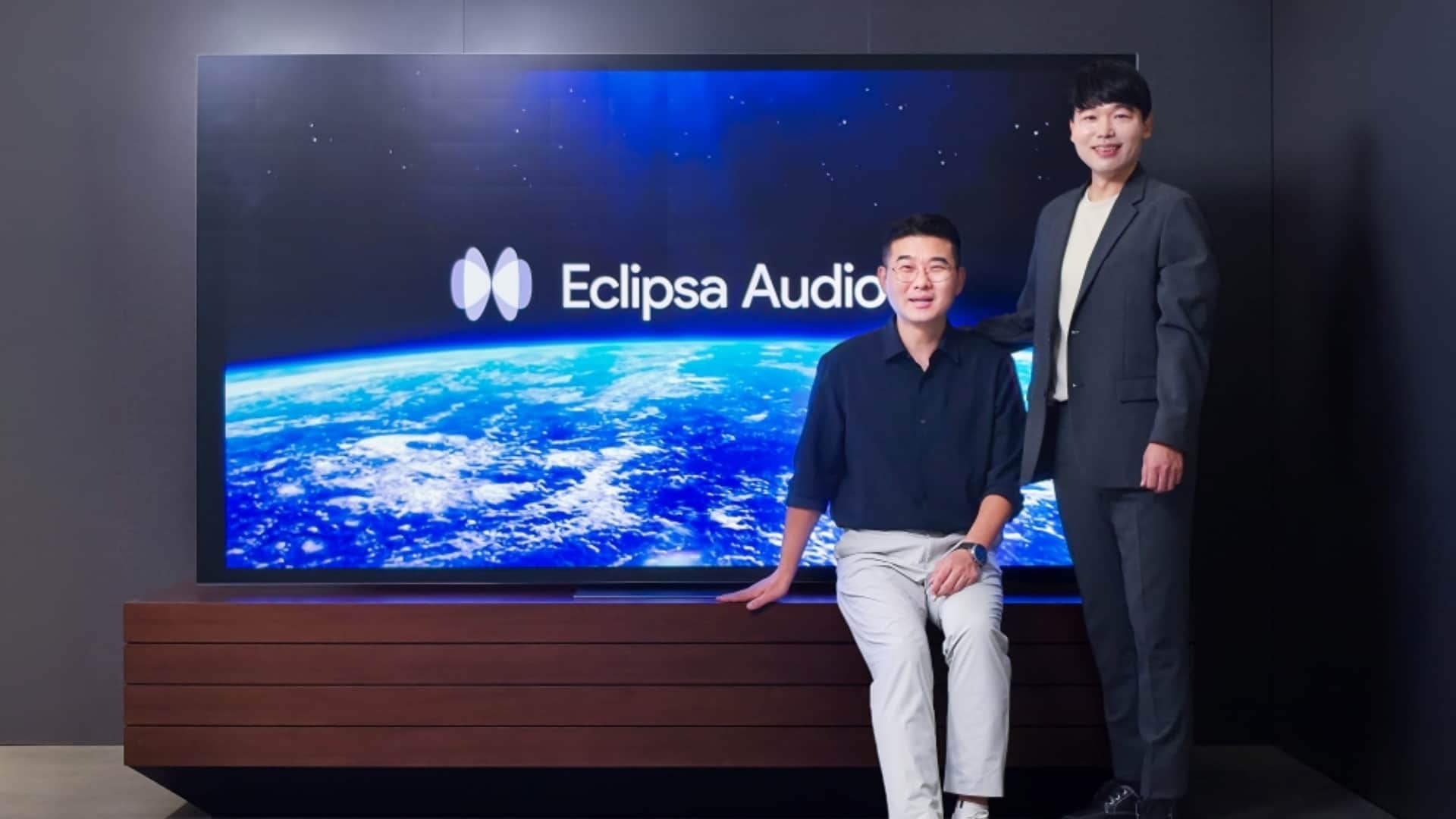
Image: SamMobile
Samsung and Google are positioning Eclipsa Audio as a more open alternative to Dolby Atmos, and Samsung has now detailed how the spatial-audio system handles capture, playback, and compatibility.
The technology was unveiled in 2024 and reached Samsung TVs and soundbars in 2025. Its underlying specification is the Immersive Audio Model and Formats (IAMF) standard, maintained by the Alliance for Open Media. Samsung and Google jointly developed the core system, including its spatial metadata framework, encoding process, and playback pipeline.
That open-standard approach is the clearest distinction from Dolby Atmos. Eclipsa Audio is designed to operate without a specific codec or licensing model, which could make it easier to deploy across content and hardware. Samsung has not provided pricing or licensing details for individual products or services, however.
How Eclipsa Audio creates spatial sound
Eclipsa Audio supports conventional channel-based layouts including 5.1.2 and 7.1.4. It adds spatial metadata describing where sounds should appear across the front, rear, left, right, and height dimensions. Instead of sending a fixed mix intended for one speaker arrangement, the system can adapt the output to the playback hardware.
Recommended reading
Trouver unveils S70 robot vacuums for 2026
That hardware might be a soundbar, a home-theater system, a TV, or a combination of a TV and soundbar. Samsung says the metadata lets audio adjust automatically to the capabilities of the device. For content played on unsupported hardware, Eclipsa Audio falls back to stereo rather than producing a playback error.
The fallback matters for a standard intended to reach different types of products, from TVs to phones and tablets. It also removes one potential barrier to distributing immersive content: unsupported devices can still play the material, even if they cannot reproduce its spatial effects.
That makes Eclipsa Audio relevant to the same buyers now seeking Dolby Atmos in products such as the latest Dolby Atmos soundbars, but the source does not establish how many existing devices support Samsung and Google’s format.
Samsung tested the system on live concerts
Samsung’s Visual Display division, which makes the company’s TVs and soundbars, handled the commercial implementation of Eclipsa Audio on Samsung TV Plus. Samsung Research co-developed the technology with Google.
Before bringing Eclipsa Audio experiences to Samsung TV Plus, Samsung tested the system in a 280-seat live concert venue with a professional sound-engineering firm. The test covered the full chain: capturing spatial audio in real time, encoding it, livestreaming it through Samsung TV Plus, and reproducing it on supported devices.
Samsung also checked transitions between immersive concert audio and the stereo audio used for television advertisements. According to the report, the goal was to ensure that those changes did not create audio stuttering or audio-video synchronization problems.
The first successful tests involved classical and K-pop concerts. Samsung has since begun bringing its first Eclipsa Audio experiences to Samsung TV Plus, although the reporting does not specify a broader release schedule or identify the full list of compatible TVs and soundbars.
Sports, films, and user-controlled mixes are next
Samsung says it plans to expand Eclipsa Audio beyond concerts to live sports, movies, and TV shows. Its longer-term plan goes further than simply placing effects overhead or around the listener: spatial metadata could give users more control over individual elements in a mix.
Potential controls include boosting vocals, reducing crowd noise, or emphasizing live sports commentary. The source describes these as roadmap goals, not features confirmed as available today.
Eclipsa Audio’s current proposition is stronger on openness and fallback compatibility than on proven reach. The royalty-free IAMF foundation and support for multiple speaker layouts could make it a practical alternative to Dolby Atmos, but Samsung has not supplied independent verification, adoption figures, product compatibility details, or a firm timetable for expanding beyond Samsung TV Plus. Until those gaps close, Eclipsa Audio is a credible technical counterweight—not yet an established replacement for Atmos.
Frontier Editor
Dan is our resident futurist, covering electric mobility, space exploration, and the smart home. He's interested in atoms just as much as bits. Whether it's a new battery chemistry, a reusable rocket, or a protocol that finally makes IoT devices talk to each other, Dan breaks down the engineering that pushes humanity forward.
via SamMobile