• 5 min read
Neil Rimer warns AI wealth will be redistributed
Index Ventures co-founder Neil Rimer says AI wealth will be redistributed voluntarily or through government action as philanthropy declines.
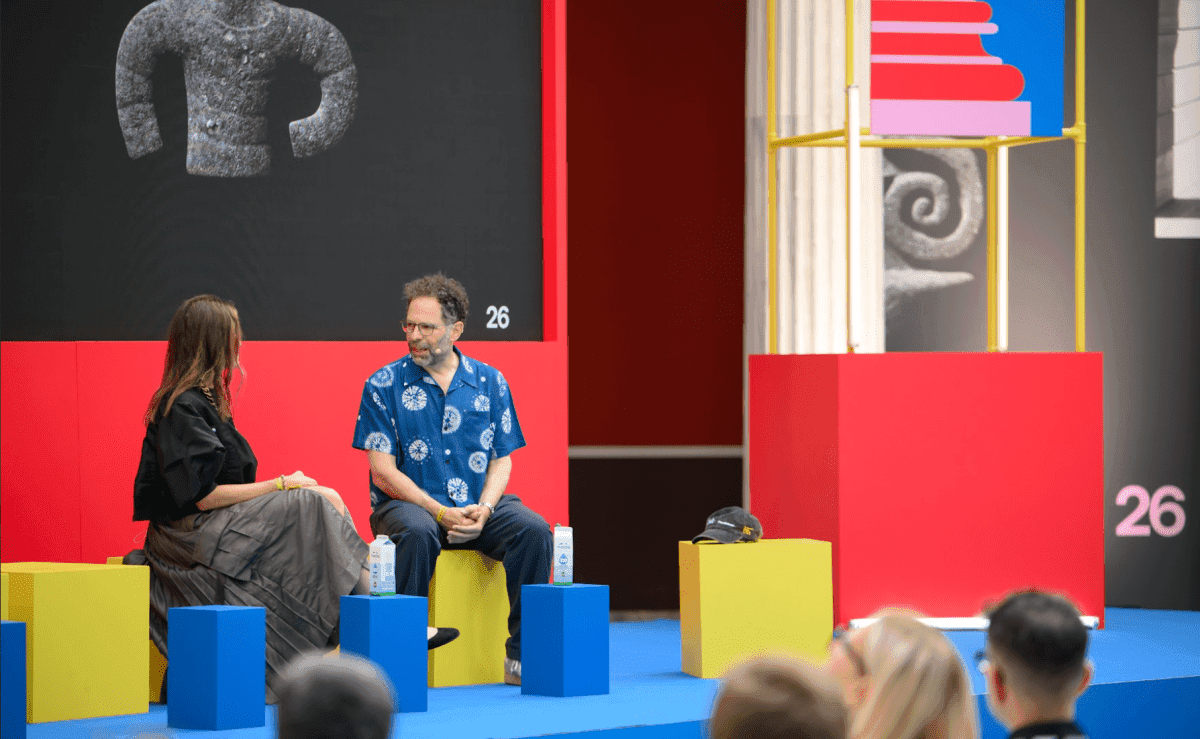
Image: Panathenea (opens in a new window)
Neil Rimer believes Silicon Valley’s enormous AI fortunes will eventually be redistributed—either by choice or through government action. “It’ll either be voluntary or it’ll be involuntary, but it’ll happen, and I hope it’s voluntary,” the Index Ventures co-founder said in a late-May interview in Athens.
Rimer stepped back from day-to-day investing in 2021 and now spends much of his time in Athens, where his wife is from and his children hold Greek passports. His warning carries weight: Index has raised roughly $15 billion from outside investors since its founding, while exits including Figma’s IPO and Google’s acquisition of cybersecurity company Wiz reportedly generated roughly $9 billion for the firm last year.
He has also supported philanthropic and civic institutions. Rimer sits on the board of Endeavor Greece and chaired the Human Rights Watch board from 2019 to 2025. In late 2021, he, his father, and two brothers gave $13 million to McGill University to renovate a campus building and establish the Institute for Indigenous Research and Knowledges.
Billionaire philanthropy is losing momentum
The decline of voluntary giving makes Rimer’s prediction especially pointed. The Giving Pledge, launched by Warren Buffett and Bill Gates in 2010, attracted 113 families in its first five years, followed by 72, then 43, and just four in all of 2024, according to a New York Times report. That article noted that Elon Musk has said his businesses “are philanthropy.”

Recommended reading
Italy’s Russian Palladium Imports Hit €50.1 Million
American charitable giving still reached a record $592.5 billion in 2024, but the number of Americans giving fell for the fifth consecutive year, declining 4.5% in 2024, according to the Stanford Social Innovation Review. About two-thirds of households donated in 2000; today, roughly half do. Giving among affluent households fell from 90% in 2017 to 81% last year, according to Bank of America and Lilly Family School data.
The trend extends to Index’s portfolio company Anthropic. The company matches employee donations of up to 25% of their equity to charity. Financial planner Alex Caswell told Business Insider that some Anthropic employees use the benefit, but most wealthy clients were prioritizing angel investing or founding companies instead of planning to give away most of their fortunes.
“That’s what I’m seeing more than the desire to become philanthropic.”
Wealth taxes and public stakes
With voluntary giving weakening, governments are considering compulsory alternatives. California voters will decide this year on a 5% one-time wealth tax targeting the state’s billionaires. Google co-founders Sergey Brin and Larry Page have reportedly moved their primary residences to South Florida. OpenAI is reportedly considering an IPO in 2027; one possible incentive is that the proposed tax would calculate net worth using worldwide assets as of the end of this calendar year.
Governor Gavin Newsom and other opponents have criticized wealth-redistribution measures of this scale. Economists have also noted that many industrialized countries repealed comparable wealth taxes since 1990 after wealthy residents relocated.
OpenAI has reportedly discussed giving the federal government a 5% equity stake, which CEO Sam Altman has described as a way to share AI’s upside with the public. Critics see the proposal as an attempt to secure political protection in Washington. Veteran investor Roelof Botha offered a more familiar Silicon Valley objection:
“[Some] of the most dangerous words in the world are: 'I’m from the government, and I’m here to help.'”
The sums involved are difficult to ignore. Elon Musk is worth just over $1 trillion after SpaceX’s IPO last month made him the first person to reach that mark. Forbes counted 45 new AI billionaires in its 2026 rankings, with a combined $2.9 trillion in wealth—before Anthropic or OpenAI has gone public. Business Insider estimates that employees of the two companies could collectively hold enough wealth after their IPOs to buy nearly a third of all homes in the San Francisco metro area.
The concentration has historical echoes. The top 1% of U.S. households held 31.7% of the nation’s wealth in the third quarter of last year, a record since Federal Reserve tracking began in 1989. That remains below the 45% held by the top 1% at the Gilded Age peak in 1916. But economist Gabriel Zucman calculates that America’s four largest fortunes held about 4% of U.S. GDP around 1910, compared with 14% held today by the country’s 19 richest households.
Rimer sees both possible outcomes in that history. In 1889, Andrew Carnegie’s “The Gospel of Wealth” argued that rich people should distribute their fortunes for the public good during their lifetimes. By the mid-1930s, Louisiana Senator Huey Long was demanding steep taxes and guaranteed income through his Share Our Wealth program. Franklin Roosevelt responded with what the press called the “soak-the-rich tax,” raising the top marginal income tax rate as high as 79%.
Rimer’s concern is not only financial. He says he is troubled that his children discuss some technology companies as earlier generations discussed defense contractors or cigarette makers. As an investor in Anthropic and other technology companies, he stands to benefit from the same wealth surge he expects to be shared. His preference is for beneficiaries to give voluntarily—before political pressure makes the decision for them.
Enterprise Editor
Marcus follows the money. He covers enterprise software, cloud architecture, and the tectonic shifts in Big Tech strategy. He translates dense earnings calls and complex M&A activity into actionable insights about where the industry is actually heading. If a tech giant makes a silent pivot, Marcus is usually the first to notice.
via TechCrunch