• 2 min read
NASA Starts Building the Rocket for Artemis III
NASA has started assembling the SLS rocket and Orion spacecraft for Artemis III, while Artemis II prepares to become the program’s first crewed mission.
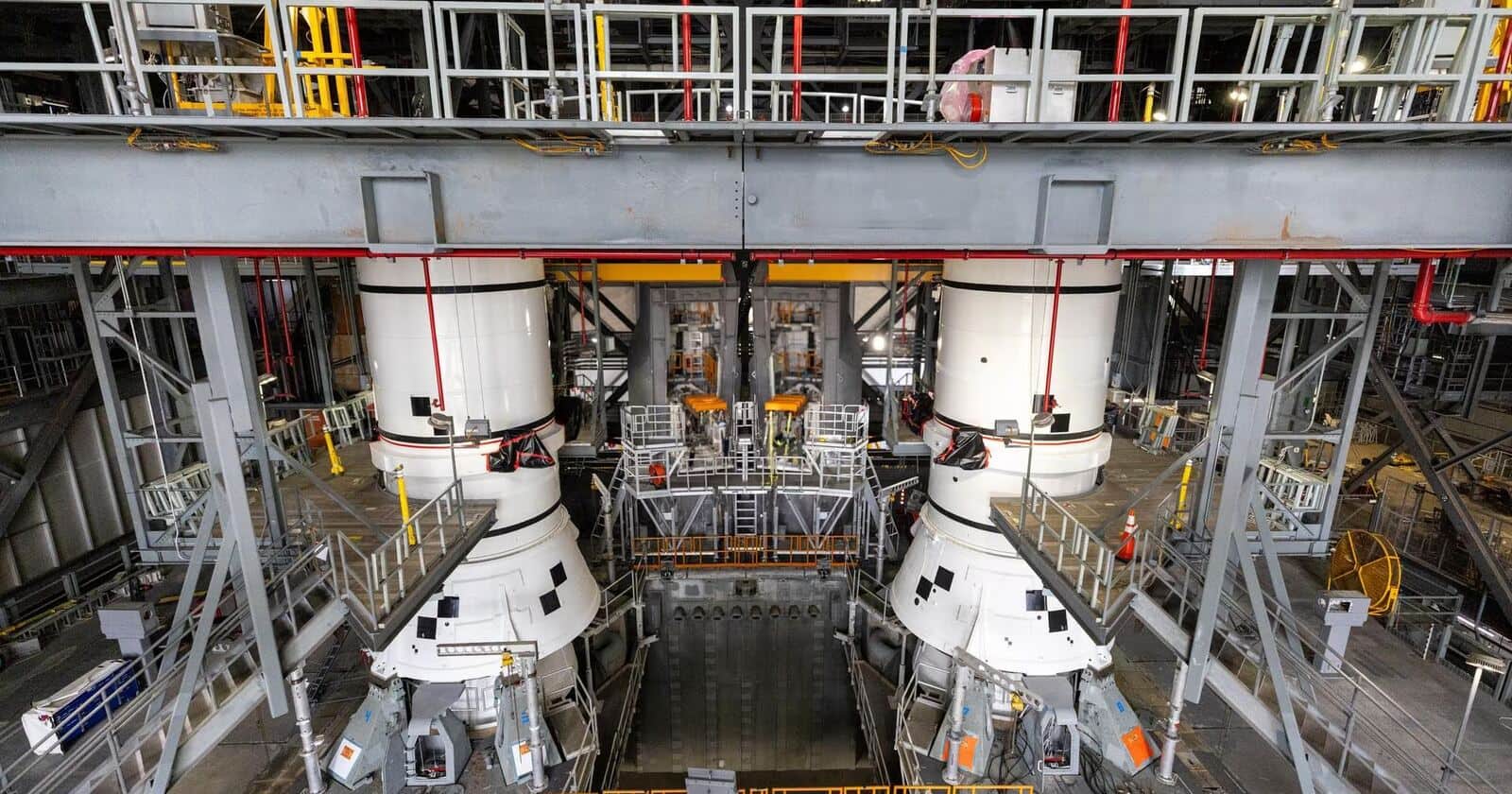
Image: ITzine
NASA has begun assembling the Space Launch System (SLS) rocket for Artemis III, the next major step in its lunar program. At the Kennedy Space Center, teams are connecting components of the solid rocket boosters while also assembling the core stage and preparing the Orion spacecraft.
The work follows Artemis I, which tested SLS and Orion without a crew in 2022. Artemis II is expected to carry astronauts on a trajectory around the Moon, becoming the program’s first crewed mission. NASA plans to move directly to the next launcher rather than pause assembly after Artemis II.
The program remains among the most expensive and technically demanding efforts in spaceflight. NASA says Artemis spending will reach tens of billions of dollars by the end of the decade, while schedules have shifted several times because of work on the spacecraft, heat shield and ground infrastructure.
China is pursuing its own lunar program, targeting a crewed landing before 2030. At the same time, SpaceX is developing a NASA lunar lander based on Starship.
Hardware now being assembled for Artemis III
The Vehicle Assembly Building has already received the first segments of the left solid rocket booster. The remaining sections arrived in June and are now undergoing inspection, processing and protective coating before being lifted onto the mobile launcher platform.

Recommended reading
This vine-like robot can dress you in 10 seconds
The core stage is also nearing completion. In May, engineers joined the main propellant tank to the engine section. The first two RS-25 engines arrived in June; after the other two are delivered, all four will be installed and teams will begin integrating the complete rocket.
Orion’s crew module has also advanced. Its heat shield has been installed in a nearby facility. The shield consists of 186 Avcoat blocks and was modified after analysis of Artemis I so the material performs more consistently across the surface. The spacecraft’s service module separately completed acoustic testing designed to simulate launch loads.
NASA must now join the crew and service modules, then test the complete spacecraft during prelaunch rehearsals. If the schedule holds, Artemis III will be a key test before the program’s next phase, which is developing lunar-landing technologies for Artemis IV, planned for 2028.
Marta Barinova is an editor on the news desk specializing in software analysis, streaming services and policy changes at global technology platforms. She has written more than 140 articles covering Windows, Spotify, Google and antitrust regulation affecting app stores.

Frontier Editor
Dan is our resident futurist, covering electric mobility, space exploration, and the smart home. He's interested in atoms just as much as bits. Whether it's a new battery chemistry, a reusable rocket, or a protocol that finally makes IoT devices talk to each other, Dan breaks down the engineering that pushes humanity forward.
via ITzine