• 2 min read
NASA’s LINK rescue spacecraft is spinning out of control
NASA’s LINK servicing spacecraft is spinning in orbit after two reaction wheels failed, putting its planned rescue of the Swift observatory at risk.
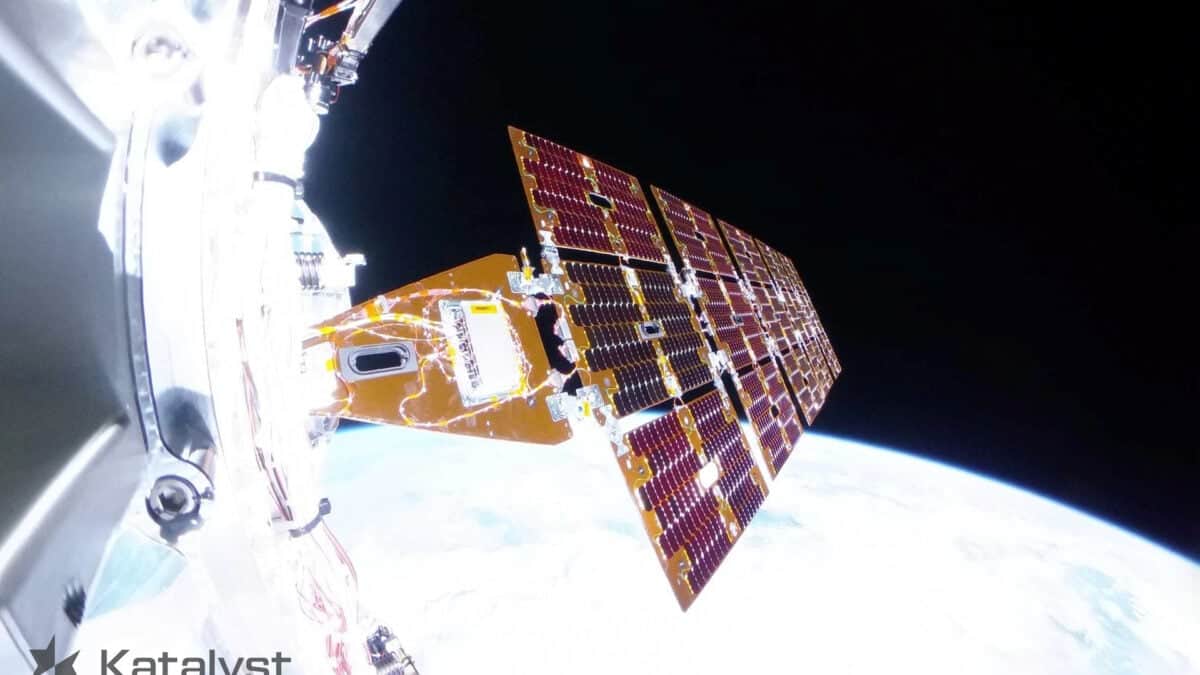
Image: Gizmodo
NASA’s planned rescue of the Neil Gehrels Swift Observatory is at risk after the servicing spacecraft sent to save it began spinning in orbit and losing communications.
The spacecraft, called LINK, was developed by contractor Katalyst Space Technologies. NASA said an attitude-control problem over the weekend caused sporadic communications and an uncontrolled tumble. Katalyst is working to stop the rotation and restore a stable orientation.
LINK’s reaction-wheel and thruster failures
LINK is a three-armed spacecraft that launched on July 3 from Kwajalein Atoll in the South Pacific. A converted Lockheed L-1011 aircraft carried it to an altitude of 7.6 miles (12.2 kilometers), where a Northrop Grumman Pegasus XL rocket released it for launch into space.
The mission initially progressed as planned: Katalyst deployed LINK’s solar arrays and established communications. However, the spacecraft had already experienced trouble with one of its three reaction wheels. These electrically driven wheels control orientation by managing the spacecraft’s rotational momentum.
NASA said on July 15 that software patches and operational updates had restored communications and attitude control after the team identified the cause of the initial problems.
Recommended reading
Starship survives first intact ocean splashdown
“The Katalyst team also quickly addressed early communications and attitude control issues seen during flight operations, including an issue with one of the spacecraft’s three reaction wheels,”
The latest update indicates that the earlier problem may have continued. NASA’s preliminary investigation found that two of LINK’s three reaction wheels are currently inoperable, along with “some loss of functionality” in the spacecraft’s cold-gas thruster system.
Katalyst remains in contact with LINK and is attempting to use its electric propulsion thrusters to halt the spacecraft’s spin. The team also plans to update LINK’s guidance, navigation, and control systems for its current configuration. NASA has not said whether those efforts will restore the spacecraft’s full operational capability.
The planned Swift rescue
LINK was designed to rendezvous with the aging Neil Gehrels Swift Observatory and give it a small orbital boost. Swift launched on November 20, 2004, to study gamma-ray bursts, the most powerful explosions in the cosmos.
The observatory has gradually lost altitude because of atmospheric drag. NASA estimates that Swift has a 50% chance of uncontrolled reentry by mid-2026. Earlier this year, the agency suspended all scientific activity on Swift in an effort to preserve the satellite until LINK could reach it.
A successful rendezvous and orbit-raising maneuver would help keep Swift from descending into Earth’s atmosphere and burning up during reentry, extending the observatory’s operational life. Katalyst and NASA will now evaluate revised approach and capture plans based on LINK’s condition and whether carrying out the rescue remains safe.
Frontier Editor
Dan is our resident futurist, covering electric mobility, space exploration, and the smart home. He's interested in atoms just as much as bits. Whether it's a new battery chemistry, a reusable rocket, or a protocol that finally makes IoT devices talk to each other, Dan breaks down the engineering that pushes humanity forward.
via Gizmodo