• 3 min read
Laser mixing could make stronger alloys inside 3D printers
Researchers at the U.S. National Institute of Standards and Technology have turned a 3D printer laser into something closer to a microscopic stirrer, using it to mix metals during printing and build more uniform high-ent
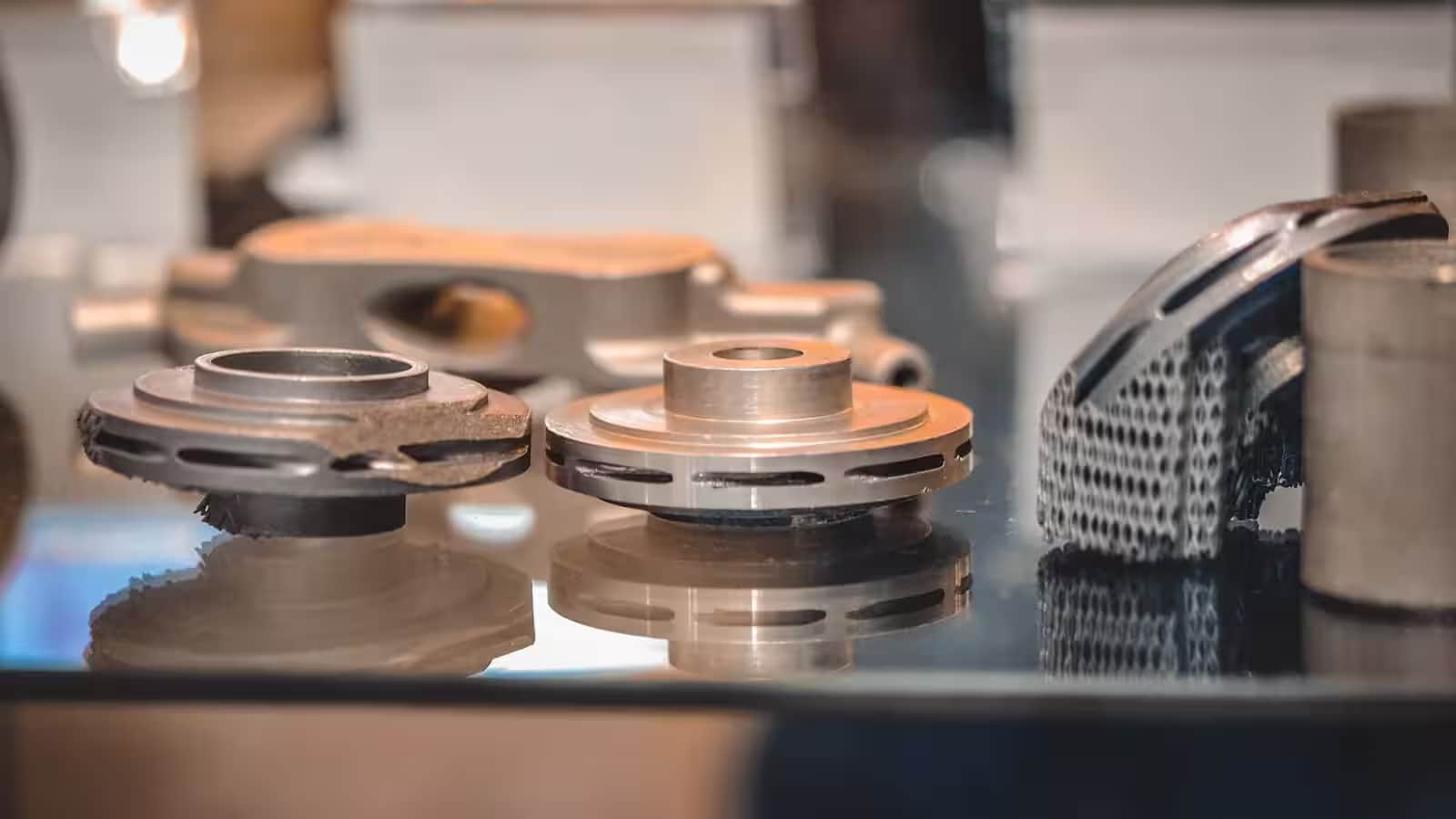
Image: ixbt.com
Researchers at the U.S. National Institute of Standards and Technology have turned a 3D printer laser into something closer to a microscopic stirrer, using it to mix metals during printing and build more uniform high-entropy alloys. The result is a cleaner internal structure for materials that are prized for strength and heat resistance but notoriously hard to make without the ingredients separating as they solidify.
The trick is simple in concept and annoying in execution: instead of tracing the usual straight paths across each layer, the laser follows looped routes that create a swirling effect in the melt pool. That motion keeps elements distributed more evenly, and it does so without changing the printer hardware itself – just the control software. In other words, the breakthrough is less about buying a fancier machine and more about teaching the old one better manners.
How the laser mixing process works
High-entropy alloys, or HEAs, are built from several elements in similar proportions rather than one dominant metal with small additives. That chemistry gives them useful properties, but it also makes them hard to manufacture because the elements tend to segregate as the material cools. NIST’s laser mixing method tackles that problem at the moment of melting, when the mix is still fluid enough to be manipulated.

Recommended reading
SpaceX may catch Starship on its next flight
The team tested the approach on a combination of RHEA-19 and titanium, then watched the structure form at Argonne National Laboratory using the Advanced Photon Source. The X-ray beam there is roughly hundreds of billions of times more intense than the kind used in medical scanners, which is the sort of firepower you need when you want to see metal rearranging itself in real time.
What laser mixing could change for metal production
The bigger promise is “alloys on demand”: instead of stocking a specially prepared powder for every final composition, manufacturers could potentially feed in base metals and form the desired alloy during printing. That is a neat fit for sectors that care about performance more than simplicity, especially aerospace, energy, and space hardware, where material failures are expensive in every sense.
There is also a more ambitious use case hiding here. If printers can vary composition inside a single object, engineers could build parts with gradient properties – tougher in one area, more heat-resistant in another – without bolting or welding separate pieces together. That is the kind of flexibility conventional metallurgy has promised for years and delivered only in fragments.
The software is the real bottleneck
What makes this especially practical is that the method does not require a new class of machine. The catch is software: standard industrial 3D-printing systems are not built to drive those complicated laser paths, so the NIST researchers had to write their own code. That is a reminder that manufacturing breakthroughs are often held back by firmware, not physics.
If this approach proves robust outside the lab, expect printer makers to start treating laser motion as a material-design tool rather than just a way to draw layers. The next question is whether the method scales cleanly from carefully observed samples to messy real-world production, where consistency matters and nobody wants to babysit a laser swirl all day.
Frontier Editor
Dan is our resident futurist, covering electric mobility, space exploration, and the smart home. He's interested in atoms just as much as bits. Whether it's a new battery chemistry, a reusable rocket, or a protocol that finally makes IoT devices talk to each other, Dan breaks down the engineering that pushes humanity forward.
via ixbt.com