• 2 min read
Hubble and Webb Find a Black Hole With a 94-Year Orbit
Hubble and Webb found oMEGACat BH-2, a stellar-mass black hole in Omega Centauri with a record 94-year orbital period.
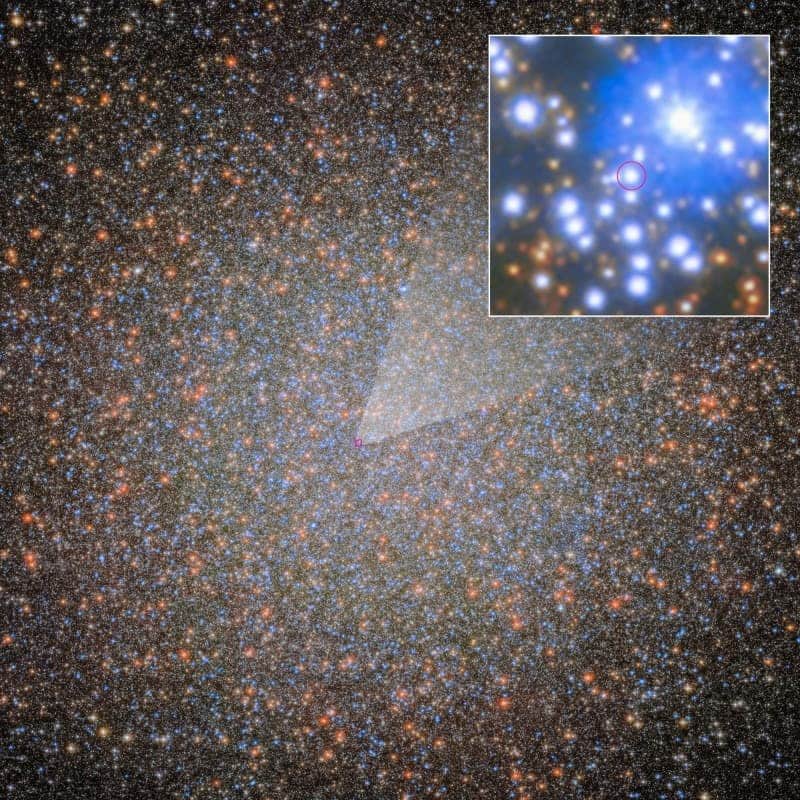
Image: iXBT
Astronomers have identified a stellar-mass black hole in Omega Centauri, one of the Milky Way’s largest and densest globular clusters. The object, designated oMEGACat BH-2, remained hidden for 20 years despite predictions that the cluster could contain around 10,000 black holes of this type.
The discovery used more than two decades of archival observations from NASA’s Hubble Space Telescope, followed by infrared measurements from the James Webb Space Telescope. The results were published in The Astrophysical Journal Letters.
How oMEGACat BH-2 was found
Omega Centauri contains about 10 million stars bound together by gravity. Earlier Hubble observations suggested that an intermediate-mass black hole might exist at the cluster’s center, while models also predicted a population of smaller black holes left behind by massive stars that died in supernova explosions.
Previous searches relied on measuring stars' line-of-sight velocities or detecting X-ray and radio emissions from material falling into a black hole. This team instead used astrometry, tracking extremely small changes in a star’s position over time.
Recommended reading
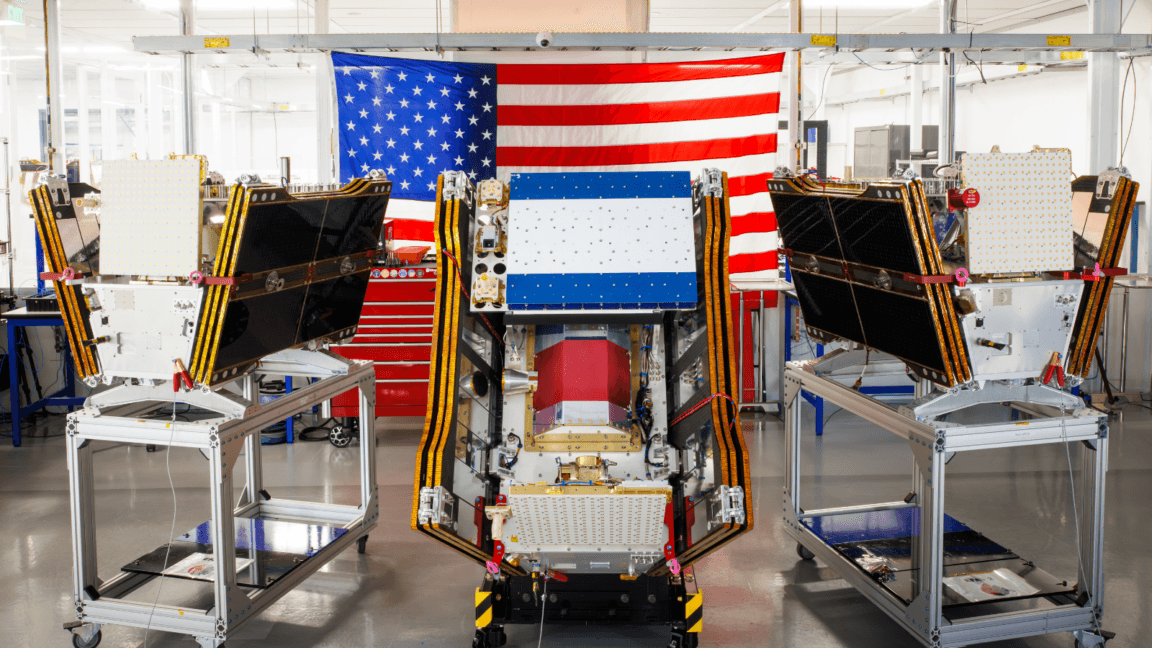
FireSat Satellites Launch to Catch Small Wildfires Early
The researchers followed a visible companion about 18,000 light-years from Earth. Its motion showed that it was orbiting an unseen massive object. Hubble images collected from 2002 to 2023, combined with Webb’s infrared data, allowed the team to refine the system’s masses: the visible star is about 0.78 solar masses, while its invisible companion has a mass of 4.46 solar masses.
That mass rules out a neutron star because the object is too massive for that class. At the same time, the black hole is lighter than expected for Omega Centauri’s low-metallicity environment.
A 94-year orbit inside Omega Centauri
The system’s most unusual feature is its orbit. The companion star takes 94 years to complete one revolution around the black hole—the longest known orbital period among black-hole binary systems.
The researchers believe the pair probably did not form together. Instead, the black hole and star may have met inside the cluster through dynamic interactions with other stars.
Studying systems like oMEGACat BH-2 could clarify how black holes and binary systems form, including binaries that may eventually produce gravitational waves when they merge. The team plans to search for similar objects in Omega Centauri and other globular clusters, while the future Nancy Grace Roman Space Telescope could expand the work through regular, high-resolution imaging of dense regions of the galaxy.

Frontier Editor
Dan is our resident futurist, covering electric mobility, space exploration, and the smart home. He's interested in atoms just as much as bits. Whether it's a new battery chemistry, a reusable rocket, or a protocol that finally makes IoT devices talk to each other, Dan breaks down the engineering that pushes humanity forward.
via iXBT