• 2 min read
GeForce RTX 4060 runs on ARM PCs
Chinese enthusiasts ran GeForce RTX cards on Windows on ARM, pairing an RTX 4060 with Huawei’s 24-core Kunpeng 920.
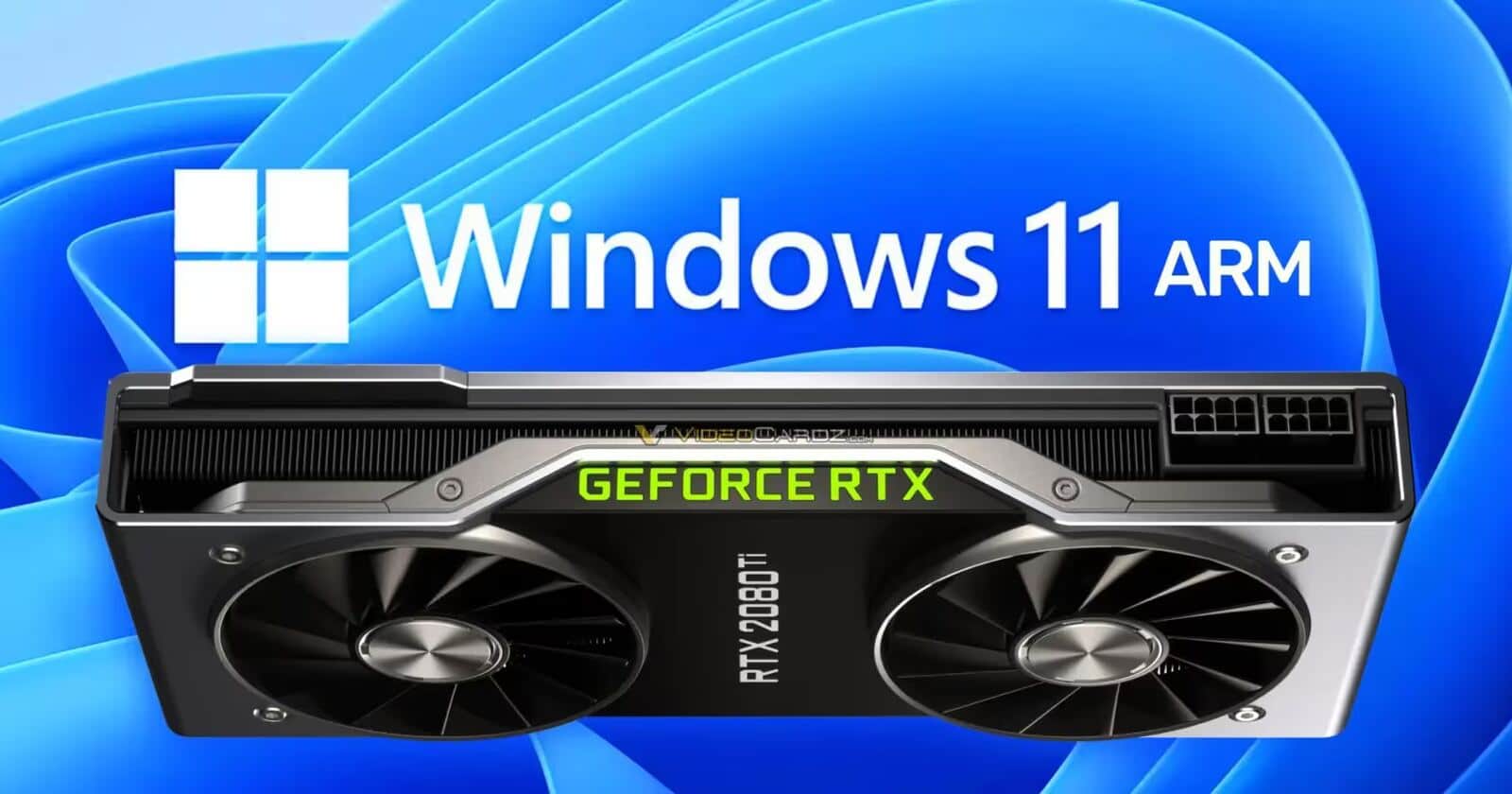
Image: ITzine
Nvidia’s latest Windows on ARM driver has enabled discrete GeForce RTX graphics on ARM computers, according to tests by Chinese enthusiasts. In one configuration, a GeForce RTX 4060 was detected by a Huawei Qingyun W510 workstation equipped with a 24-core Kunpeng 920, without relying on emulation workarounds.
The test system included 32 GB of DDR4 memory and an 8 GB RTX 4060 connected over PCIe 4.0 x8. Installing Windows 11 required an open-source ACPI patch because the platform does not provide native compatibility out of the box.
The same approach was later repeated on the compact Radxa Orion O6 ARM board, this time with a GeForce RTX 2080 Ti.
RTX 4060 performance on Kunpeng 920
The graphics card was useful for more than display output. Blender detected the RTX 4060 through CUDA, and GPU utilization reached approximately 89% during rendering. That suggests the platform can support some compute workloads rather than being limited to office applications and video playback.
Synthetic benchmarks produced the following results:
Recommended reading
Quantum computing’s future runs on classical systems
- 3DMark Night Raid: 43,530 points
- 3DMark Solar Bay: 32,370 points
- 3DMark Speed Way: 2,252 points
- 3DMark Time Spy: 6,369 points
Time Spy ran through x64 emulation, which helps explain its lower score. The results indicate that the main limitation is not necessarily the GPU itself, but the compatibility layer spanning the processor, drivers, and software.
Gaming remains much less practical. Most modern Windows on ARM games still depend on x64 emulation, which significantly reduces performance. Genshin Impact at Full HD, Black Myth: Wukong, and the Star Wars Reflections demo functioned more as technical demonstrations than as replacements for a conventional x86 PC.
Nvidia support broadens Windows on ARM hardware
Until recently, Windows on ARM was primarily associated with thin Snapdragon-based laptops using integrated graphics. Discrete GPUs were largely absent from the platform. The new GeForce driver changes that by allowing enthusiasts to experiment with ARM workstations and desktop boards under Windows.
The timing also coincides with growing momentum for Windows on ARM. Qualcomm has spent several years advancing the platform in laptops, while Microsoft has pushed developers more actively toward ARM64 application ports following the release of Snapdragon X Elite.
A universal GeForce driver that works reliably across more cards could eventually support configurations beyond the RTX 20 and RTX 40 series. For now, however, these systems remain experimental. Their practical future depends on driver support, the performance cost of emulation, and whether manufacturers decide to sell ARM machines built for regular use rather than demonstrations.

Computing Editor
Tomas lives in the terminal. He covers chips, laptops, and operating systems with a focus on performance and efficiency. He reads kernel changelogs the way other people read fiction, and he's always on the hunt for the perfect mechanical keyboard switch. If it processes data, Tomas has an opinion on it.
via ITzine